Serengeti National Park Overview
Serengeti National Park is one of Africa's most famous wildlife destinations, but its appeal goes far beyond the Great Migration.
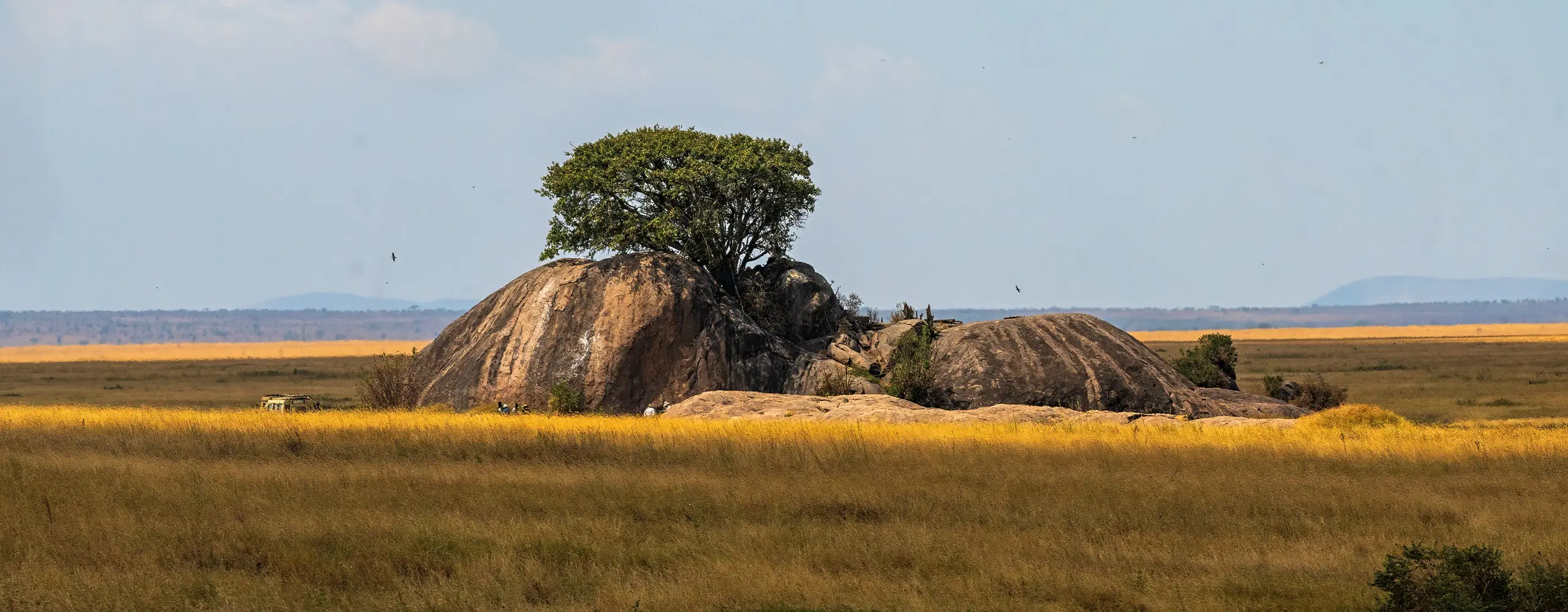
The park covers an enormous landscape of open grasslands, rocky kopjes, acacia woodland, rivers and seasonal plains. Wildlife moves through these different habitats throughout the year, creating a safari experience that changes with the landscape and the seasons. You can spend one morning watching a pride of lions near a kopje, drive across an almost empty plain in search of cheetahs, or find elephants moving through woodland later in the day.
And then there is the migration — millions of animals moving through the wider Serengeti-Mara ecosystem as they follow seasonal rainfall, fresh grass and water. For many travelers, Serengeti is the centerpiece of a Tanzania safari.
Where Is Serengeti National Park?
Serengeti National Park is in northern Tanzania, extending from the Ngorongoro area in the southeast toward the Kenyan border in the north. It forms part of the larger Serengeti-Mara ecosystem, which continues across the border into Kenya's Maasai Mara.
The park is enormous, so "going to the Serengeti" does not describe one single experience. Where you stay inside the park can make a major difference to the landscape, wildlife and migration activity you encounter. Central Serengeti around Seronera, Southern Serengeti and Ndutu, Western Serengeti and the Northern Serengeti around Kogatende all have different characteristics.
What Makes Serengeti Special?
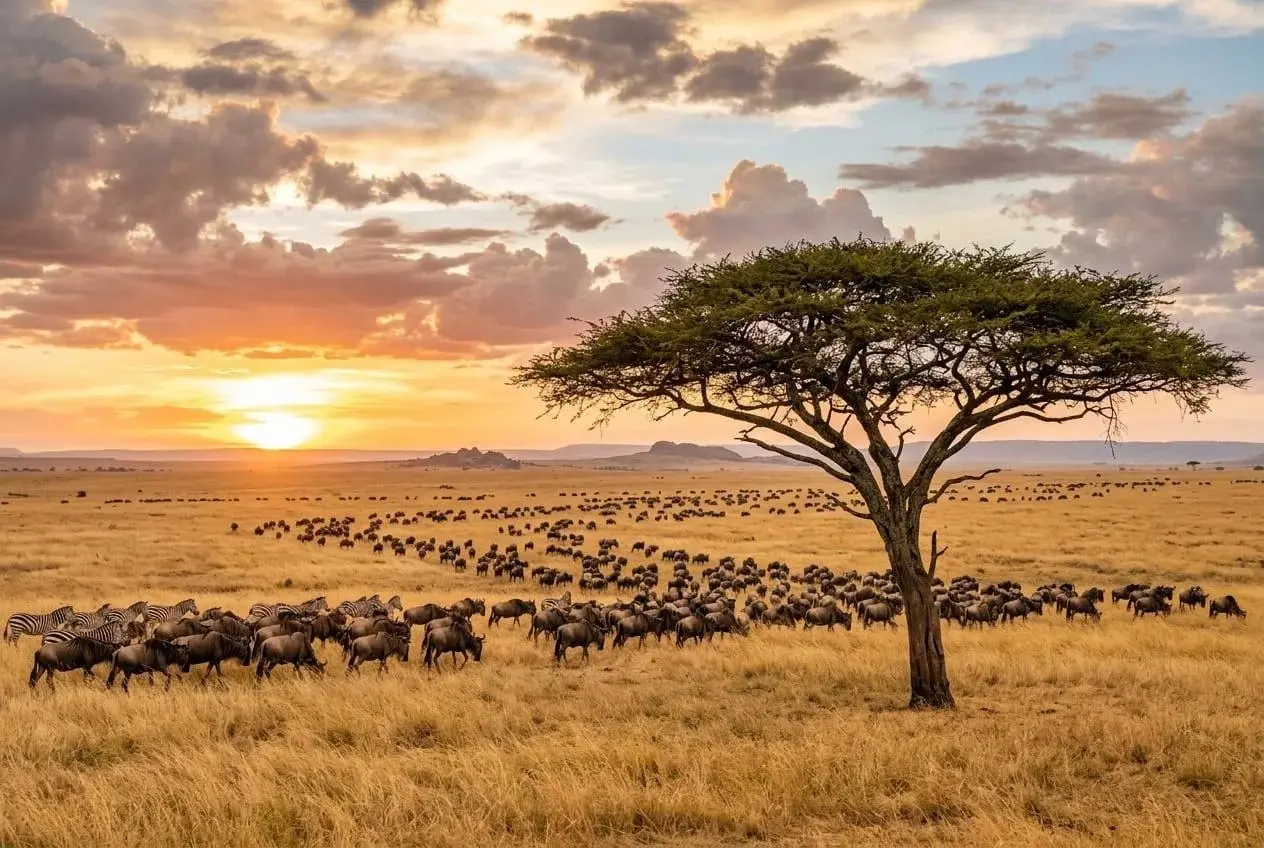
The scale is the first thing you notice.
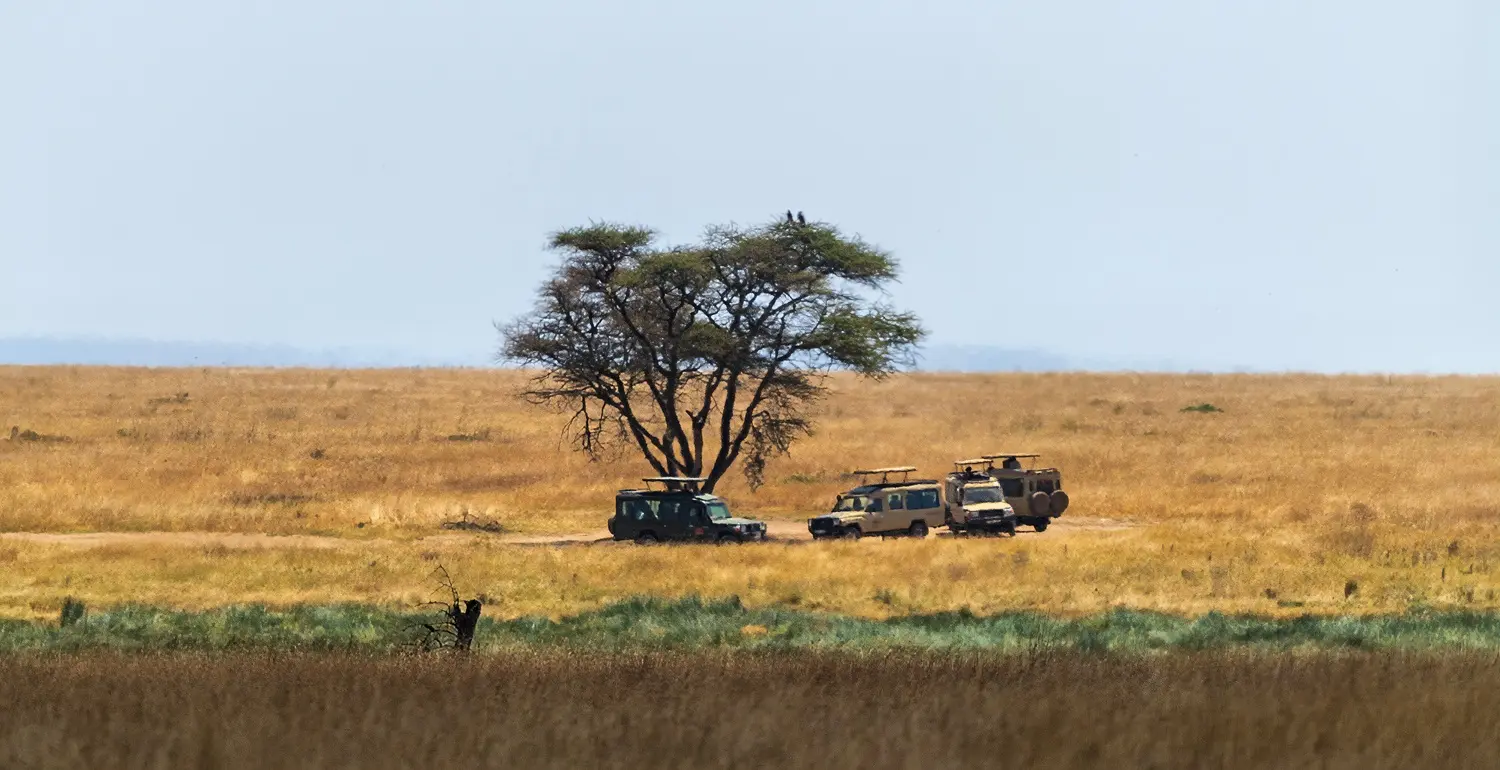
The Serengeti does not feel like a small wildlife reserve where you drive from one attraction to another. The horizon can stretch for kilometres, and sometimes there is nothing visible except grassland, scattered trees and distant kopjes.
Then something appears. A few zebra become hundreds. A distant group of wildebeest turns into a huge herd. A lion is spotted beneath a tree. A cheetah appears on the horizon. The combination of enormous landscapes and large concentrations of wildlife is what gives the Serengeti its distinctive character.
It is also a functioning ecosystem rather than a place built around a single wildlife attraction. Resident animals remain here throughout the year, while the migrating herds move through different areas as conditions change.
Serengeti Landscape & Ecosystem
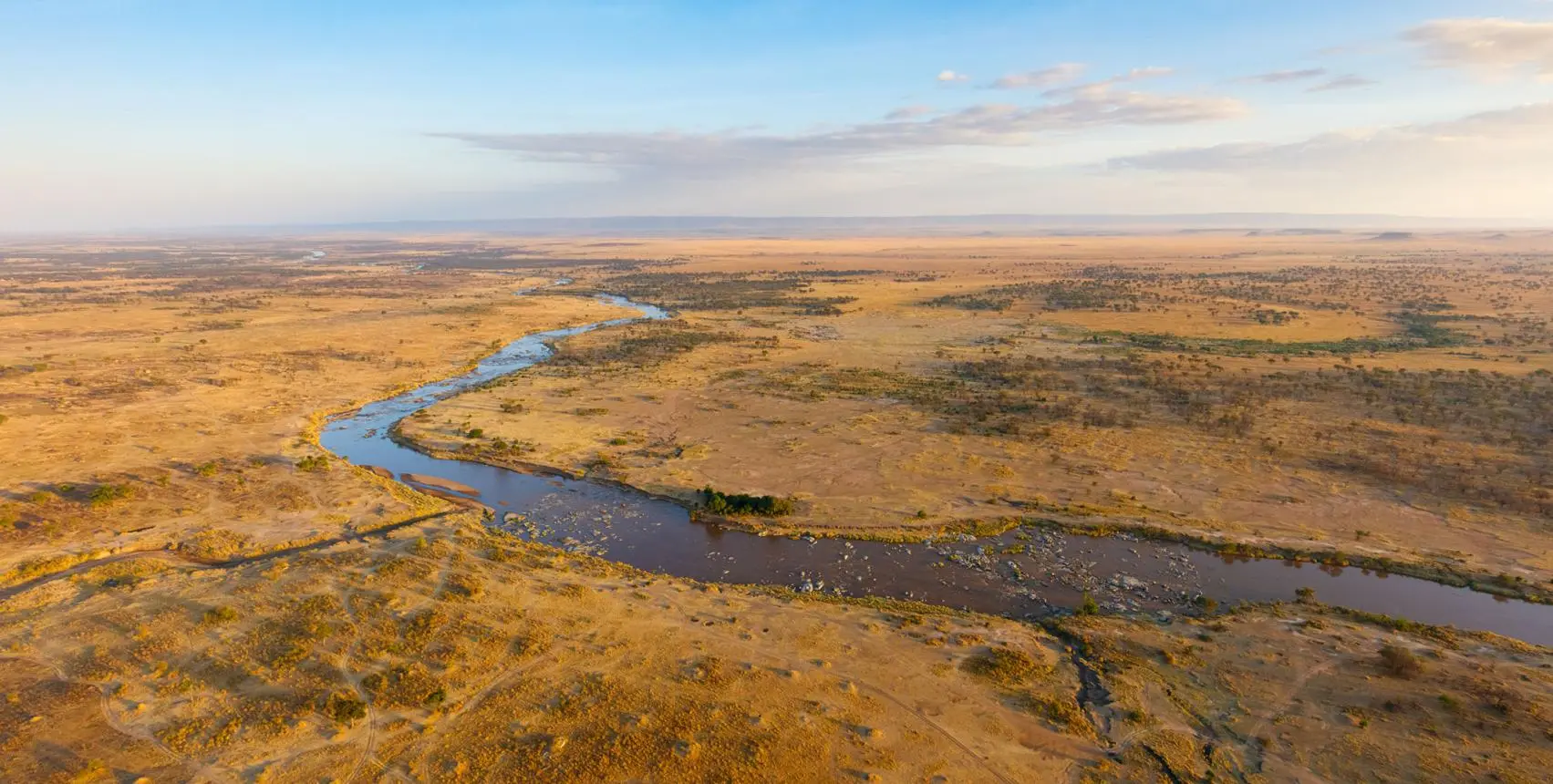
The Serengeti is made up of several different landscapes. The southern plains are wide and open, particularly around the Ndutu area. These short-grass plains become especially important during the calving season.
Central Serengeti around Seronera has a mixture of grassland, acacia woodland, riverine vegetation and rocky kopjes. Further west, the landscape becomes more wooded and is shaped by the Grumeti River.
Northern Serengeti is more rugged in places, with hills, rocky outcrops and woodland around the Mara River. This variety is one reason a longer safari can feel very different from one day to the next.
Serengeti Zones
The easiest way to understand the park is to divide it into broad regions.
Southern Serengeti & Ndutu
The southern plains are strongly associated with the Great Migration's calving season. From around January to March, large numbers of wildebeest gather here, with newborn calves attracting predators such as lions, cheetahs and hyenas. Outside the calving period, the experience can be different, so the south is particularly important when your safari is timed around the migration.
Central Serengeti
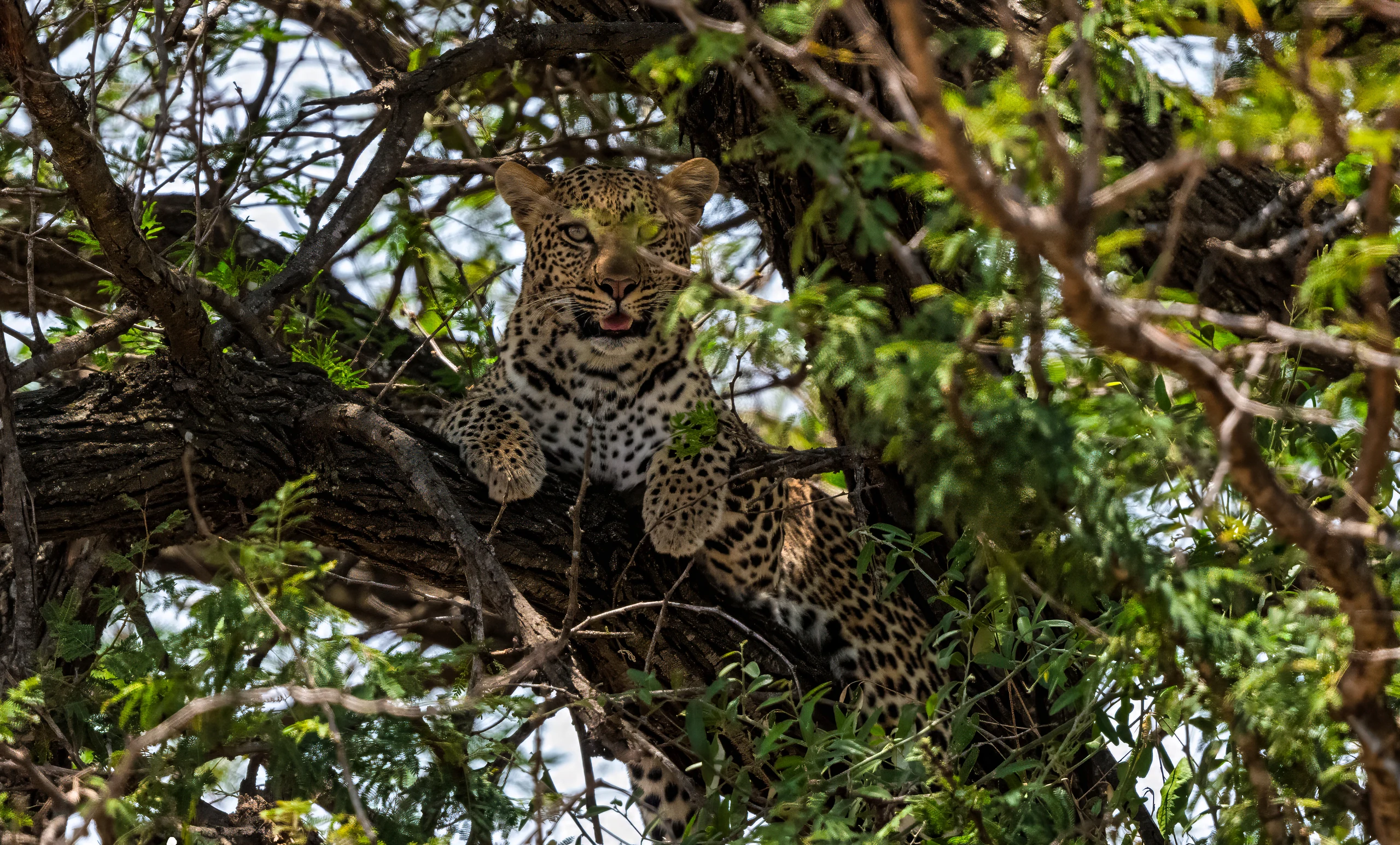
Central Serengeti is the park's classic year-round safari area. The Seronera region has abundant resident wildlife and is particularly known for big cats. Lions can be found around the plains and kopjes, while leopards often use trees and riverine vegetation for cover. Because the resident wildlife remains even when the migration is elsewhere, Central Serengeti can be a practical choice for travelers who want a strong wildlife experience regardless of the migration's exact location.
Western Corridor
The Western Corridor stretches toward Lake Victoria and is associated with the Grumeti River. The landscape becomes more wooded, and the river provides habitat for hippos and large crocodiles. During the migration season, the Grumeti region can become important as the herds move north.
Northern Serengeti
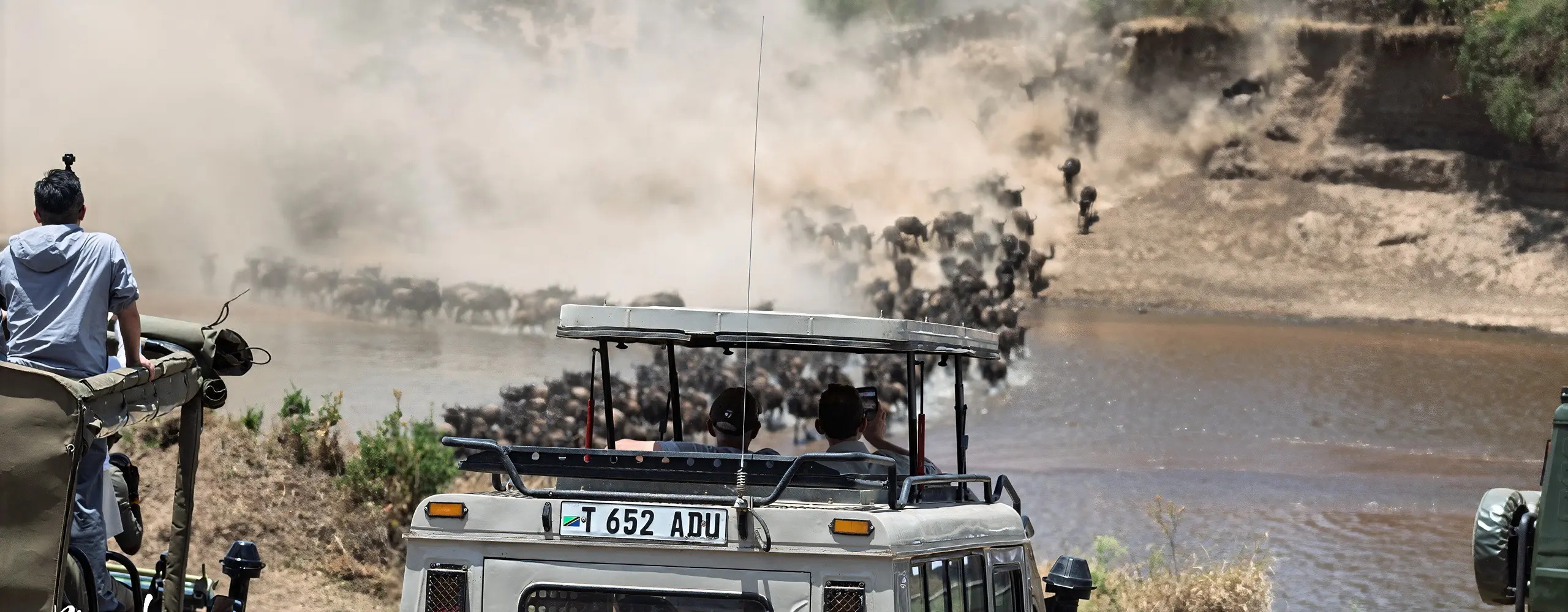
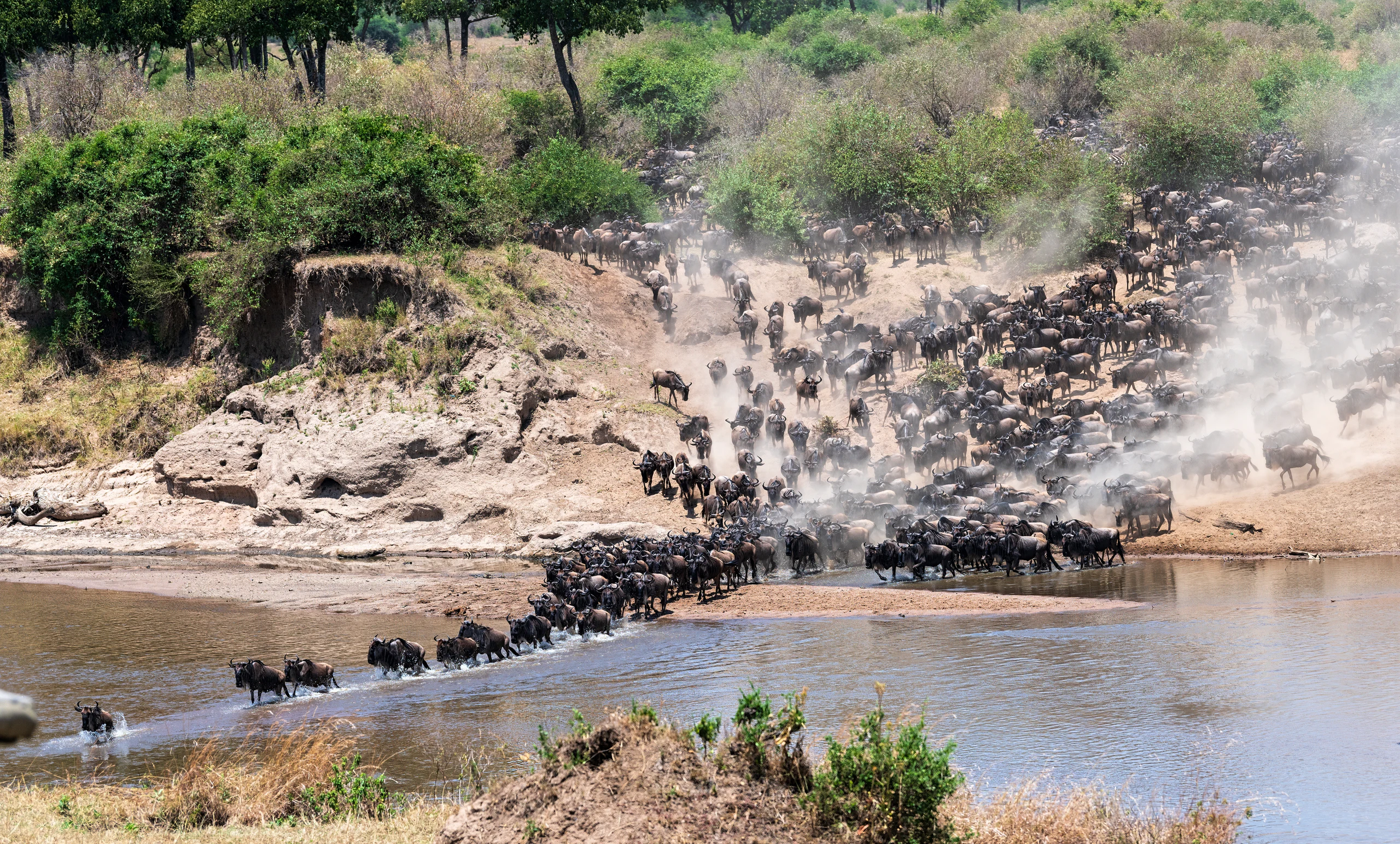
Northern Serengeti is more remote and is particularly important during the later stages of the Great Migration. The Mara River runs through the northern ecosystem, and this is where some of the famous wildebeest river crossings can take place.But the north should not be treated simply as a river-crossing location. Its landscapes, resident wildlife and quieter atmosphere are part of the experience.
Wildlife in Serengeti
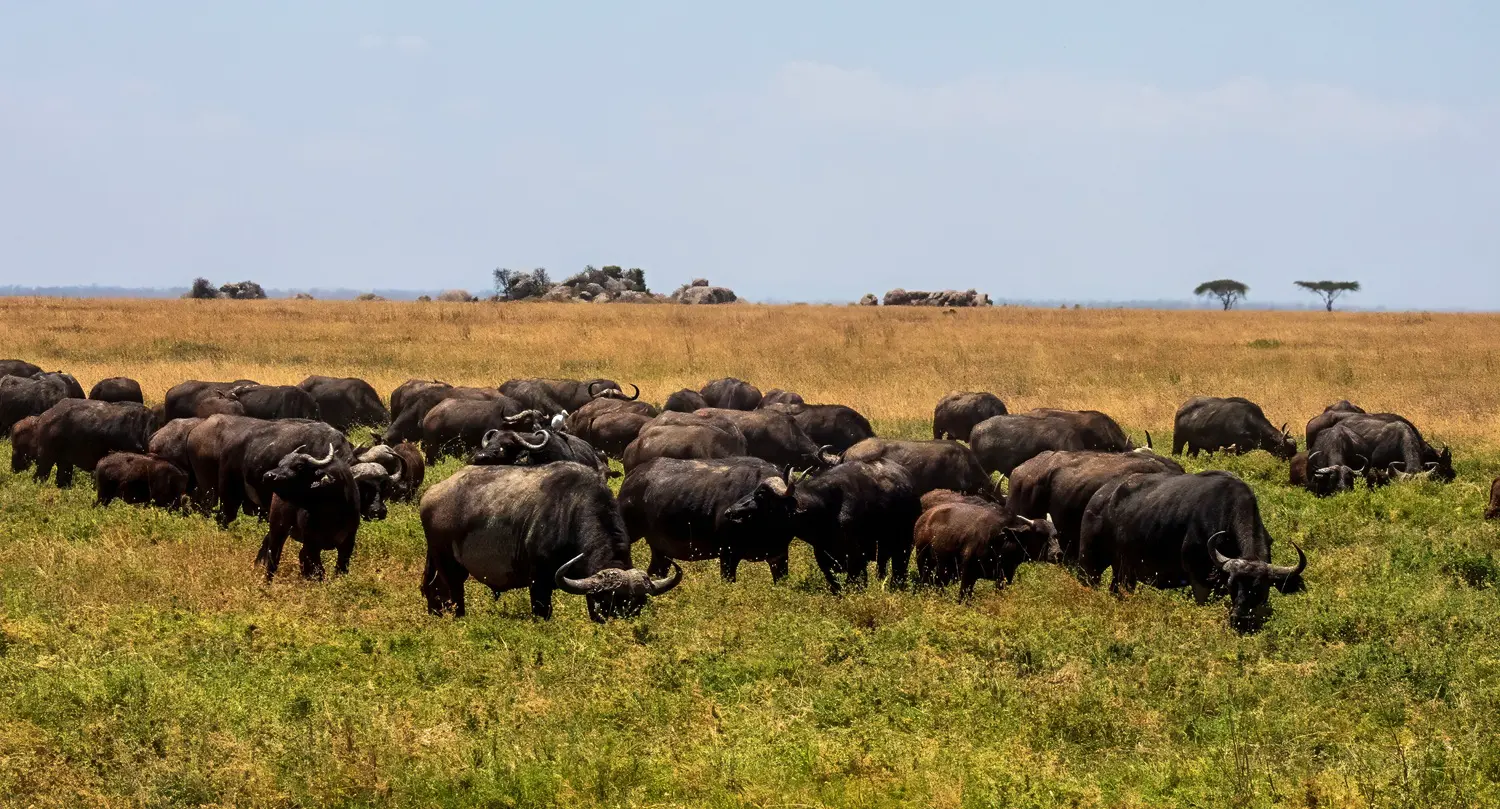
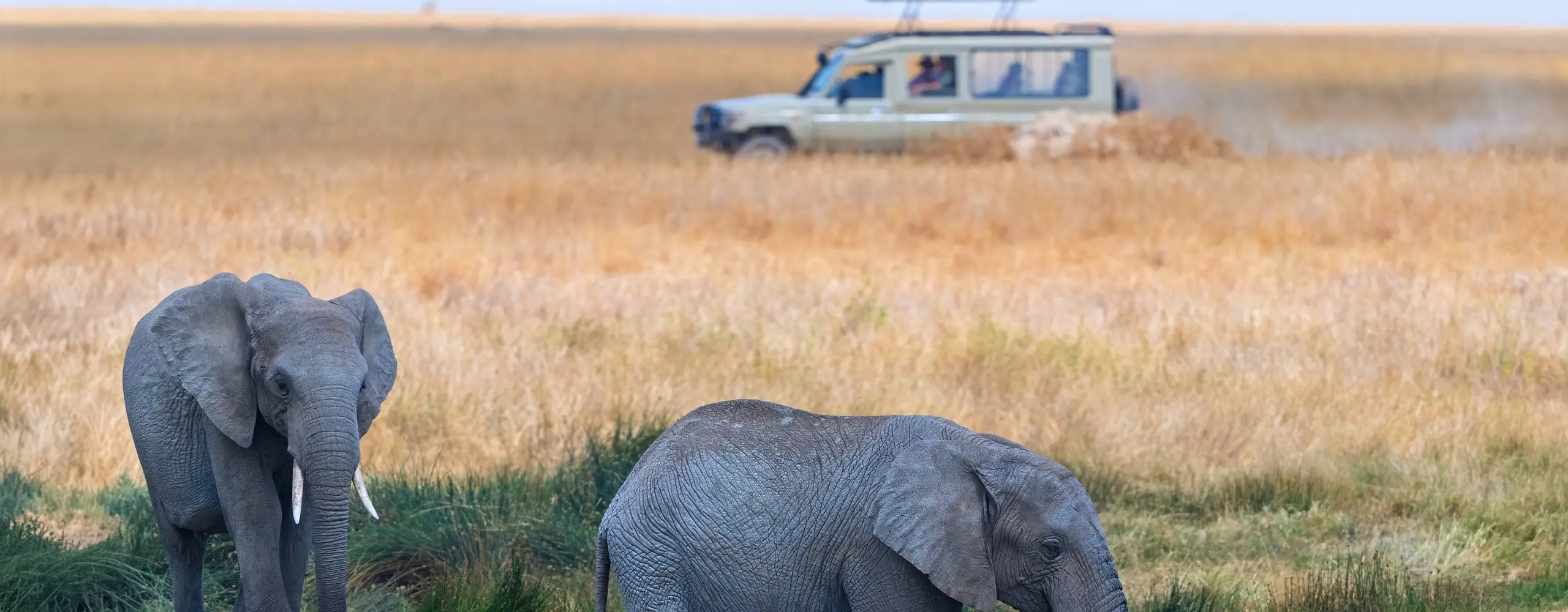
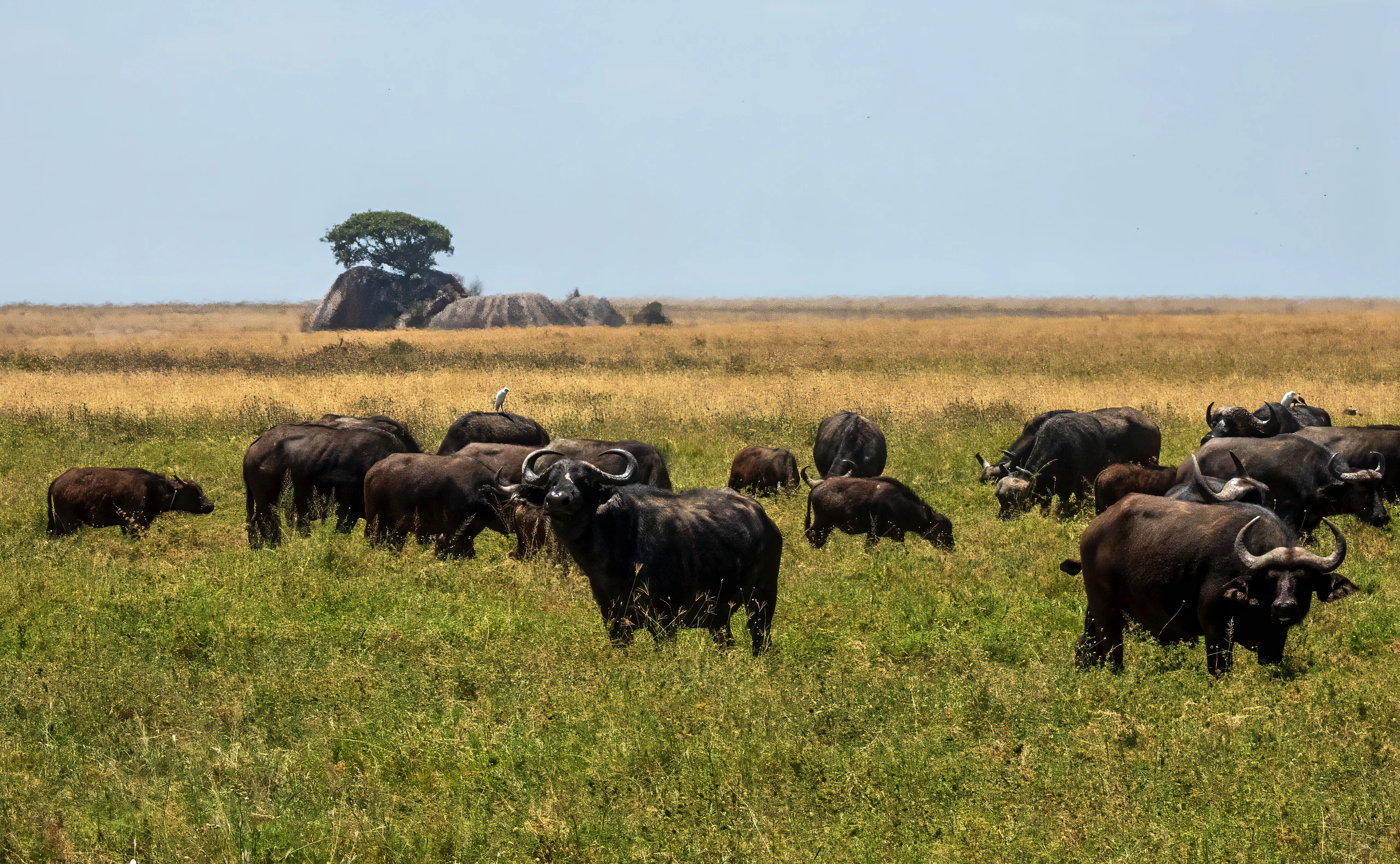
Wildlife is one of the reasons the Serengeti remains on so many safari itineraries. Large herbivores include wildebeest, zebra, buffalo, giraffe, elephant, hippo and numerous species of antelope. Predators are equally important. Lions are widespread, while cheetahs are particularly associated with open grassland. Leopards can be more difficult to spot, often resting in trees or dense vegetation.
You may also encounter spotted hyenas, jackals, servals, warthogs, baboons, mongooses and many smaller species. And then there are the birds. From large kori bustards and secretary birds to vultures, eagles, rollers and colorful bee-eaters, the Serengeti is as interesting for birdwatchers as it is for big-game enthusiasts.
The Big Five
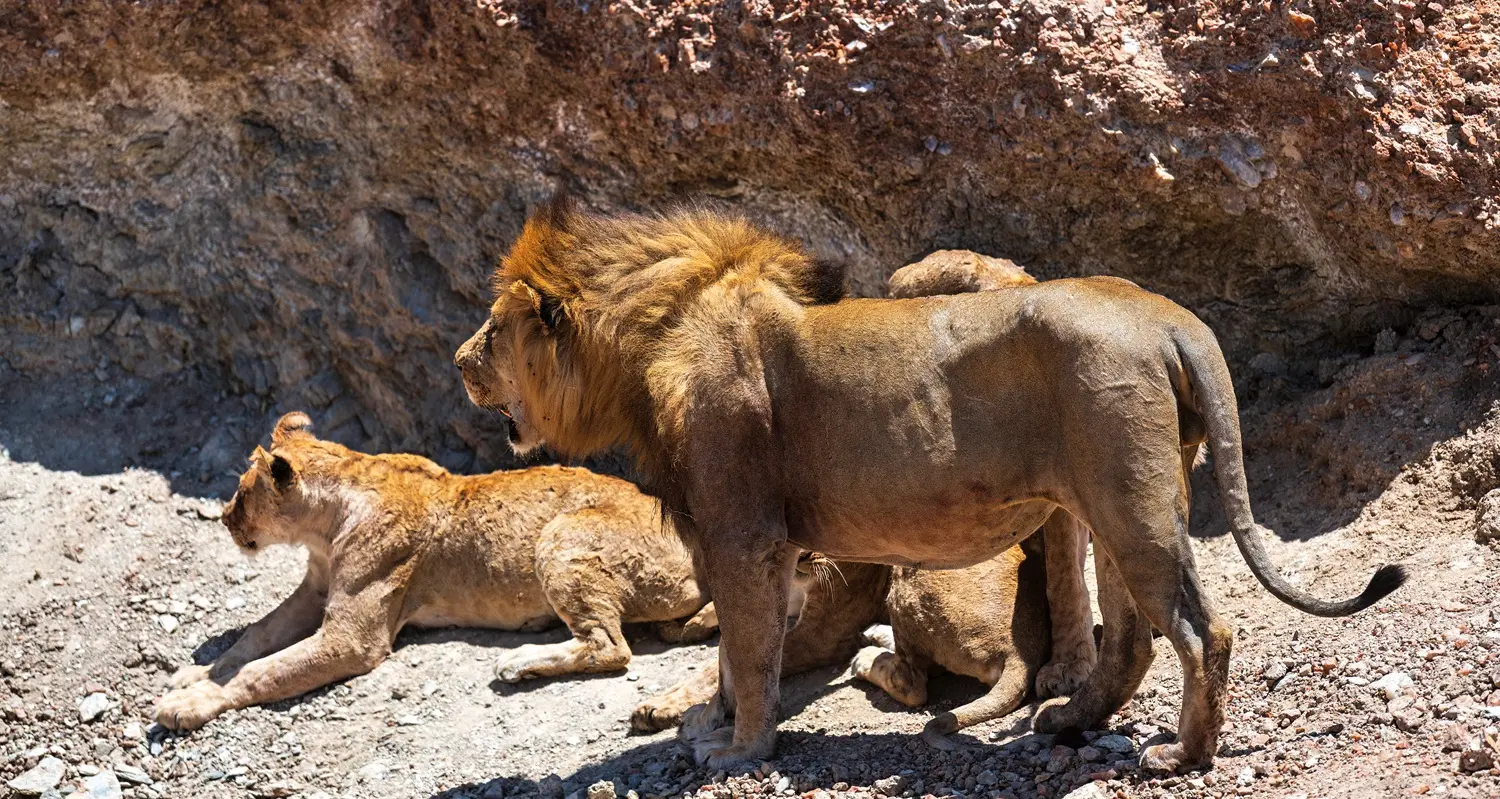
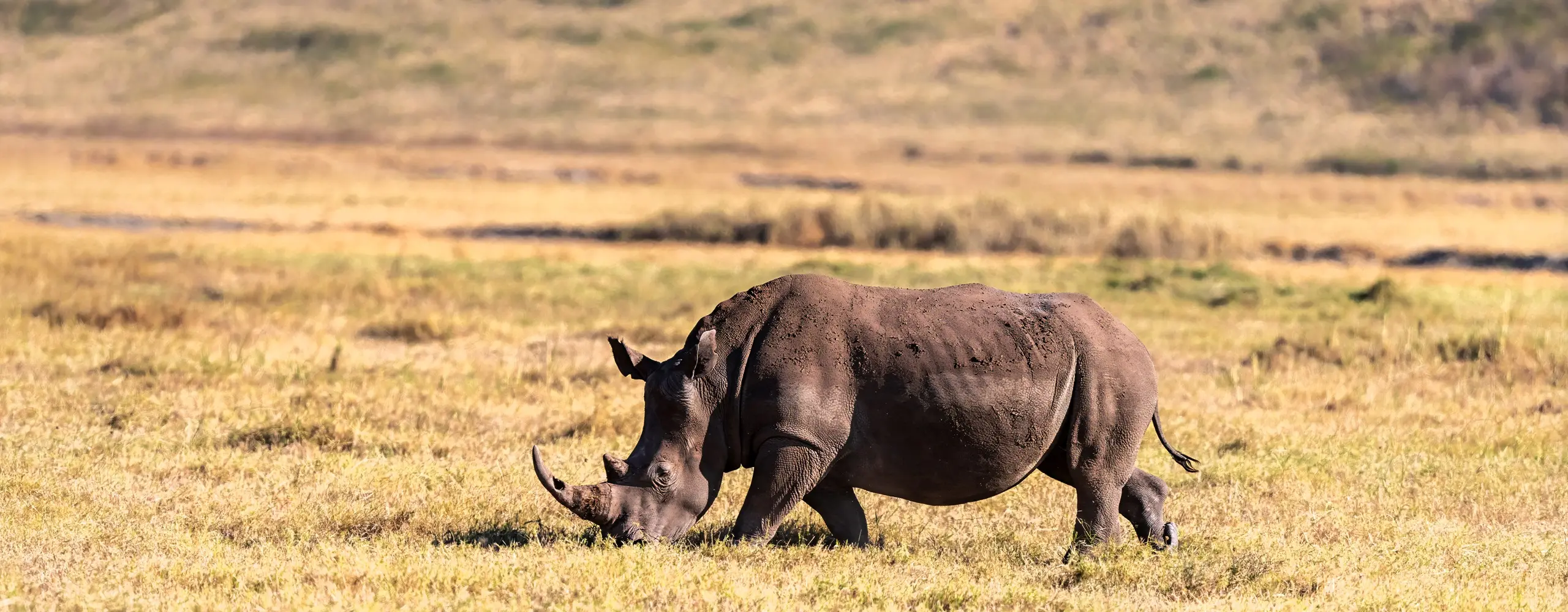
The Serengeti is home to the famous Big Five: lion, leopard, elephant, buffalo and rhinoceros. Lions are among the more regularly encountered large predators, while elephants and buffalo can also be seen across different parts of the park.
Leopards are more secretive and often require patience and a good guide who knows their preferred areas. Rhino sightings are considerably less common. Black rhinos are protected and their numbers and distribution are closely managed, so seeing one should be considered a special encounter rather than something to build an itinerary around. The Serengeti offers much more than a Big Five checklist, and some of the most memorable sightings involve animals that are much smaller.
The Great Migration in Serengeti
The Great Migration is one of the defining features of the Serengeti, but it is important to understand that the migration is not a single event. Wildebeest, zebra and gazelle move through the wider Serengeti-Mara ecosystem throughout the year, responding primarily to rainfall, grazing and water.
The southern Serengeti is important during calving season. The herds then move north through the Serengeti and Western Corridor before reaching the northern ecosystem later in the year. Some groups may eventually gather around the Mara River, where crossings can occur. The exact timing changes from year to year, so a migration calendar should be used as a planning guide rather than a guarantee.
Read more: Great Migration Complete Guide
Best Time to Visit Serengeti
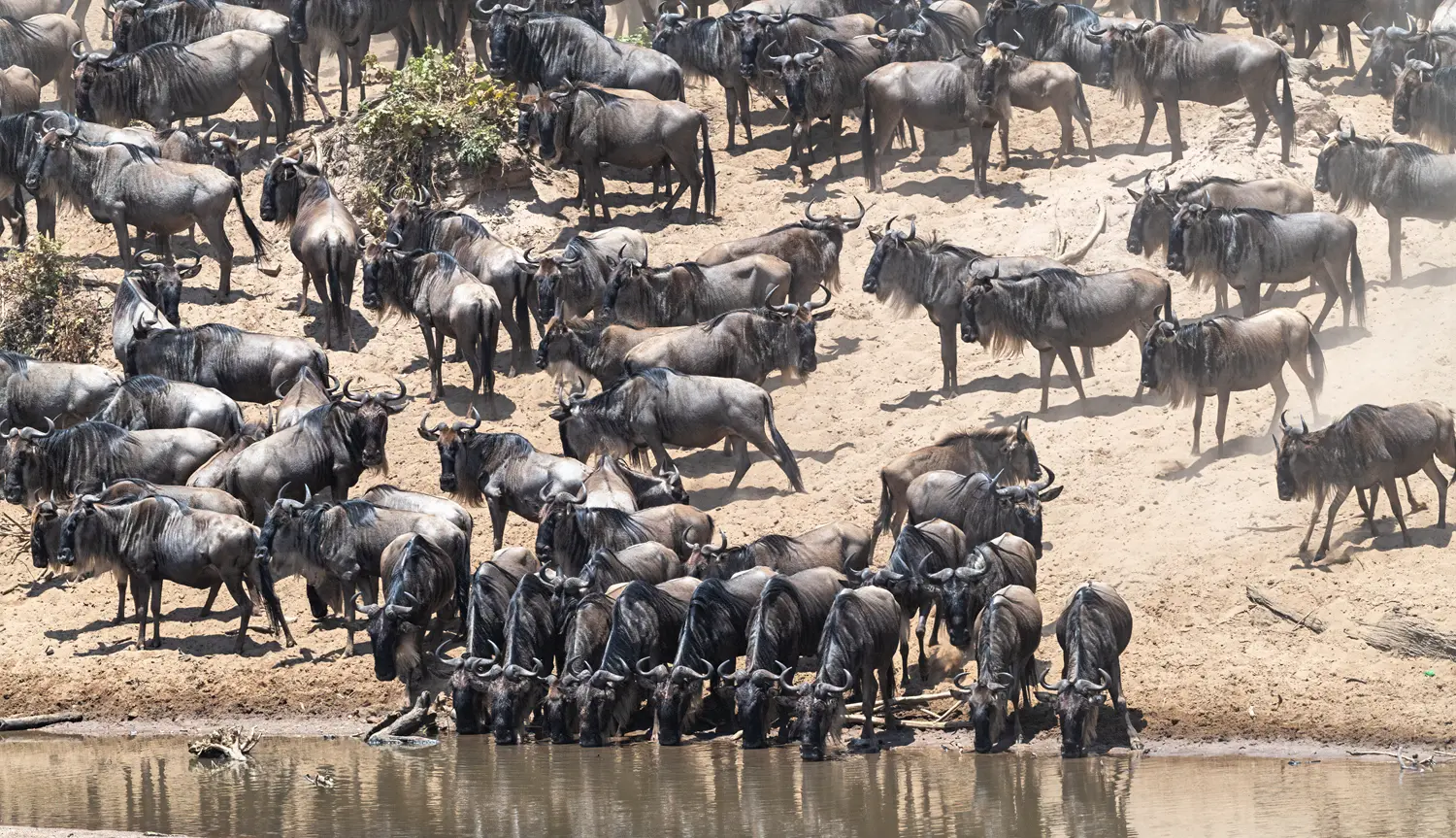
Serengeti can be visited throughout the year, but different seasons create different safari experiences.
January–March
This is the key period for the southern Serengeti and Ndutu calving season. The plains can be filled with wildebeest and newborn calves, while predator activity can be particularly interesting.
April–May
The landscape becomes greener during the long-rain period. Visitor numbers can be lower, and the migrating herds begin moving north. Some roads can become muddy, and some seasonal camps may have limited operations.
June–October
This is generally the dry season and one of the most popular periods for safari. Wildlife can become easier to locate around remaining water sources, while the migration moves through different parts of the Serengeti. Northern Serengeti becomes particularly important later in this period.
November–December
Short rains bring fresh growth and greener landscapes. The migration begins moving south again, eventually returning toward the southern plains. There is no single perfect season. The best time depends on whether you prioritize migration, calving, general wildlife, landscapes, fewer visitors or specific activities.
Where to Stay in Serengeti
Choosing where to stay can be almost as important as choosing the camp itself.
- If you want year-round wildlife and easy access to the central Serengeti, look around Seronera.
- If you are travelling during calving season, accommodation around Ndutu puts you much closer to the southern migration.
- If you are travelling during the later migration and want access to the Mara River, consider Northern Serengeti areas such as Kogatende.
- There are permanent lodges, permanent tented camps and mobile camps, each offering a different style of safari.
Central vs Northern vs Southern Serengeti
The three major regions serve different purposes. Read more: [Central vs Northern vs Southern Serengeti — Migration Guide] (/travel-guide/central-northern-southern-serengeti)
- Southern Serengeti: calving season, newborns and predator activity.
- Central Serengeti: year-round resident wildlife and strong big-cat viewing.
- Northern Serengeti: later migration, remote landscapes and possible Mara River crossings.
- The right choice depends heavily on your travel dates.
How Many Days Do You Need?
There is a big difference between visiting the Serengeti and experiencing it properly.
- One night can give you a glimpse, but it also means spending a significant amount of your limited time travelling into and out of the park.
- Two to three nights gives you much more room for different game drives and wildlife areas.
- Four or more nights can make sense when the Serengeti is the main purpose of your trip, particularly if you want to explore different regions or follow the migration.
- If you have limited time, I would generally rather see you spend three good nights in one part of the Serengeti than rush through several distant areas.
Central vs Northern vs Southern Serengeti
The three major regions serve different purposes. Read more: [Central vs Northern vs Southern Serengeti — Migration Guide] (/travel-guide/central-northern-southern-serengeti)
- Southern Serengeti: calving season, newborns and predator activity.
- Central Serengeti: year-round resident wildlife and strong big-cat viewing.
- Northern Serengeti: later migration, remote landscapes and possible Mara River crossings.
- The right choice depends heavily on your travel dates.
How to Get to Serengeti
Most road-based Northern Circuit safaris reach Serengeti after visiting Tarangire and/or the Ngorongoro area.
- The drive is part of the experience, with the landscape changing dramatically as you move deeper into the park.
- Flying is another option, particularly for travelers with limited time or those heading directly to a remote region.
- Several airstrips serve different parts of the Serengeti, making it possible to fly into one area and out from another.