Great Migration Overview
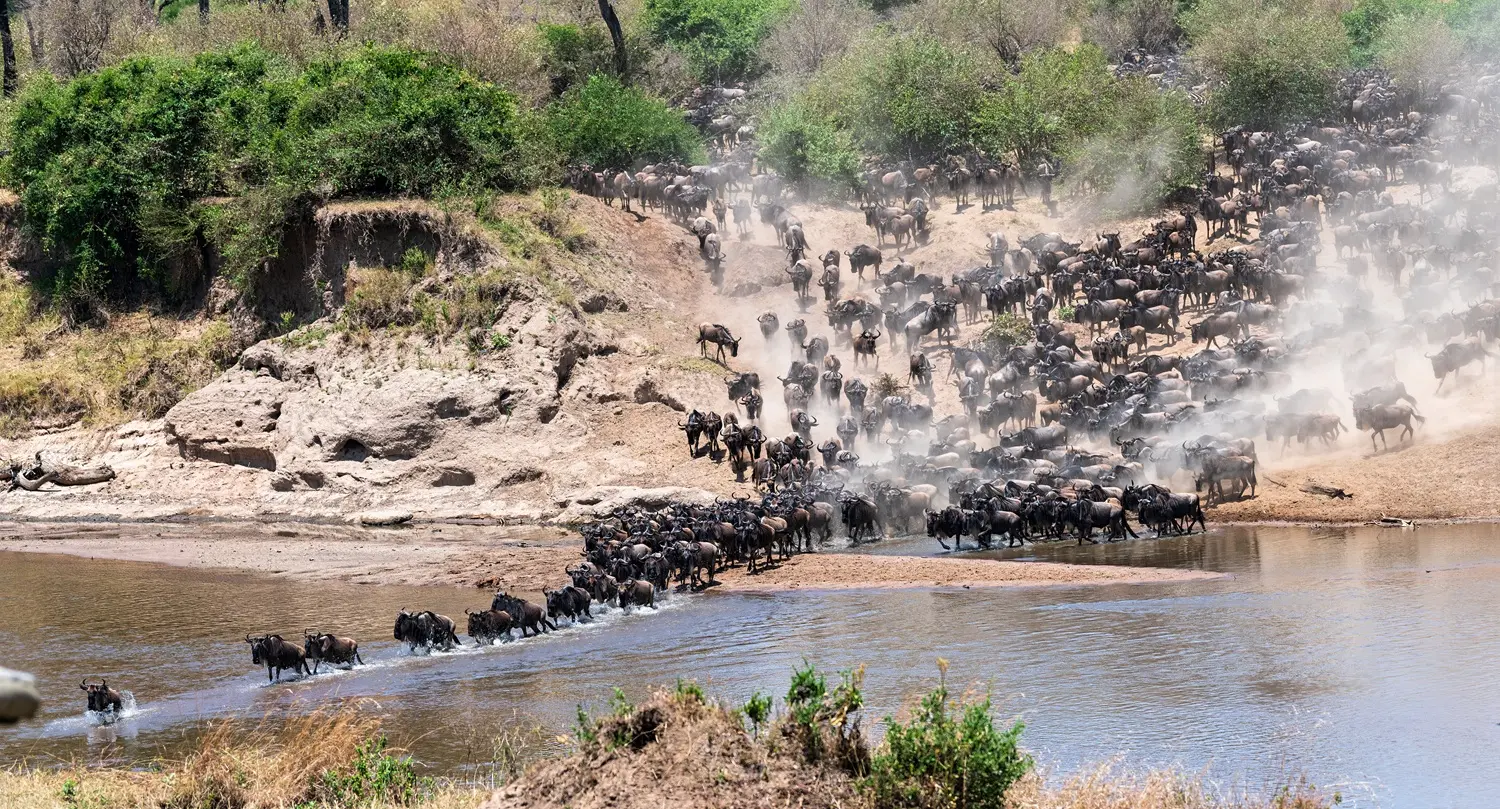
The Great Migration is not really one event. It is a continuous movement of wildebeest, zebra and gazelle across the Serengeti-Mara ecosystem as the animals follow seasonal grass, water and rainfall. Around a million or more wildebeest form the main movement, joined by hundreds of thousands of zebra and gazelle. The route stretches across Tanzania and Kenya and changes constantly with the conditions on the ground.
For a visitor, that means there is no single place or single month when you can say, "This is the Great Migration." In January, you might be watching newborn calves on the southern plains. A few months later, the same animals may be moving through the Western Corridor. Later in the year, they can be gathered around the Mara River in the north. Then the whole cycle begins again.
What Is the Great Migration?
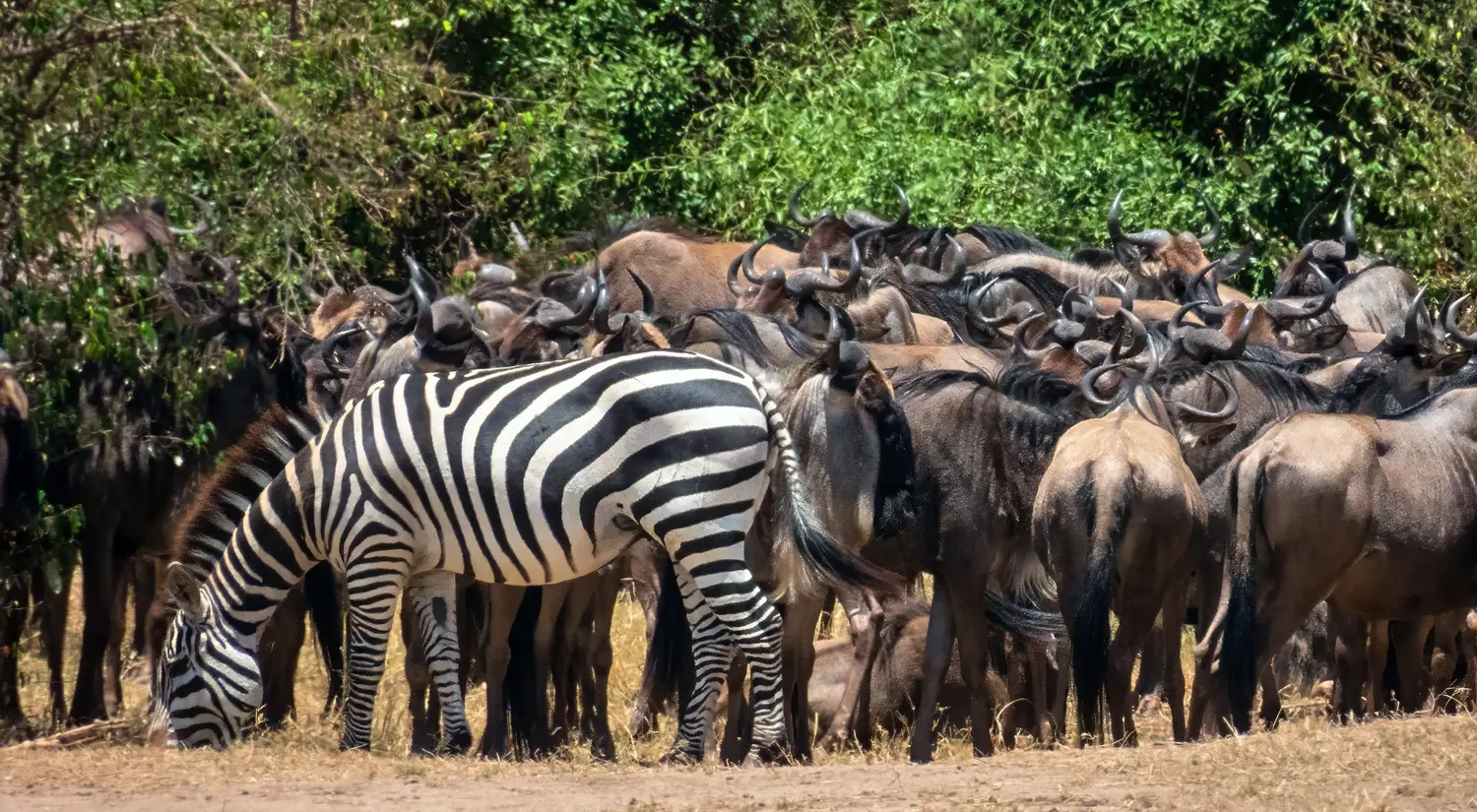
At its simplest, the Great Migration is a search for food and water. The herds move with the seasonal growth of the grass, covering hundreds of kilometres as conditions change across the ecosystem.
But seeing it in person makes it feel much bigger than that explanation. One moment you may be looking across an empty-looking plain, and then you notice a few wildebeest in the distance. As you drive closer, those few animals become hundreds, then thousands, until the horizon seems to move.
Wildebeest are the main force behind the migration, but they do not travel alone. Zebra, Thomson's gazelles and other herbivores move through the same ecosystem, while lions, cheetahs, hyenas, crocodiles and other predators take advantage of the enormous concentration of prey.
Why Do the Wildebeest Migrate?
The migration follows one of nature's simplest rules: go where the food is.
Rainfall determines where fresh grass grows, and the herds respond to those changing conditions. The southern Serengeti becomes especially important during the calving period because the short-grass plains provide nutritious grazing for pregnant and nursing wildebeest. As the season changes, the herds gradually move north and west in search of new pasture and water.
This is why the migration should not be thought of as a train following railway tracks. The animals are constantly responding to their environment. If rain falls early in one area, the herds may move sooner. If fresh grass appears where they already are, they may stay longer.
The Migration at a Glance
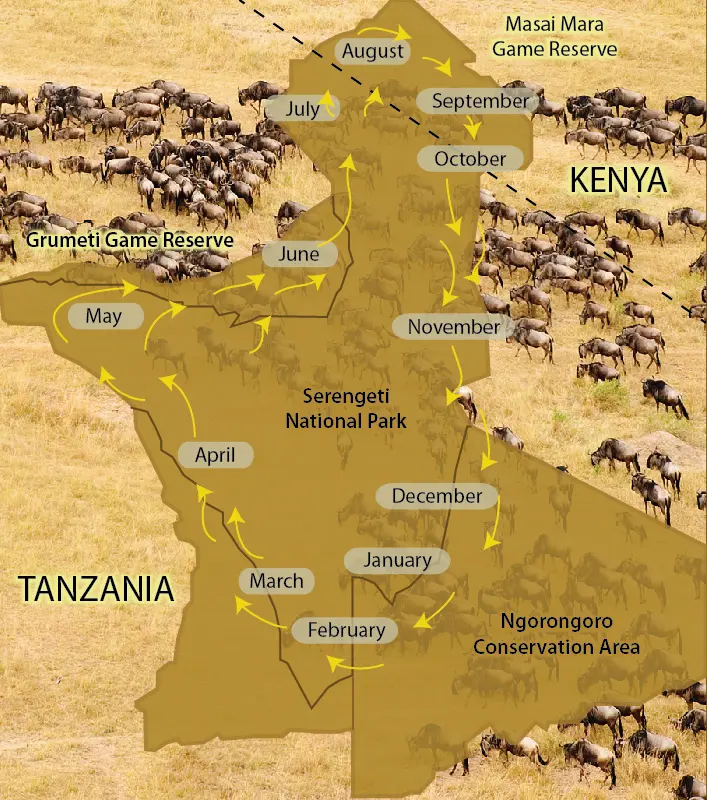
The easiest way to understand the migration is to follow the animals through the year.
- January–March: The herds gather across the southern Serengeti and Ndutu area for calving.
- April–May: The herds begin moving north and west as the southern grasslands change.
- May–June: Large numbers move through the Western Corridor toward the Grumeti River.
- July–September: The migration reaches the Northern Serengeti and Maasai Mara region, where river crossings can occur.
- October–December: The herds gradually turn south again as rains return, eventually reaching the southern plains for the next calving season.
January–March: Calving Season in Ndutu
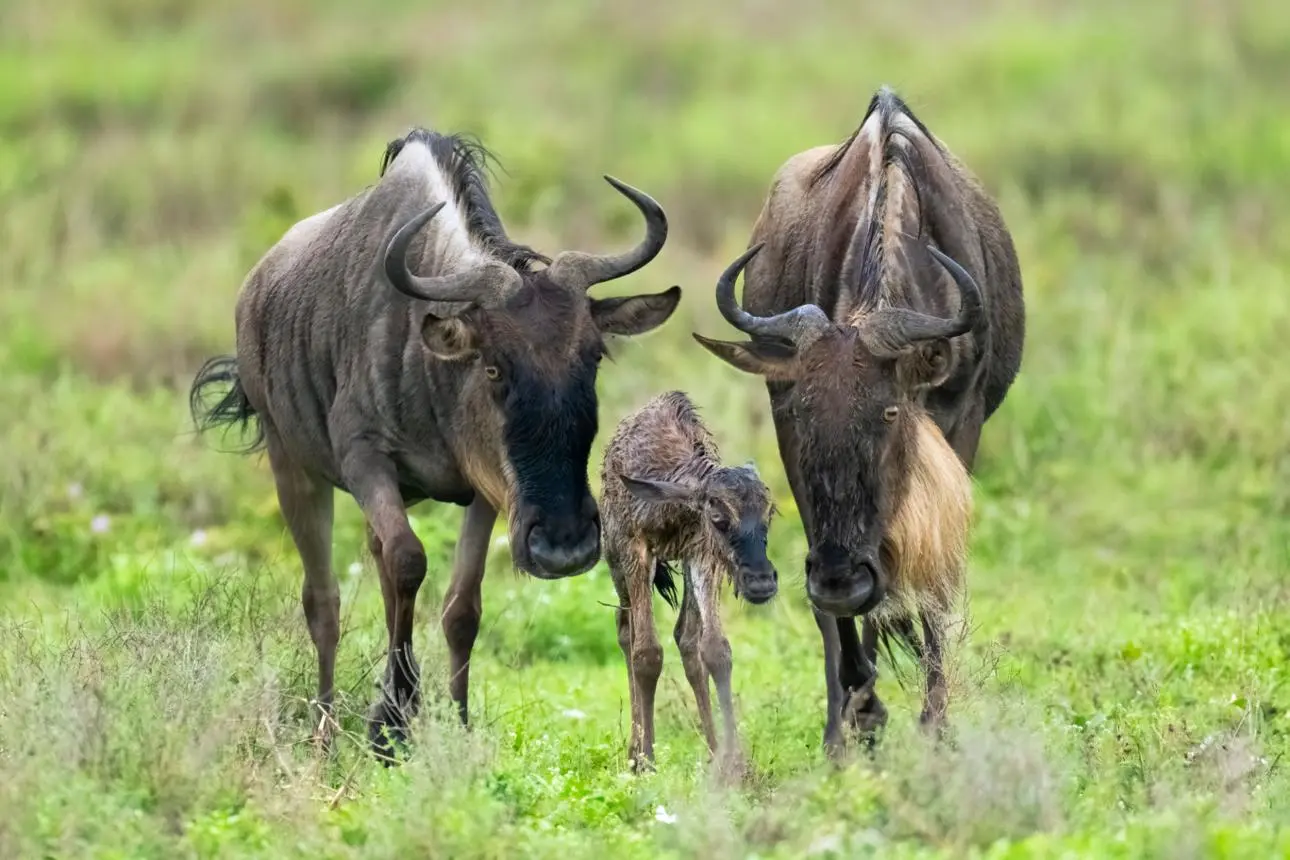
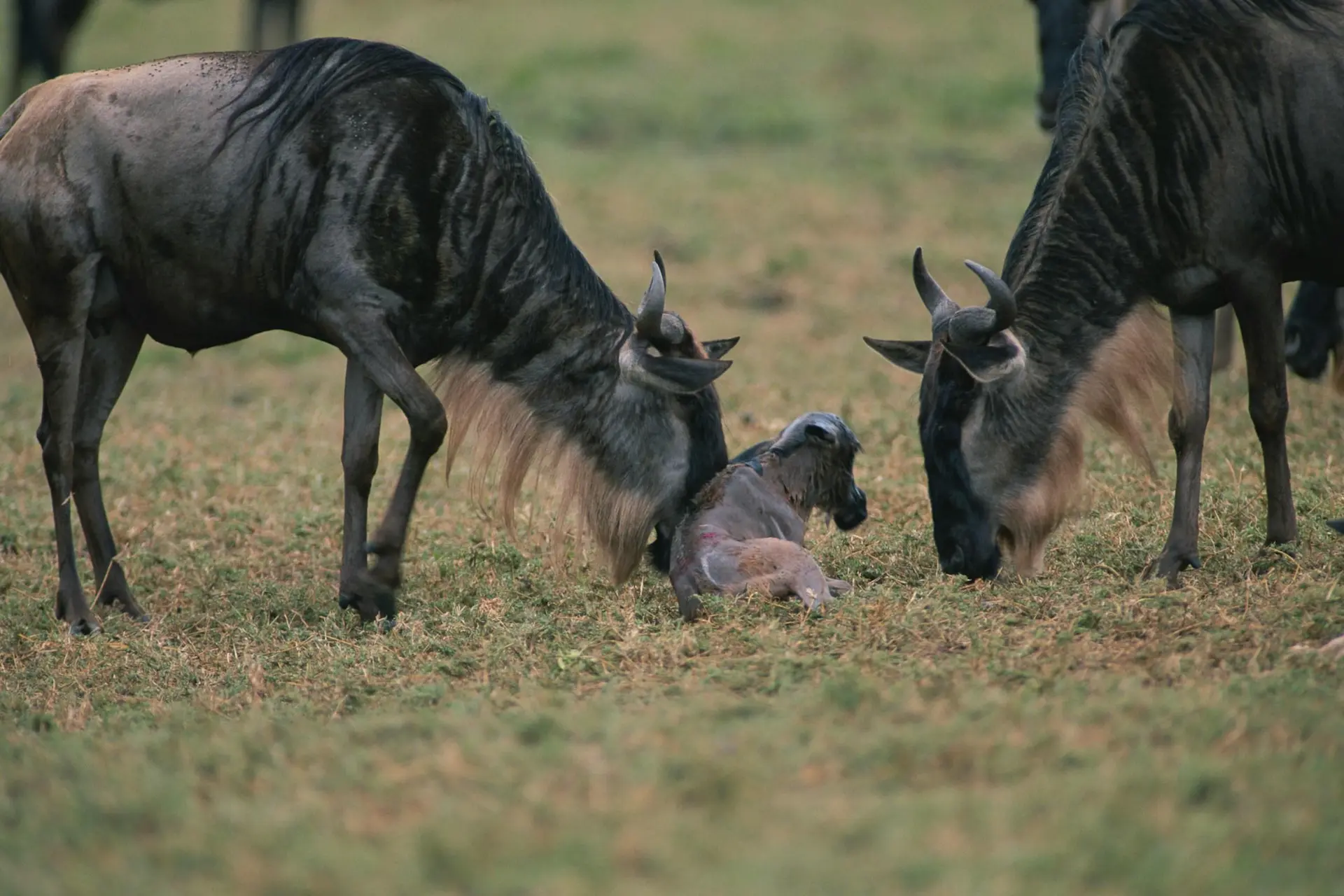
The year begins with one of the most intimate stages of the migration. Wildebeest gather across the southern Serengeti and Ndutu plains, where the green short grass provides important food for mothers and their newborn calves.
For a few weeks, the landscape becomes a huge nursery. Calves are born almost continuously, mothers stay close to their young and predators take advantage of the abundance of vulnerable newborns. Lions, cheetahs, hyenas and jackals can all become part of the story.
This is not necessarily the dramatic migration experience many people imagine when they hear the words "Great Migration." There are no enormous river crossings here. Instead, the drama comes from watching thousands of births, young calves finding their feet and predators working the edges of the herds.
Read more: Ndutu Calving Season Guide
April–June: Moving North Through the Serengeti
After the calving period, the herds begin their long movement north. The landscape gradually changes as the animals leave the southern plains and spread through the central Serengeti.
April and May can be particularly interesting for travelers who want to see the migration without focusing exclusively on river crossings. The herds are moving, feeding and regrouping across a huge area, while the Serengeti is still benefiting from seasonal rains.
As the migration continues, the animals gradually reach the Western Corridor and the Grumeti region. This is where the journey begins to feel very different from the open plains of Ndutu.
May–July: The Grumeti River
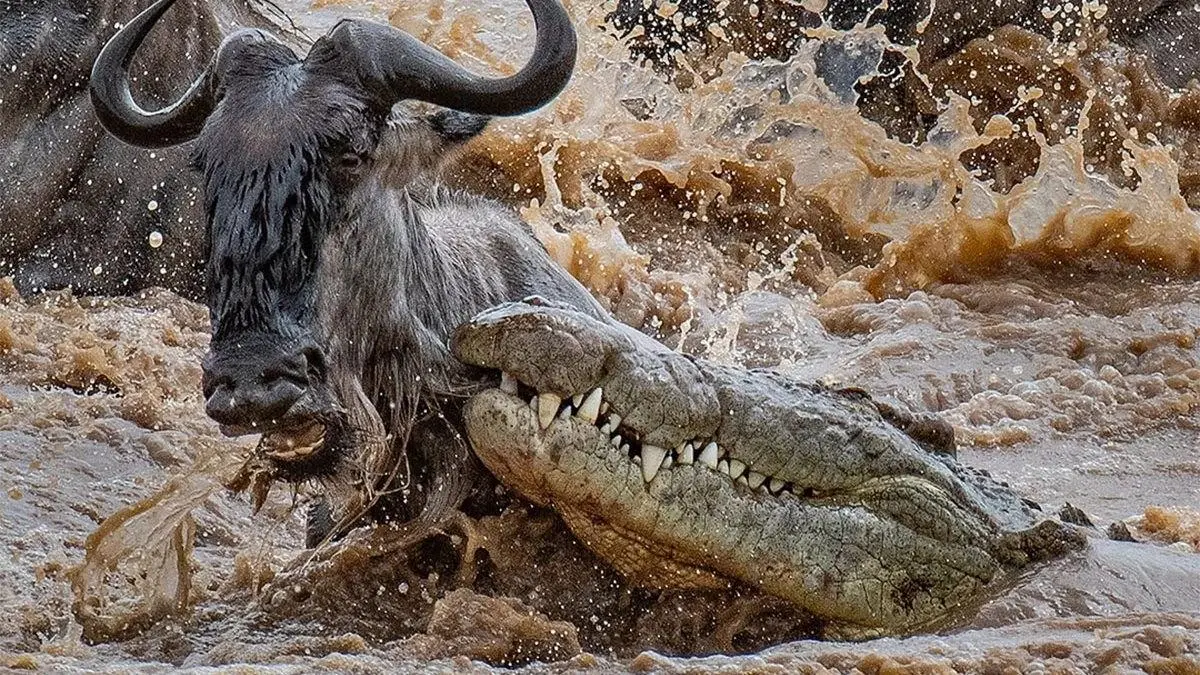
The Grumeti River is one of the important natural obstacles along the migration route. As the herds move through the Western Corridor, large groups can gather around the river before attempting to cross.
The river is also home to large crocodiles, making the crossing potentially dangerous for the animals. But there is no fixed "Grumeti crossing day." Some herds may cross quickly, while others wait or use another part of the river.
For travelers, the Western Corridor offers more than the crossing itself. The scenery becomes greener and more wooded, and the area can provide a different kind of Serengeti experience from the open southern and central plains.
Read more: Grumeti River Crossing Guide
July–September: Northern Serengeti & Mara River
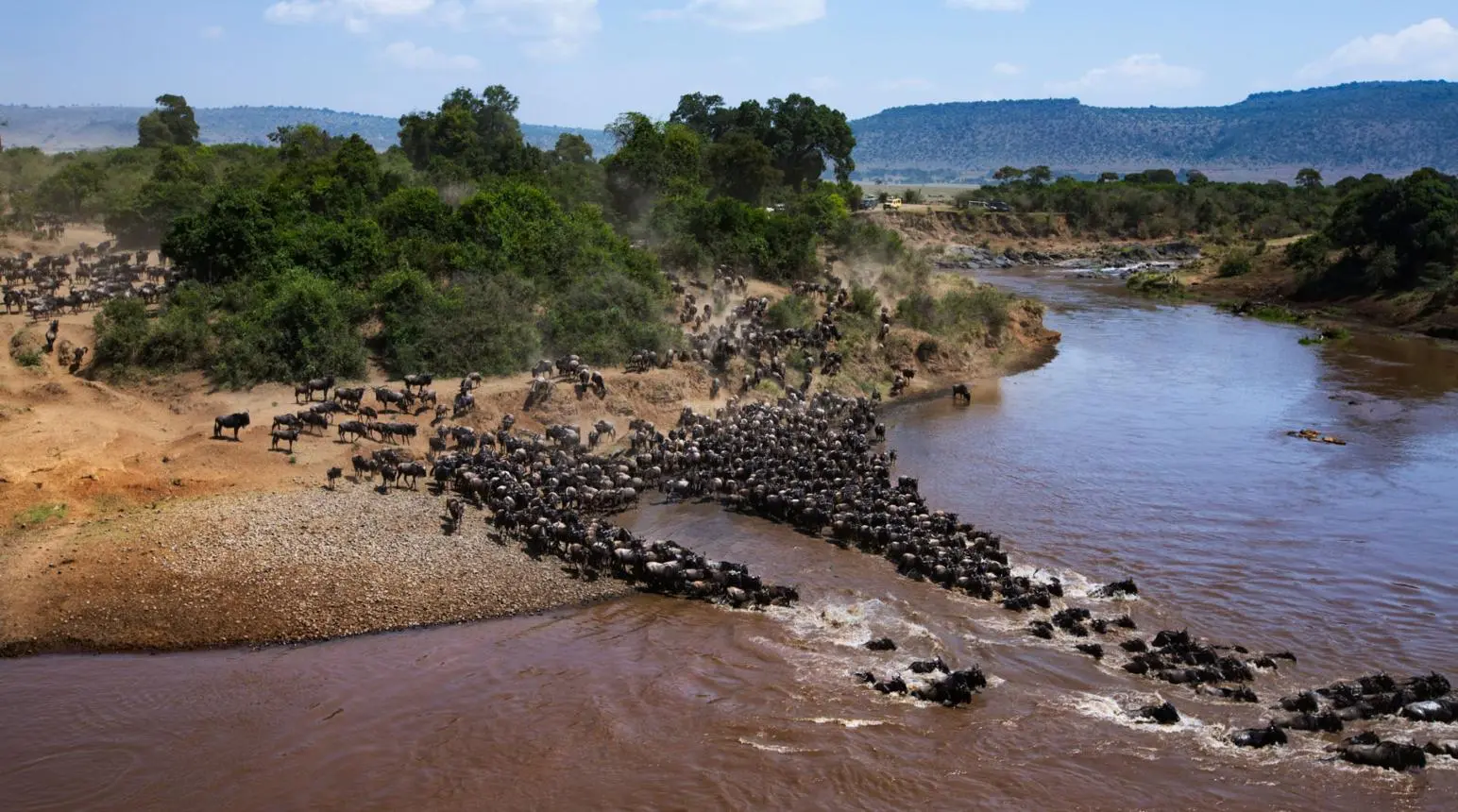
By the middle and later part of the year, large numbers of migrating animals reach the Northern Serengeti and the wider Serengeti-Mara ecosystem.
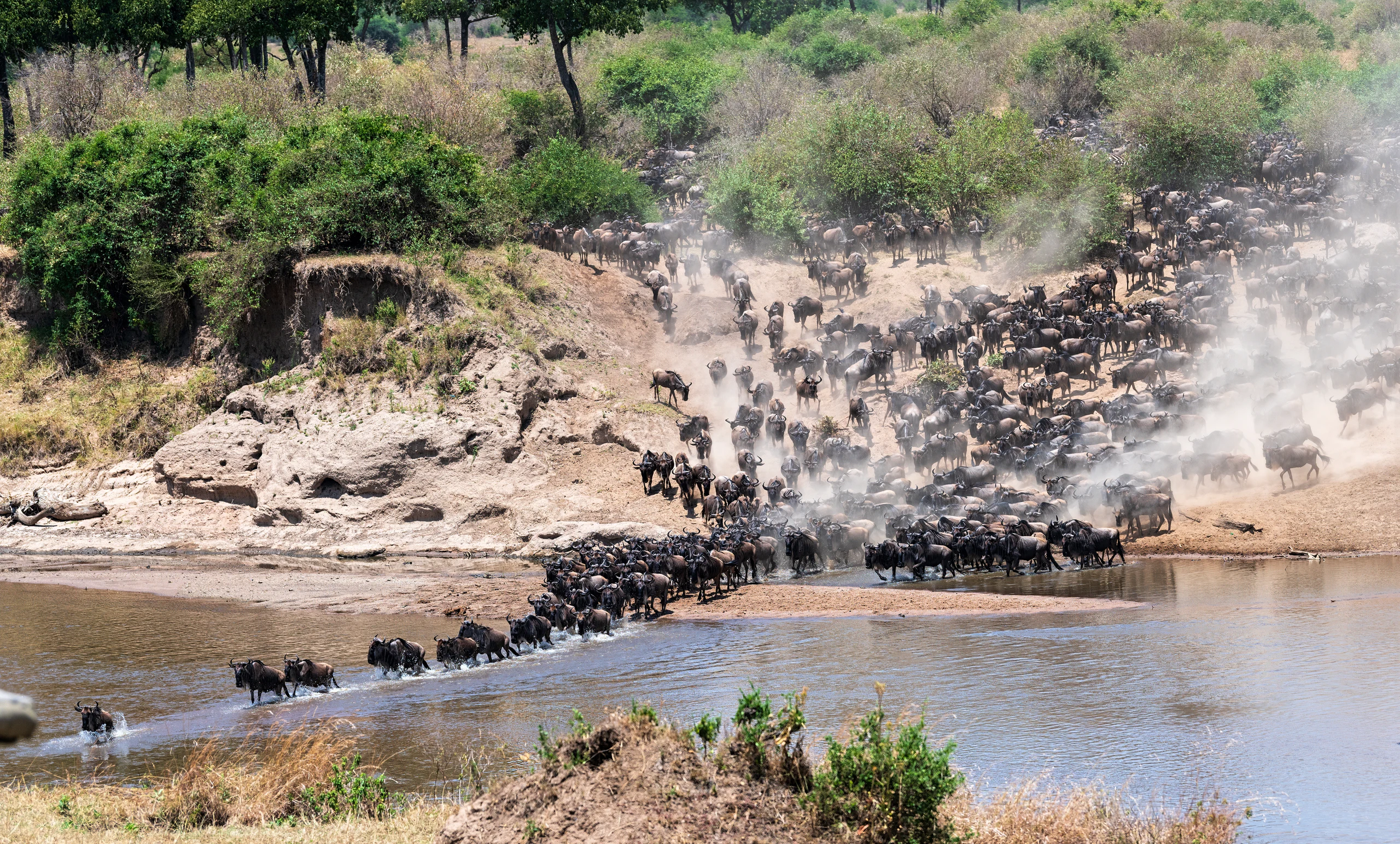
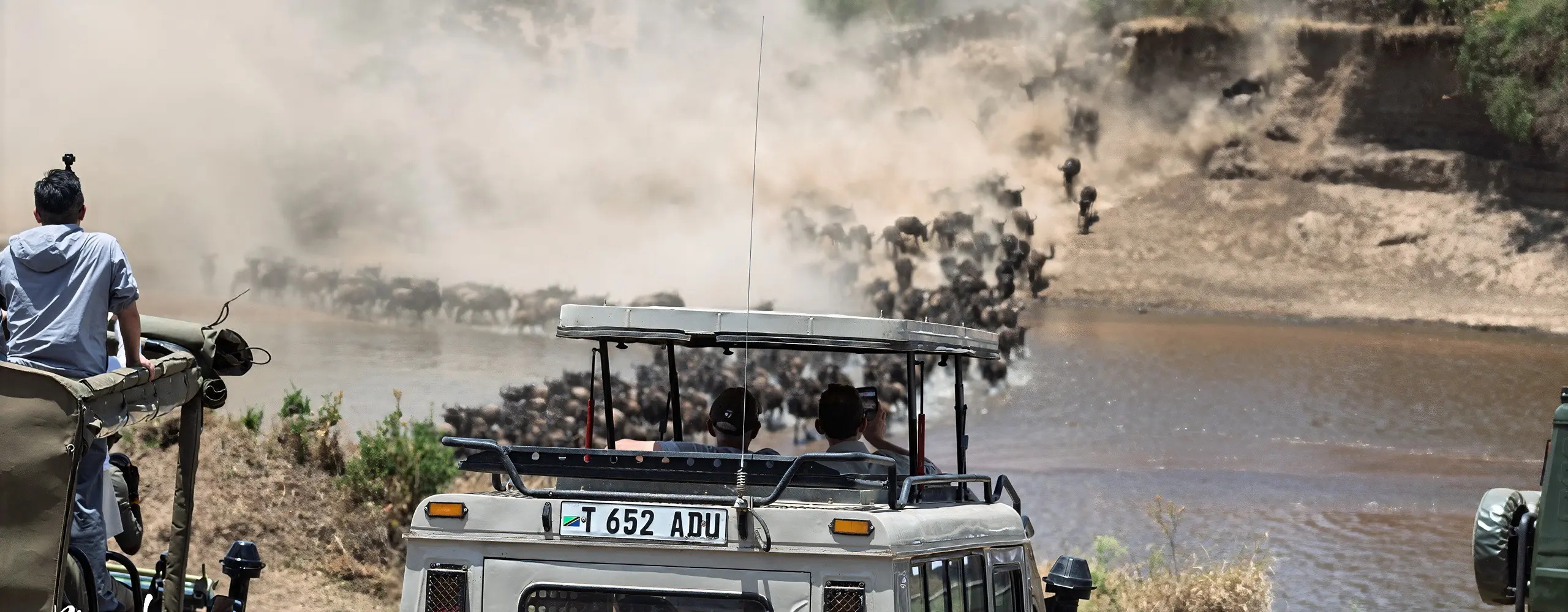
This is when the famous Mara River crossings can occur. Herds may gather along the riverbank for hours before suddenly moving into the water. A crossing can be over almost as quickly as it begins, while another group may wait until another day.
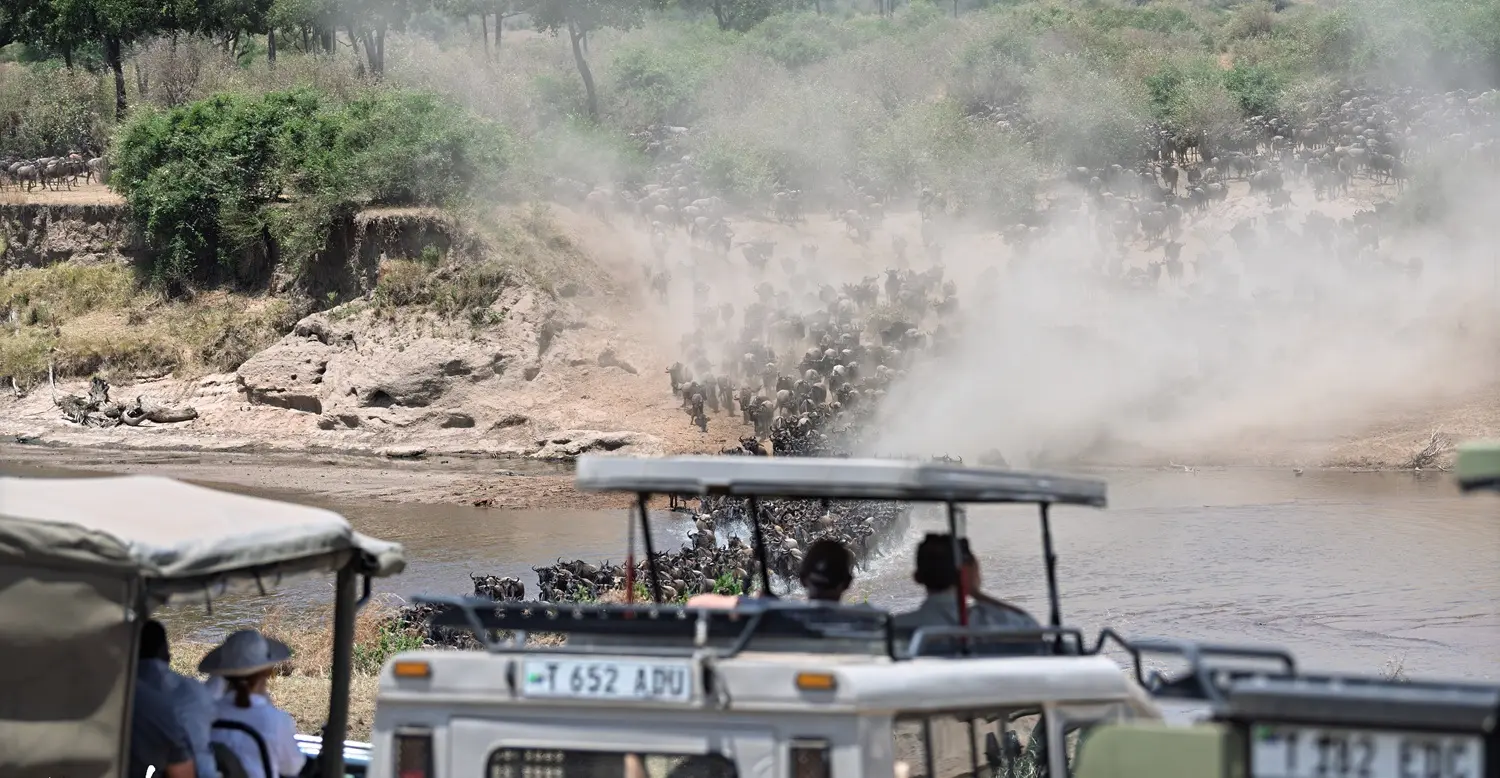
The Mara crossings are spectacular precisely because they are uncertain. Even during the peak migration months, nobody can tell an individual herd when to cross. Serengeti National Park has designated viewing areas and specific rules for river-crossing encounters, including requirements for vehicles to remain stationary in designated areas.
October–December: The Journey South
After spending time in the northern part of the ecosystem, the herds gradually begin moving south again. The return journey is less commonly discussed than the Mara crossings, but it is an important part of the migration cycle.
As seasonal rains return to parts of Tanzania, fresh grass begins to appear and the animals respond. The herds move through the eastern and central Serengeti before eventually reaching the southern plains again.
The Mara crossings are spectacular precisely because they are uncertain. Even during the peak migration months, nobody can tell an individual herd when to cross. Serengeti National Park has designated viewing areas and specific rules for river-crossing encounters, including requirements for vehicles to remain stationary in designated areas.
By the end of the year, the cycle is preparing to begin again. The animals that were crossing rivers months earlier are once again gathering in the south, ready for another calving season.
Where to Go During Each Stage
The most important decision is not simply choosing a month. It is choosing the right part of the Serengeti for that month.
For calving season, the southern Serengeti and Ndutu area make sense because this is where the herds gather around the short-grass plains. During the northward movement, the central Serengeti and Western Corridor become increasingly important.
For the later migration, Northern Serengeti areas such as Kogatende put you closer to the Mara River and the northern herds. This is why a migration safari is often better planned around regions and nights rather than around a single promised sighting.
Wildlife You Can See Along the Migration
The wildebeest may be the stars of the migration, but they are far from the only animals worth watching.
Zebra travel alongside the herds, while Thomson's gazelles and other antelope use the changing grasslands as the migration moves. The concentration of prey also attracts some of Africa's most famous predators.
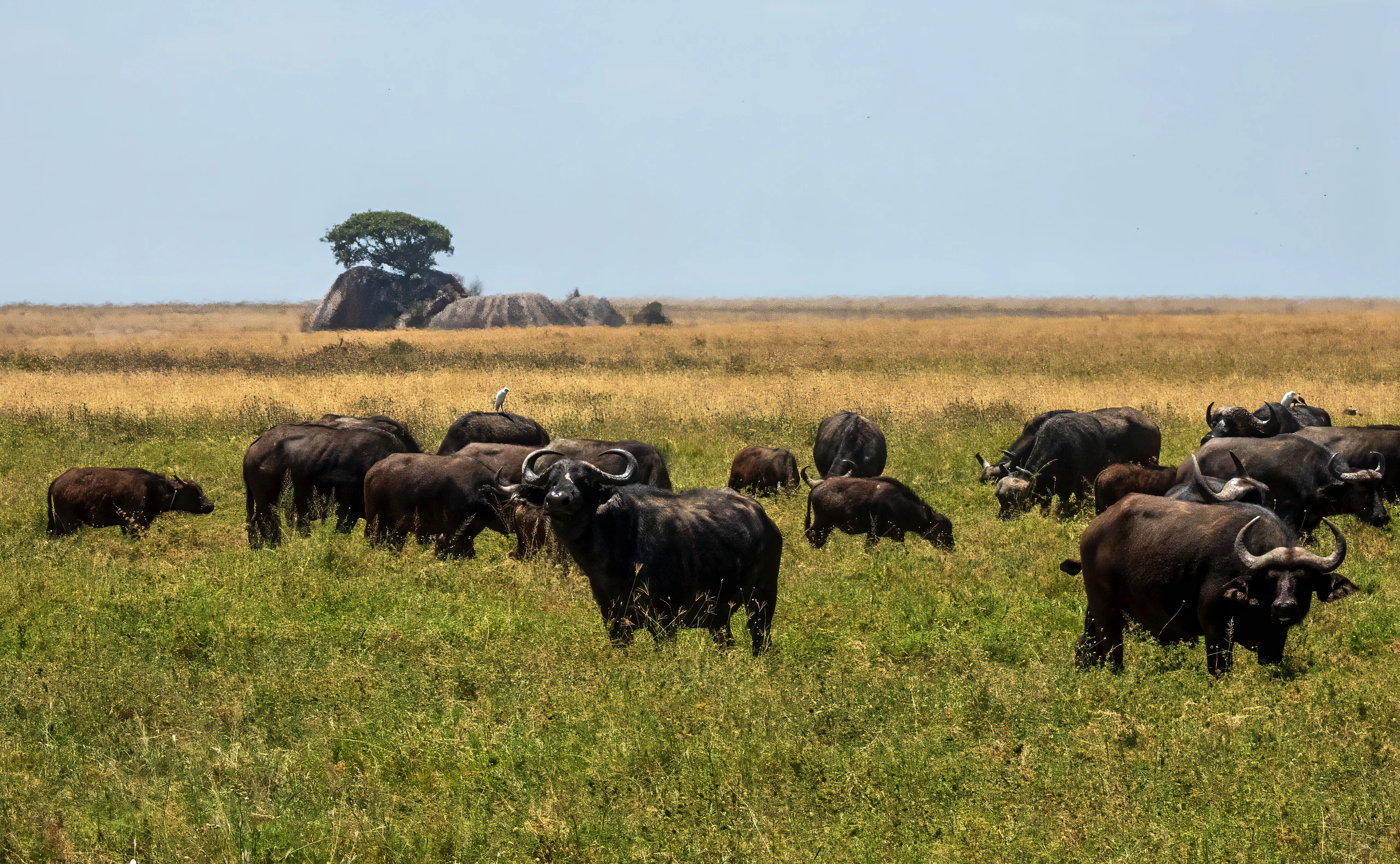
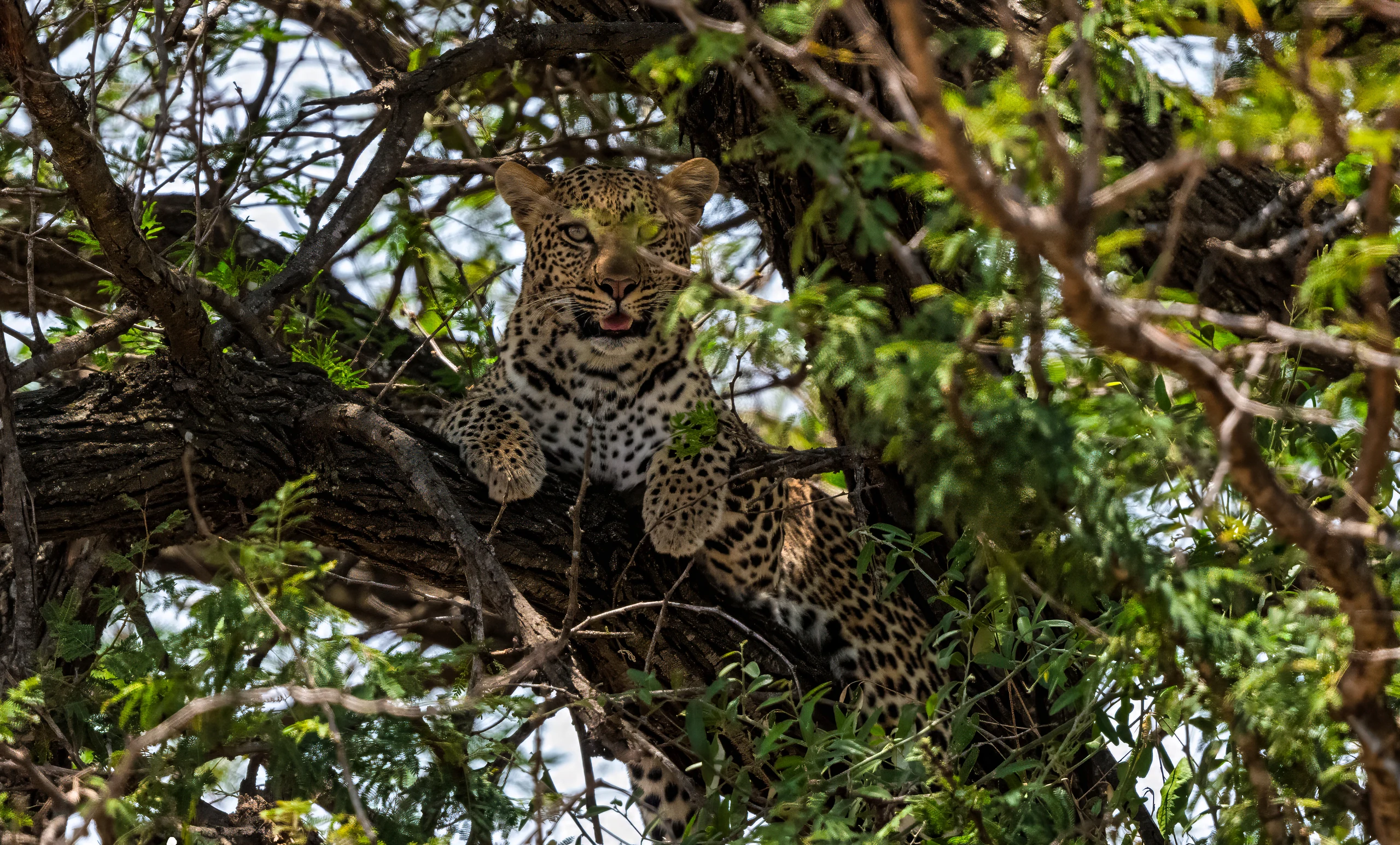
Depending on the region and season, you may encounter lions, cheetahs, leopards, spotted hyenas, crocodiles and jackals. The surrounding Serengeti also supports elephants, giraffes, buffalo, hippos and an extraordinary variety of birds. The migration therefore works best as part of a wider safari experience rather than as a hunt for one particular event.
Predators and the Migrationn
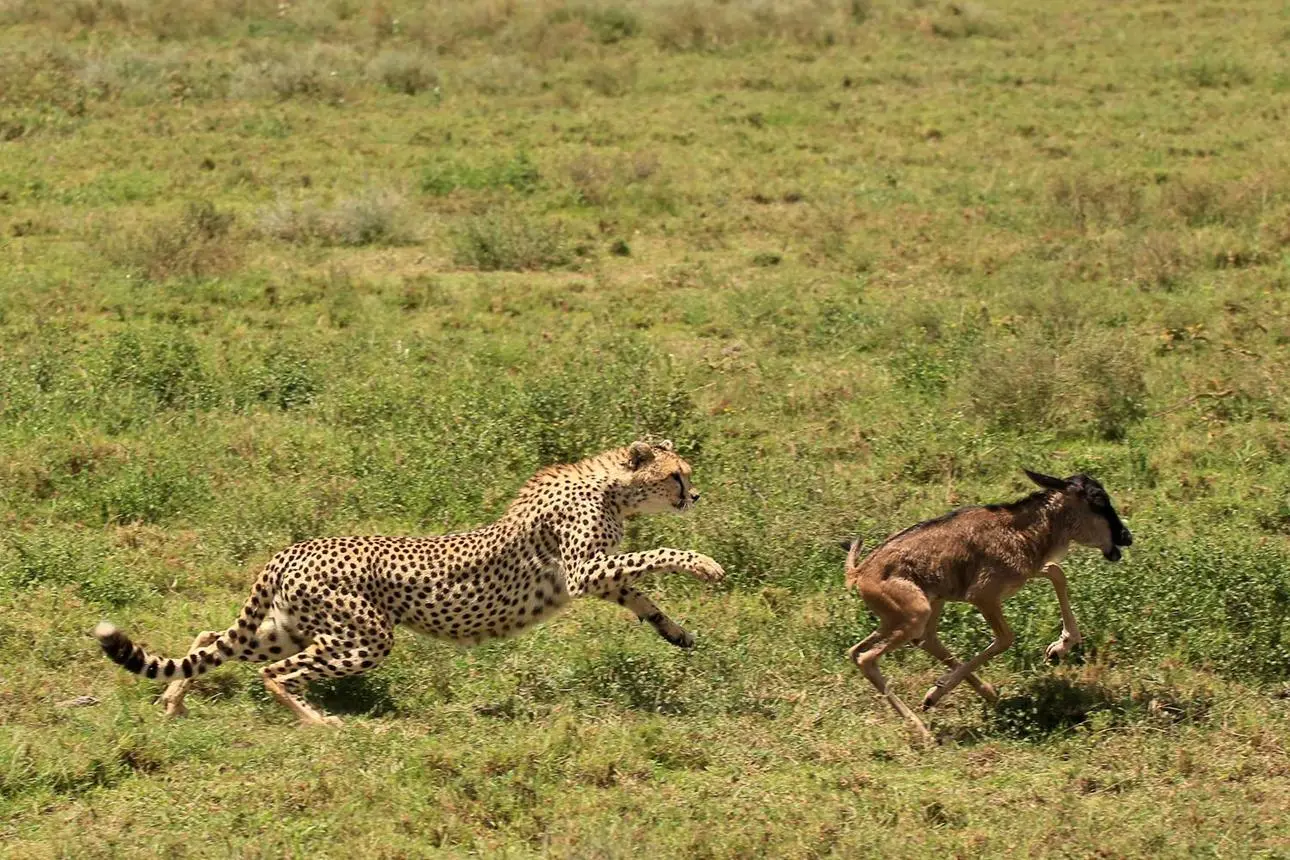
Predators follow the migration because the herds provide an enormous and predictable source of food.
During calving season, newborn animals create opportunities for cheetahs, lions and hyenas. Later, as the herds spread across the Serengeti, predators continue to follow their movements and take advantage of animals that are young, injured or separated from the group.
At the rivers, the story changes again. Crocodiles wait in the water while lions and other predators may patrol the surrounding banks.
For visitors, this means that a migration game drive does not necessarily have to involve thousands of animals moving together. Sometimes the most memorable sighting is a predator watching a small group of wildebeest from the grass.
River Crossings: What Really Happens
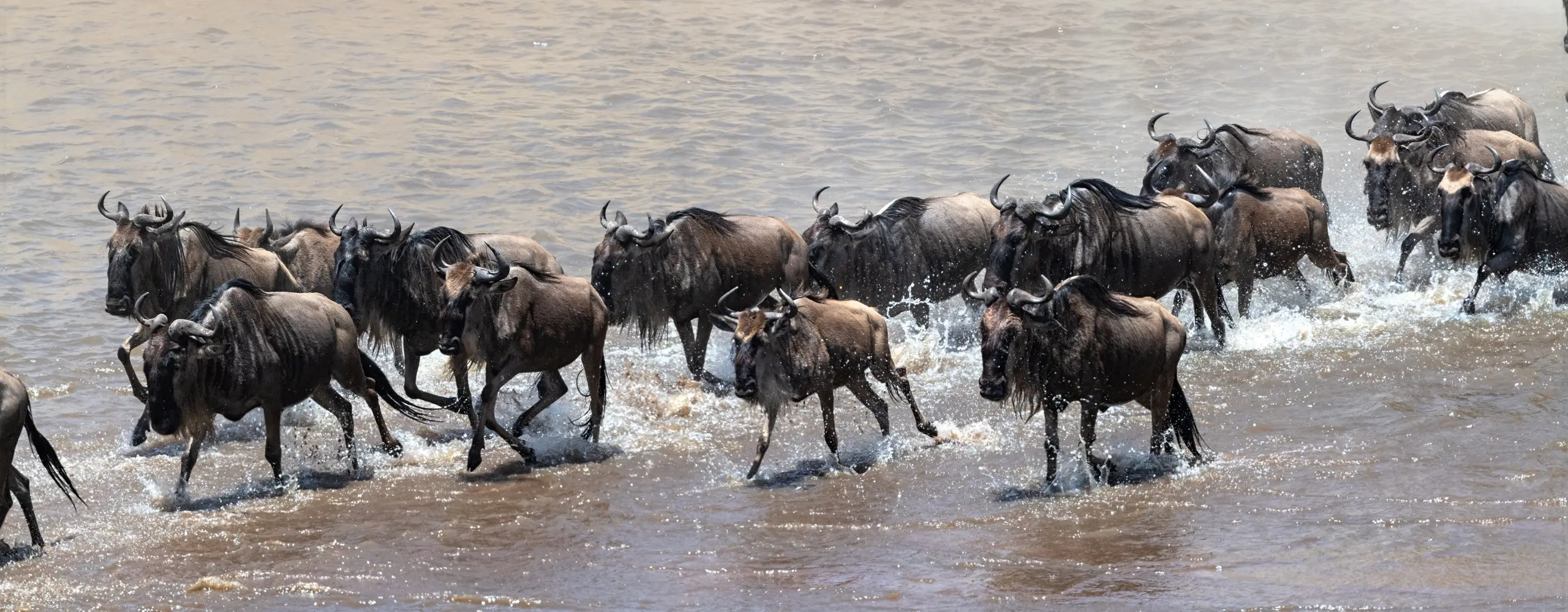
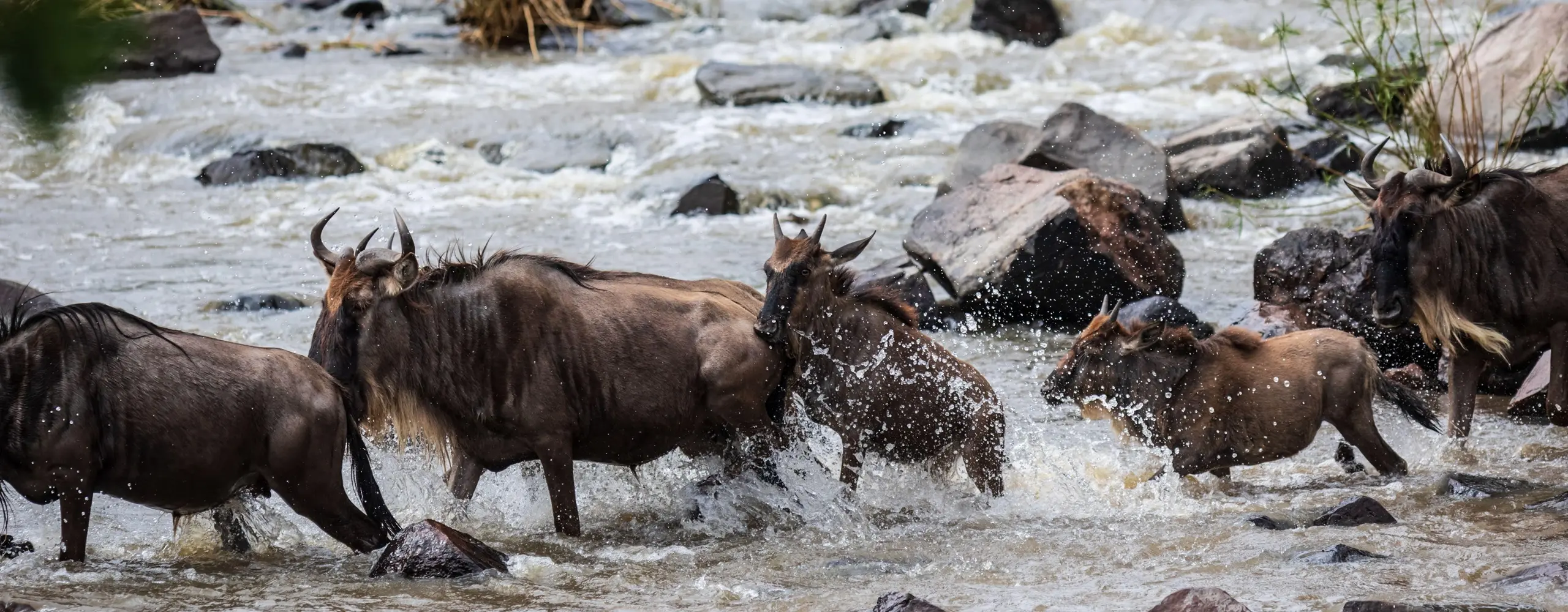
River crossings are probably the most famous images associated with the Great Migration, but they represent only a small part of the animals' year. A herd may gather beside the river, hesitate, move along the bank and then suddenly commit to the water. Once the first animals enter, hundreds more can follow in a matter of moments.
The crossing can be difficult and dangerous, with steep banks, deep water, currents, crocodiles and thousands of animals moving together. But the most important thing for visitors to understand is that there is no reliable schedule.
You can spend hours watching a herd beside the river and never see it cross.
Why Migration Timing Is Unpredictable
Rain is the biggest reason migration timing cannot be reduced to a simple calendar.
The animals are following fresh grazing, so a useful rainfall event can change their plans. A herd that was expected in one region may stay farther south because new grass has appeared. Another group may move north sooner than expected.
This is why experienced guides pay attention to what is happening on the ground rather than simply following a printed migration calendar. Even recent reports can become outdated quickly when the weather changes.
Best Time to See the Great Migration
There is no single best month for everyone because different parts of the migration offer completely different experiences.
If you want to experience the migration as a whole rather than chase one particular event, a longer itinerary that follows more than one region can give you a much broader understanding of the cycle.
- February is particularly interesting if your priority is newborn calves and predator activity.
- May and June can suit travelers interested in the Western Corridor and Grumeti region.
- July through September is the period most closely associated with the Northern Serengeti and Mara River crossings.
How Many Days Do You Need?
A short safari can still provide an excellent introduction, particularly if your dates and location line up with the herds. But if the migration is the main reason for your trip, spending several nights in the relevant region is much more sensible than arriving for a single day and expecting the animals to be exactly where you want them.
For a more immersive migration trip, you can also combine different Serengeti regions rather than staying in one place for the entire safari.
Where to Stay
Your camp location can have a major effect on your migration experience.
In calving season, staying around Ndutu keeps you close to the southern herds. During the Grumeti period, a camp in or near the Western Corridor reduces the need for long drives. Later in the year, Northern Serengeti camps around Kogatende and the Mara region provide access to the northern migration.
Mobile camps can be particularly useful because they can follow the seasonal movement, while permanent lodges offer a different style of accommodation and year-round base.
The important thing is to choose accommodation based on where the migration is likely to be, not simply on the reputation of the camp.
Common Great Migration Mistakes
Planning around one exact date. The migration does not follow a calendar with guaranteed arrival dates.
Staying too far from the action. A cheaper camp can become less attractive if reaching the migration requires hours of driving every day.
Focusing only on river crossings. The migration lasts all year, and calving, herd movement and predator activity can be just as interesting.
Trying to cover too much. Constantly changing camps can leave you spending more time on the road than watching wildlife.
Expecting every day to be dramatic. Some of the best migration experiences come after a long, quiet wait.
Choosing a safari only by the month. The specific region and camp location can matter just as much as the date.
How to Plan Your Great Migration Safari
Start with the experience you actually want.
If newborn calves and predators are your priority, build around the southern Serengeti and Ndutu. If the Grumeti River interests you, focus on the Western Corridor. If your dream is to watch wildebeest gather beside the Mara River, plan for the Northern Serengeti during the later part of the migration season.
Then give the itinerary enough flexibility to account for nature. A good migration safari is not about guaranteeing a particular photograph. It is about putting yourself in the right landscape, at the right general time, with enough days for the animals to do what they naturally do.
Month-By-Month Plan
Tap a month to see wildlife focus, crowd levels, and practical tips — then plan those dates.
Southern plains build-up.
Herds assemble on short grass as rains pattern grazing. Warm days and rising migration energy without full calving chaos yet.
Large wildebeest and zebra gatherings forming; predators shadow the edges; strong general plains game.
Moderate in southern systems; better availability than February peak camps.
- Excellent if you want herds without peak calving rates.
- Base toward southern short-grass systems.
- Watch rain timing — it steers precise locations week to week.