1. How Much Does a Tanzania Safari Cost?
The simplest way to estimate the cost of a Tanzania safari is to start with the level of accommodation and service you prefer.
Budget Safari
A budget or camping safari may cost approximately $200–$350 per person per day.
These safaris commonly use public campsites, basic tented camps, simple lodges or budget hotels. They can provide an affordable way to experience Tanzania's major wildlife areas while keeping accommodation costs under control.
Budget does not necessarily mean that the wildlife experience is poor. Much of your safari experience takes place outside your accommodation, in the parks and conservation areas.
However, budget trips may involve simpler rooms, shared vehicles, fewer included services and less flexibility.
Mid-Range Safari
A mid-range safari may cost approximately $350–$600 per person per day.
This level can include comfortable lodges, permanent tented camps, private en-suite rooms, good locations and full-board meals.
For many travelers, this category offers a balance between comfort and overall safari cost.
Luxury Safari
Luxury safaris may cost approximately $700–$1,500+ per person per day.
Luxury accommodation can include premium tented suites, excellent locations, personalized service, high-quality meals and additional facilities such as swimming pools, laundry or spa services. Private vehicles and more customized itineraries may also be part of the experience.
Some premium camps can cost considerably more than $1,500 per person per day.
Why These Are Only Planning Ranges
It is important not to treat these numbers as fixed Tanzania safari prices.
Safari rates can change because accommodation prices, park fees, transportation costs and availability can change. A safari during a busy travel period may cost considerably more than the same route during a quieter period.
The exact route also matters.
A safari visiting Tarangire, Ngorongoro and Serengeti will have different costs from a shorter itinerary focused on one or two parks. Adding domestic flights, luxury camps or private experiences can also increase the total.
For this reason, use daily price ranges as a first planning tool, then request a quote based on your actual travel dates and preferred itinerary.
2. What Determines the Price of a Tanzania Safari?
Several different costs come together to create the final safari price.
The biggest factors are usually:
- Accommodation
- Park and conservation fees
- Safari vehicle and guide
- Travel season
- Number of travelers
- Length of the safari
- Route and destinations
- Road travel versus domestic flights
- Optional experiences
Understanding these factors makes it much easier to compare safari quotes.
Accommodation
Accommodation is one of the largest differences between safari prices.
A public campsite and a luxury tented suite provide very different experiences and have very different operating costs.
Park and Conservation Fees
National parks and conservation areas charge fees that form part of the safari cost. These charges vary depending on the destination and can change over time.
Serengeti and Ngorongoro, for example, have important conservation and park-related costs that need to be considered when planning an itinerary.
Vehicle and Guide
A safari vehicle is not simply transportation.
The cost can include the 4x4 vehicle, driver-guide, fuel, maintenance, insurance and vehicle-related park charges.
Whether that vehicle is shared between several travelers or reserved privately for your group can make a significant difference to the price per person.
Season
The same accommodation and route can cost differently at different times of year.
Peak periods usually have stronger demand, while quieter periods can offer lower accommodation rates.
Group Size
A private safari vehicle and guide can be shared between the people in your group.
For example, the cost is divided differently between two travelers than between four or six travelers. As more people share the vehicle and guide costs, the price per person can decrease.
Safari Length
More days normally mean a higher total cost, but the daily cost does not always increase proportionally.
A longer itinerary can sometimes make the trip more comfortable because you have more time to explore and less pressure to move between destinations every day.
3. What Is Usually Included in a Tanzania Safari?
One of the most important things to understand when comparing safari prices is what is actually included.
Two safari companies can advertise different prices for similar-looking itineraries, but the cheaper quote may leave out important costs.
A typical Tanzania safari package may include:
- 4x4 safari vehicle
- Professional driver-guide
- Accommodation
- Breakfast
- Lunch
- Dinner
- Drinking water
- National park entry or conservation fees
- Ngorongoro-related fees where applicable
- Game drives
- Airport or hotel transfers, depending on the package
These inclusions can vary between operators and safari levels.
Always Check the Inclusions
Before comparing two prices, ask exactly what each quote includes.
For example, one quote might include park fees while another lists them separately.
One might include airport transfers while another charges for them separately.
One might include domestic flights while another assumes that you will travel by road.
The headline price therefore does not always tell you which safari is actually more expensive.
Questions to Ask
Before booking, check:
Accommodation
- Which lodges or camps are included?
- Are meals included?
- Are the rooms private?
- Is the accommodation inside or outside the park?
Vehicle
- Is the safari private or shared?
- How many people will be in the vehicle?
- Is it a dedicated 4x4 safari vehicle?
Fees
- Are park fees included?
- Are conservation fees included?
- Are Ngorongoro-related charges included?
Transportation
- Are airport transfers included?
- Is fuel included?
- Are domestic flights included?
Extras
- Are drinks included?
- Are activities included?
- Are tips included?
- Is laundry included?
5. How Much Does a Tanzania Safari Cost by Length?
The number of safari days is another important part of your budget.
However, there is no universal price for a three-day, five-day or seven-day safari.
The route, accommodation and season can change the price considerably.
The following ranges from the planning guide are useful as broad starting points:
3-Day Safari
A three-day safari is useful for travelers with limited time.
A short Northern Circuit itinerary may focus on destinations such as:
Tarangire → Ngorongoro → Lake Manyara
A three-day trip is relatively short for reaching and exploring the Serengeti by road, so the route needs to be planned carefully.
5-Day Safari
Five days provides more flexibility.
A possible Northern Circuit route could include:
Tarangire → Ngorongoro → Serengeti
The exact number of nights in each destination depends on your priorities and travel dates.
7-Day Safari
Seven days allows more time in the major wildlife areas.
For example, you may have time for:
- Tarangire
- Ngorongoro
- Central Serengeti
- Northern Serengeti
- Longer game drives
The additional time can make the journey feel less rushed.
10 Days or More
A longer safari allows you to slow down and spend more nights in important wildlife areas.
It can also make it easier to combine several regions or add a Zanzibar beach stay afterward.
The important point is that more days do not automatically mean a better safari.
A well-planned itinerary with enough time in each destination can be more useful than a long itinerary that spends too much time moving between camps.
| Safari Length | Approximate Planning Range |
|---|---|
| 3 days | $850–$2,000+ per person |
| 5 days | $1,200–$4,000+ per person |
| 7 days | $1,500–$6,000+ per person |
| 10 days | $2,000–$10,000+ per person |
6. How Does the Season Affect Safari Prices?
Travel season can have a major effect on safari costs.
Tanzania can be visited throughout much of the year, but demand changes according to weather, wildlife patterns, migration activity and visitor numbers.
Peak Season
The guide identifies June to October as a generally busy period.
This period is popular because of:
- Generally dry conditions
- Strong wildlife viewing
- Great Migration activity
- High visitor demand
Because demand is higher, accommodation in popular areas can also become more expensive.
However, not every lodge or camp follows exactly the same pricing pattern.
Shoulder Season
Shoulder periods can provide a balance between price, weather and visitor numbers.
For travelers who are flexible with dates, these periods can sometimes provide more accommodation choices without the highest peak-season rates.
Green / Low Season
The guide identifies April and May as generally lower-season months.
Potential advantages include:
- Lower accommodation prices
- Fewer tourists
- Green landscapes
- Strong photography opportunities
The main consideration is the long rains.
Road conditions can be affected, and some seasonal camps may close during this period.
Prices Can Change
Seasonal advice should always be treated as a planning guide rather than a guarantee.
Actual accommodation prices depend on the specific property, availability and travel dates.
This is particularly important when planning far in advance.
7. Great Migration and Tanzania Safari Costs
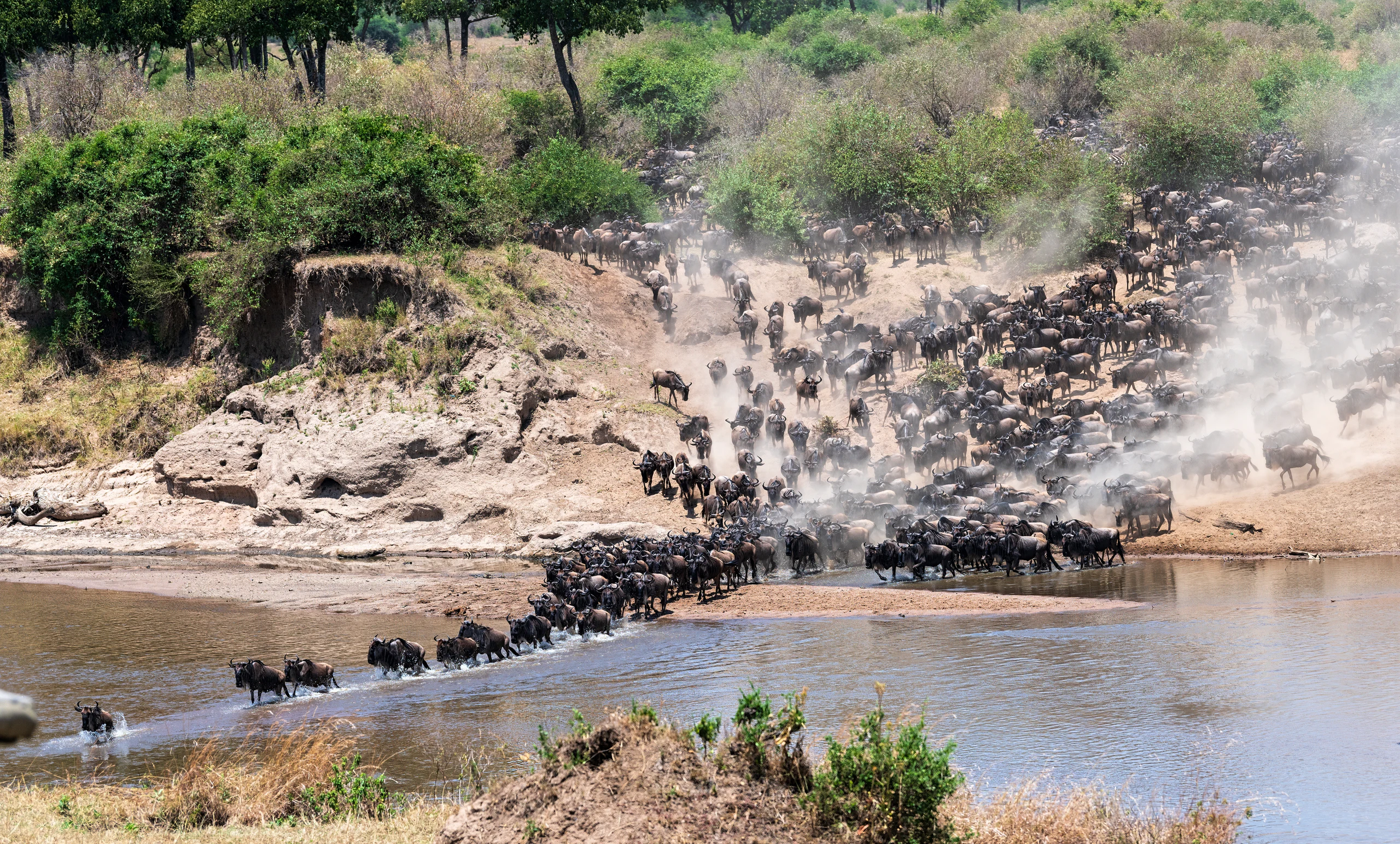
The Great Migration is one of the reasons travelers choose specific months for a Tanzania safari.
However, the migration does not remain in one place throughout the year.
The planning guide gives this broad seasonal pattern:
- January–March: Southern Serengeti and Ndutu
- April–May: Movement northward
- June–July: Western and Central Serengeti
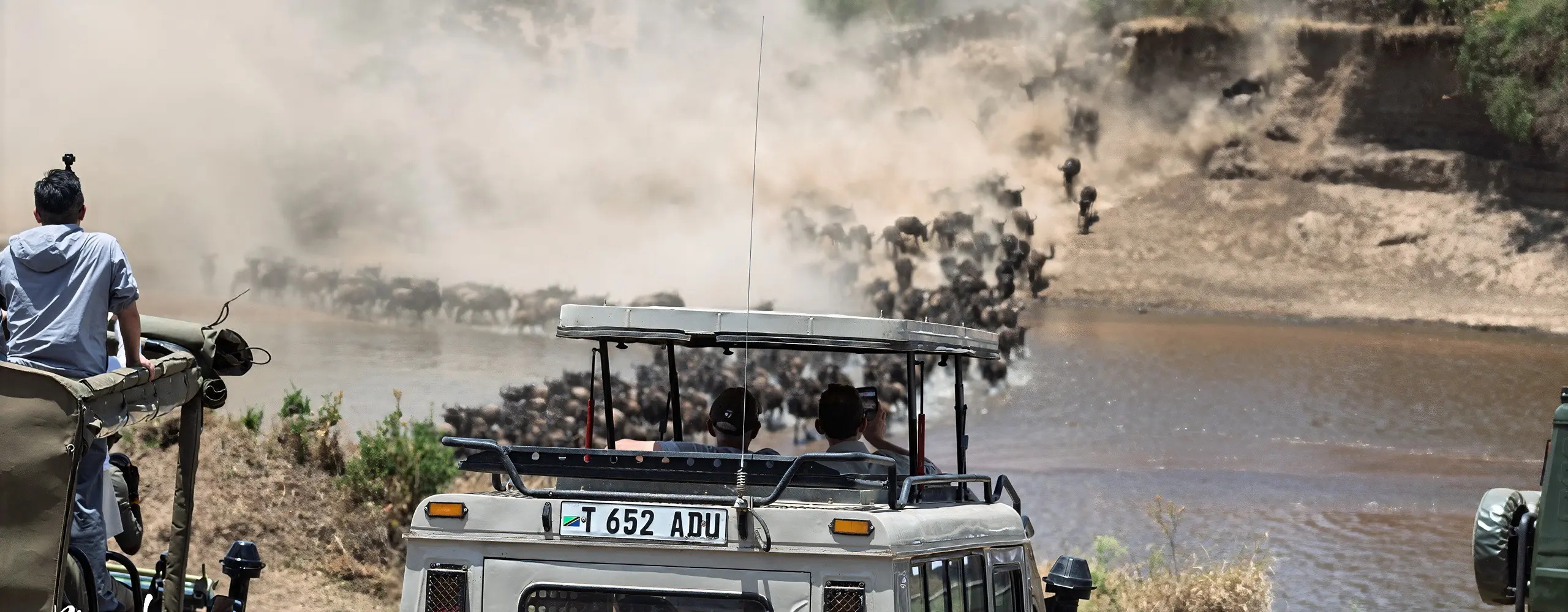
- July–October: Northern Serengeti and Mara River region
- November–December: Movement back toward southern Serengeti
These are broad patterns rather than guaranteed dates or locations.
Why Migration Timing Can Affect Cost
When demand is particularly high in popular migration areas, accommodation prices can increase.
This means choosing a migration safari is not simply about choosing a month.
You also need to think about which part of the Serengeti you want to visit.
For example, a traveler interested in northern Serengeti and the Mara River region may choose different dates from someone primarily interested in the southern calving season.
The most important point is that wildlife movements are natural events.
No operator can guarantee a specific sighting or a specific migration event on a particular day.
Choosing Dates
If your priority is migration, tell your safari planner exactly what you want to see.
If your priority is lower cost, you may have more flexibility.
If your priority is a particular region, your dates should be planned around that region.
This is why a customized itinerary can be more useful than simply choosing a generic "migration safari."
8. Extra Costs to Budget For
The safari package is not necessarily the same as your total Tanzania holiday budget.
Several additional expenses may sit outside the main safari price.
International Flights
International airfare is usually separate from the safari package.
The price depends heavily on your departure city, airline, travel dates and booking time.
Visa
Visa requirements and fees depend on nationality.
Check the current requirements that apply to your passport before traveling.
Travel Insurance
Travel insurance is another important part of your overall trip budget.
The cost depends on the traveler, trip length and coverage selected.
Tips
Tipping safari guides and camp staff is customary.
The exact amount depends on the type of safari and the service received. Your safari operator can provide current tipping guidance.
Drinks
Many safari packages include drinking water, but alcoholic drinks, soft drinks or premium beverages may cost extra.
Always check the accommodation's drink policy before assuming everything is included.
Laundry
Laundry may be included at some luxury camps but charged separately at others.
Optional Experiences
Optional activities can include:
- Hot-air balloon safari
- Walking safari
- Cultural experiences
- Night drives where permitted
- Private vehicle upgrades
9. Road Safaris, Flights and Other Experiences
Transportation is another major part of the safari budget.
Most Tanzania road safaris use specially equipped 4x4 vehicles with features such as pop-up roofs, large windows, charging facilities and wildlife-viewing configurations.
Road Travel
Road travel is often useful for Northern Circuit itineraries because destinations such as Tarangire, Ngorongoro and Serengeti can be connected as part of a broader route.
A road safari also becomes part of the experience.
You can travel through changing landscapes rather than simply moving between airports.
However, long road transfers can take time.
Domestic Flights
Domestic flights can reduce long travel days.
Flights may be useful for:
- Arusha to Serengeti
- Travel between Serengeti regions
- Serengeti to Zanzibar
The main trade-off is straightforward:
Flights save time but usually increase the cost.
For a traveler with limited vacation time, the additional cost may be worth considering.
For travelers focused on keeping the budget down, road travel may make more sense.
Hot-Air Balloon Safari
A Serengeti hot-air balloon safari is a popular optional experience.
The planning guide gives an approximate range of $500–$700+ per person, depending on the operator and current rates.
Because this is an additional activity, it should not automatically be included in the base safari budget.
The experience may include an early-morning transfer, balloon flight, bush breakfast and return transfer.
Prices can change, so confirm the current rate when booking.
Zanzibar Extension
A safari can also be combined with a Zanzibar beach holiday.
A common planning concept is:
5–7 days safari + 4–5 days Zanzibar
But Zanzibar should be treated as a separate part of the holiday budget.
Additional costs can include:
- Domestic flights
- Accommodation
- Meals
- Airport transfers
- Excursions
- Activities
10. How to Plan and Compare Your Tanzania Safari Budget
The easiest way to control your safari budget is to decide what matters most to you before comparing quotes.
Start with your travel dates.
Then decide how many days you have.
Next, decide whether you prefer:
- Budget camping
- Comfortable mid-range lodges
- Luxury tented camps
- High-end or exclusive accommodation
Then consider whether you want a private or shared vehicle.
After that, choose the destinations that matter most.
You do not necessarily need to visit every park.
A focused itinerary can sometimes provide a better experience than trying to fit too many destinations into one trip.
For example:
Tarangire + Ngorongoro + Serengeti
can form a strong Northern Tanzania safari itinerary.
How to Keep Costs Under Control
There are several practical ways to manage the budget.
Travel With More People
If you are traveling with friends or family, sharing a private vehicle can reduce the cost per person.
Choose Mid-Range Accommodation
Mid-range lodges and tented camps can provide comfortable accommodation without the higher rates of luxury camps.
Consider Shoulder or Lower Seasons
If your dates are flexible, compare different travel periods.
A small change in dates can sometimes affect accommodation availability and pricing.
Reduce Unnecessary Flights
Domestic flights are convenient but add to the overall cost.
If your itinerary works well by road, staying on the road can help control expenses.
Stay Longer in Fewer Places
Moving every night can create additional driving and transfer time.
A better-designed itinerary may spend more nights in fewer destinations, allowing you to enjoy the parks rather than constantly packing and unpacking.
Budget tiers at a glance
Honest trade-offs
Budget-conscious
$250–$450 / person / night
Comfort lodges or simple tented camps, more road transfers, carefully chosen nights rather than premium migration front-row beds. Still guided and fee-aware — not backpacker camping without support.
- · Shared or small-group vehicles with solid guiding
- · Comfort lodges outside the absolute peak sectors
- · Shoulder-season dates stretch value furthest
- · Expect longer drives; protect Serengeti nights anyway
Our sweet spot from ~$4,500
Mid-range / Topy Tours core
$450–$850 / person / night
The band where most Topy Tours private custom safaris live: character lodges and tented camps, park fees included where stated, professional guiding, and itineraries paced for wildlife rather than packing density.
- · Published trips often start ~$4,500–$5,200 for 11–13 days
- · Park fees, meals, vehicles, and listed domestic hops typically bundled
- · Location prioritized over logo prestige
- · Relaxed pace designed by Topy Tours
Fewer rooms, richer access
Luxury & premium
$850–$1,800+ / person / night
High-end camps, migration-mobile placements, private vehicles, or multi-country arcs with elevated lodge tiers. Cost rises fastest when you demand scarce beds beside herds in July–September.
- · Premium Serengeti and migration-mobile camps
- · Private guiding options and lighter aircraft hops
- · Southern circuit fly-ins and specialist extensions often sit here
- · Ballooning, spa, and cellar extras stack quickly