Tanzania Through the Lens
A Tanzania safari can give you thousands of photographs. But the photographs you remember are rarely the ones you simply happened to take. They are the moments when the light came through the clouds at exactly the right time. A lion looked directly toward the vehicle. An elephant disappeared behind a baobab and reappeared a few seconds later. A cheetah started running across the plains. Thousands of wildebeest moved together across the horizon.
A photography safari is about giving yourself the time and flexibility to wait for those moments. Tanzania is particularly well suited to wildlife photography because its safari landscapes range from the enormous plains of the Serengeti to the woodland and baobab scenery of Tarangire, the crater landscapes of Ngorongoro and the varied habitats of Lake Manyara. The Northern Circuit — including Tarangire, Ngorongoro and Serengeti — is a signature safari route with strong photographic safari moments among its experiences.
The goal is not to come home with the largest number of images. It is to come home with a small collection of photographs that actually tell the story of your safari.
What Is a Photography Safari?
A photography safari is a safari planned around the needs of photography rather than simply seeing as many animals as possible. That changes the way you travel.
You may spend longer at a sighting instead of moving immediately to the next animal. You may choose a private vehicle so you can position yourself more comfortably. You may plan your days around early morning and late afternoon light.
Your guide also becomes an important part of the photographic experience. A good guide can help you anticipate animal behavior, find interesting backgrounds and understand where wildlife is likely to move.
Photography safari does not necessarily mean you need expensive professional equipment. You can take extraordinary photographs with a relatively simple camera setup if you are in the right place, at the right time, with enough patience.
Why Tanzania Is Excellent for Wildlife Photography
Tanzania offers an unusual combination of wildlife, scale and variety. The Serengeti provides huge open landscapes, predators, migrating herds and dramatic skies. Tarangire gives you elephants, baobabs and woodland scenes. Ngorongoro offers crater landscapes with wildlife often framed by the surrounding escarpment. Lake Manyara brings forest, lake, birds and varied vegetation.
And beyond the classic Northern Circuit, Tanzania offers additional photographic environments including Nyerere and Ruaha. The variety means you can build a safari around a particular photographic interest rather than simply following a standard itinerary.
The Most Important Photography Safari Decision: Your Vehicle
If photography is the main reason for your safari, think carefully about the vehicle. A private safari vehicle gives you much greater control over your photographic day.
You can spend longer at a sighting. You can ask your guide to wait for better light. You can reposition when appropriate. You can stop when an interesting landscape appears. You also avoid having another passenger decide that it is time to leave while you are waiting for the animal to do something interesting.
This is particularly important for wildlife photographers because the best photograph often comes after the obvious moment. With Topy Tours, photography trips are planned as private custom safaris so timing and positioning stay under your control.
Why Patience Matters More Than Equipment
It is easy to think that better photographs simply require a better camera. Equipment helps. But patience often matters more.
A lion lying in the grass may look uninteresting for ten minutes. Then it raises its head. It looks toward the horizon. The wind moves the grass. The light changes. Suddenly the photograph is completely different.
The same thing happens with elephants, giraffes, cheetahs, birds and even landscapes. A photography safari gives you permission to wait. That is something a rushed itinerary cannot provide.
Early Morning: The Best Light
Early morning is one of the most valuable periods of a photographic safari. The light is softer. The landscape can have mist or haze. Animals are often active after the cooler night. And the low angle of the sun creates texture across the grass.
You may capture silhouettes, long shadows, warm backlighting and landscapes that would look completely different a few hours later. This is one reason photographers often accept the inconvenience of an early breakfast. You are not simply getting up early. You are getting outside while the landscape is still changing.
Golden Hour & Late Afternoon
The final hours of daylight can be equally rewarding. As the sun drops, the harsh midday contrast begins to disappear. Grass turns golden. Dust catches the light. Animals become silhouettes. A giraffe standing against an open horizon can suddenly look almost unreal.
If photography is your priority, avoid building an itinerary that forces you to return to camp too early every afternoon. Ask your operator about park closing times and the rules for the particular area you are visiting, then build your photographic schedule around what is actually permitted.
Midday Photography
Midday is often considered the least attractive time for wildlife photography. That does not mean you should put your camera away. Strong overhead light can work for certain images. Use midday as a different photographic opportunity rather than simply waiting for evening.
- Birds in flight
- Close-up animal portraits
- Elephants in water
- Colorful birds
- Insects
- Cultural photography
- Camp details
- Clouds and landscapes
Photography in the Serengeti
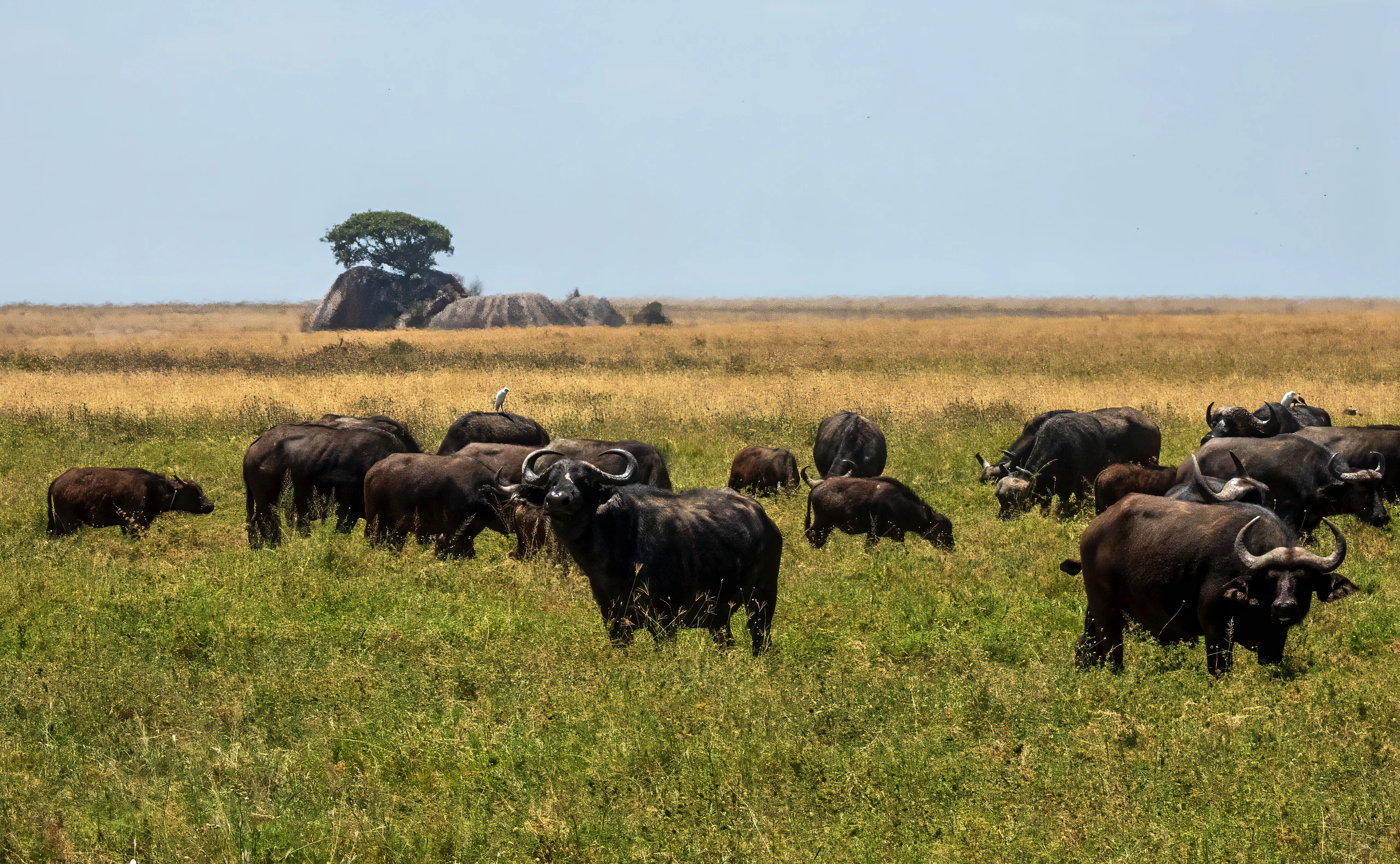
The Serengeti should be at the heart of many Tanzania photography safaris. The landscape is enormous, so photographs can work at two very different scales. You can create intimate portraits of individual animals. Or you can step back and photograph the animal as part of the landscape. Both are important.
A single lion against a huge plain can communicate the scale of the Serengeti better than a tightly cropped portrait. The park also provides opportunities for predators, herbivores, birds, landscapes and migration photography. Serengeti is a year-round destination, with game drives and balloon safaris among its experiences.
Central Serengeti for Photography
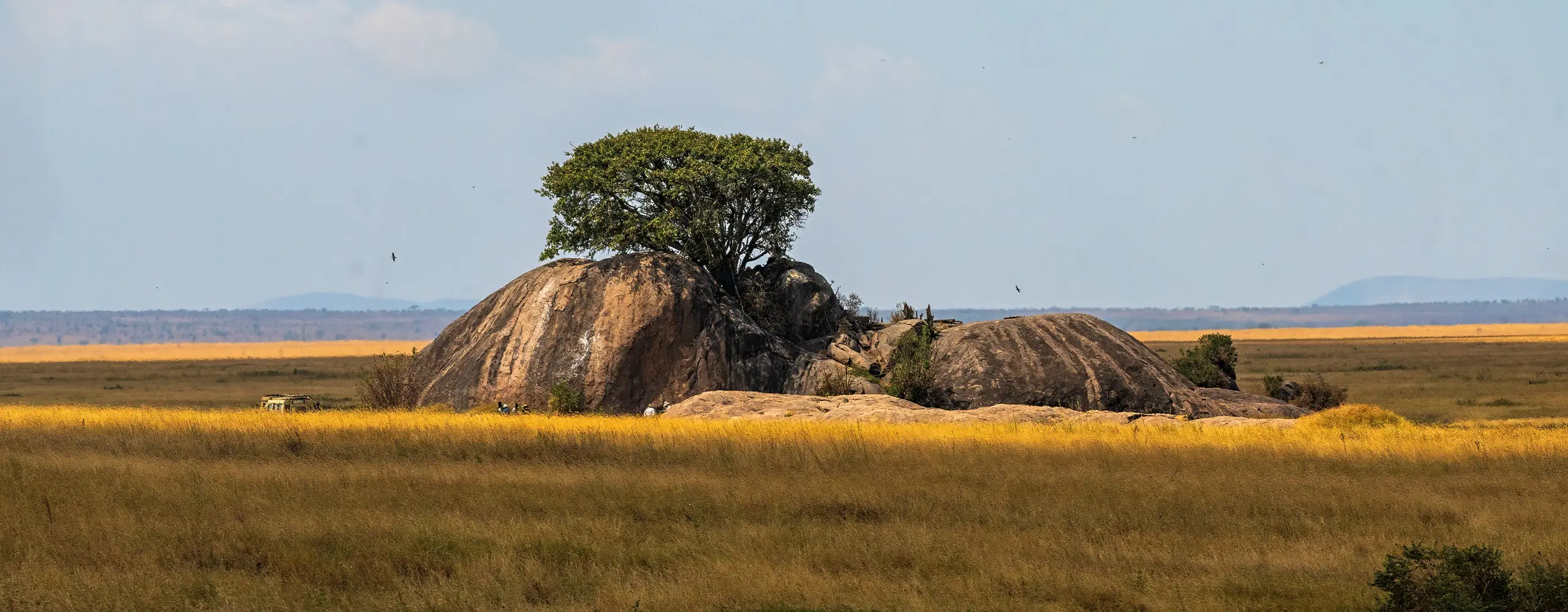
Central Serengeti around Seronera is particularly useful for photographers who want a mixture of wildlife and landscapes. The area contains open plains, rocky kopjes, riverine vegetation and habitats that support resident wildlife.
It also makes a practical base for several days of photography. Rather than moving every morning, you can return to familiar areas and learn how the light changes. You may see the same pride of lions behaving differently on different days. That familiarity can improve your photographs.
Northern Serengeti & Migration Photography
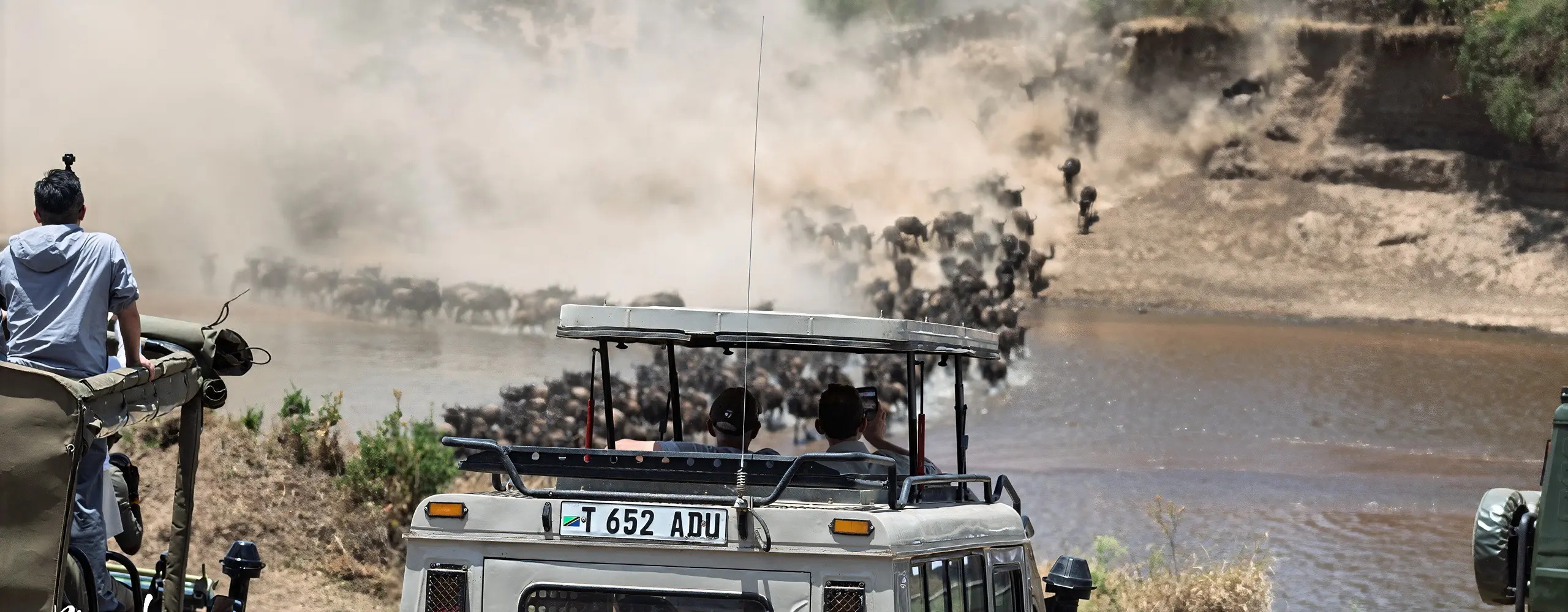
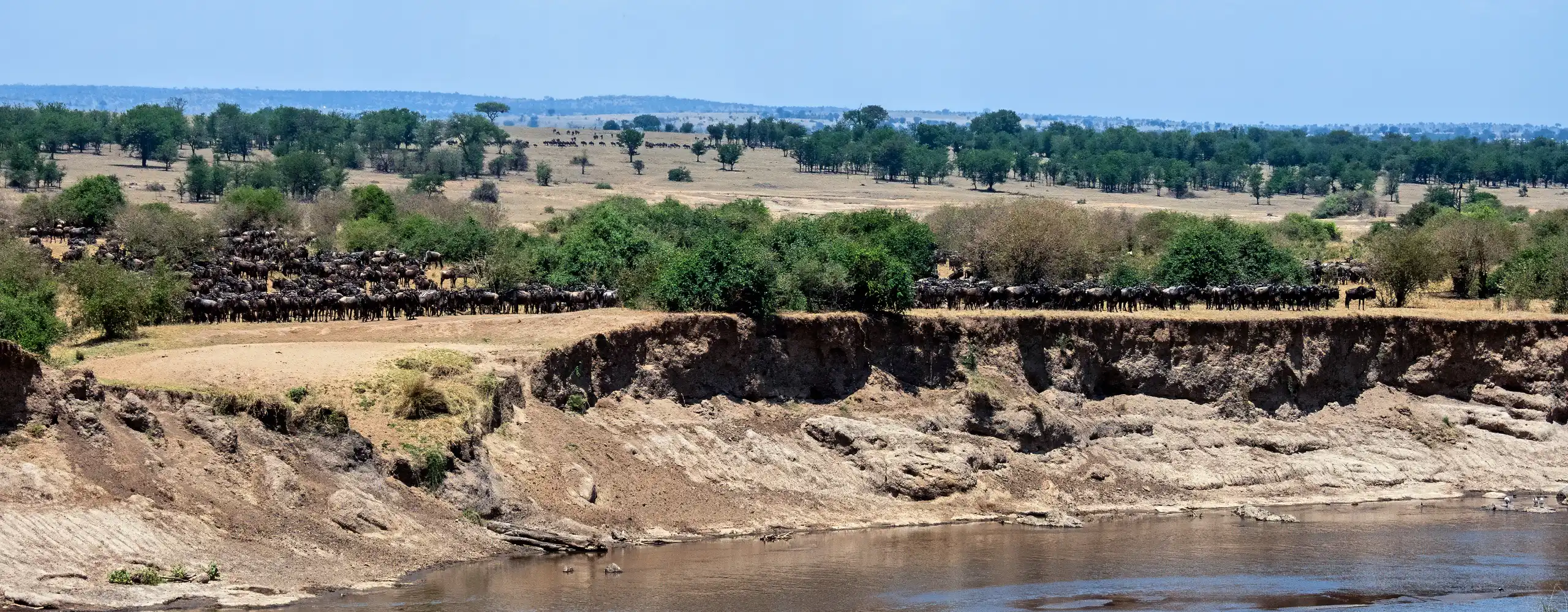
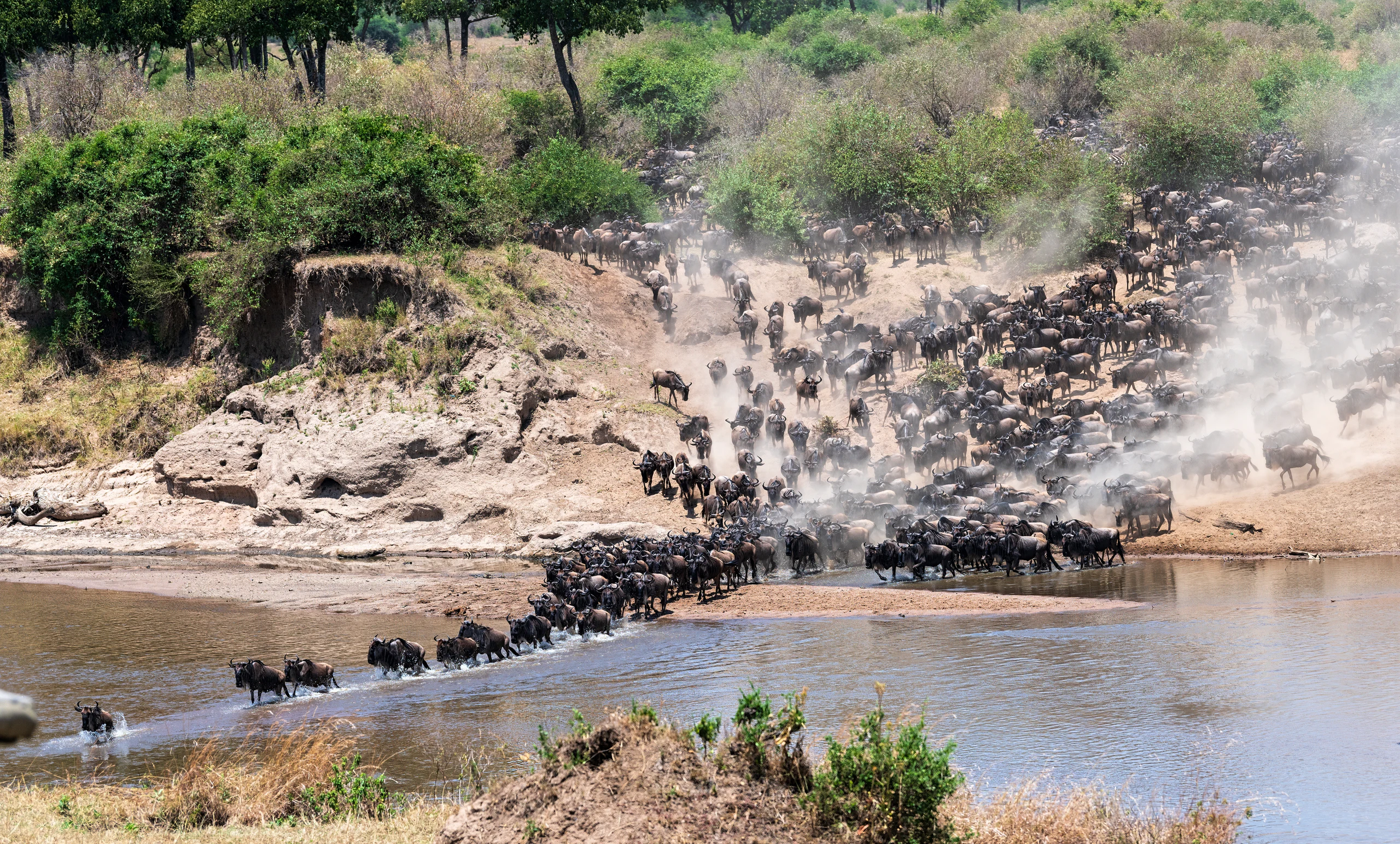
Northern Serengeti offers a very different photographic experience. The landscape becomes more rugged in places, with kopjes, river valleys and open grassland. During the migration period, the northern Serengeti can also provide opportunities for photographing wildebeest movements and river-crossing behavior.
River crossings are unpredictable, however. A responsible photography safari should never promise that a particular crossing will happen on a particular day. Wildlife should also never be manipulated or disturbed simply to create a photograph. National-park policy prohibits manipulation of wildlife and natural resources for filming or photographic purposes.
Ndutu & Calving Season Photography
The southern Serengeti and Ndutu area can be especially interesting during the calving season. Young animals create opportunities for intimate behavioral photographs. But the real attraction is the interaction between newborns, mothers and predators. Cheetahs, lions, hyenas and other predators may be active around the herds.
For photographers, this is a reminder that wildlife photography is not just about portraits. Behavior is the story. A photograph of a mother wildebeest protecting her calf can communicate much more than a technically perfect headshot.
Tarangire for Wildlife Photography
Tarangire offers a photographic style that is very different from Serengeti. The combination of elephants, giant baobabs, dry landscapes and woodland can create powerful environmental photographs.
Instead of filling the entire frame with an elephant, consider including the tree, sky and landscape. The photograph becomes about the animal and the place where it lives. That approach can produce a much stronger safari collection.
Ngorongoro for Photography
Ngorongoro provides dramatic opportunities because wildlife can be photographed within a huge volcanic landscape. The crater walls create natural layers. Animals can appear against grassland, woodland or the distant escarpment.
Because the landscape is so recognizable, try to make your photographs show the scale of the environment rather than photographing every animal as an isolated subject.
Lake Manyara for Bird & Wildlife Photography
Lake Manyara can be particularly rewarding if you enjoy bird photography. The park has a diverse bird environment and is promoted for filming and photography. The combination of forest, lake and open areas gives you opportunities for different photographic subjects in a relatively compact area.
This can make Manyara a useful addition to a broader photography itinerary.
Wildlife Photography: Think Beyond the Big Five
The Big Five are obvious photographic targets. But some of the most interesting photographs may come from animals that receive less attention. Do not spend your entire safari searching for lions. Tanzania’s wildlife photography story is much bigger than the Big Five.
- Cheetahs
- Giraffes
- Zebras
- Hippos
- Jackals
- Hyenas
- Warthogs
- Baboons
- Monkeys
- Antelope
- Secretary birds
- Kori bustards
- Vultures
- Eagles
- Kingfishers
- Flamingos
Photographing Predators
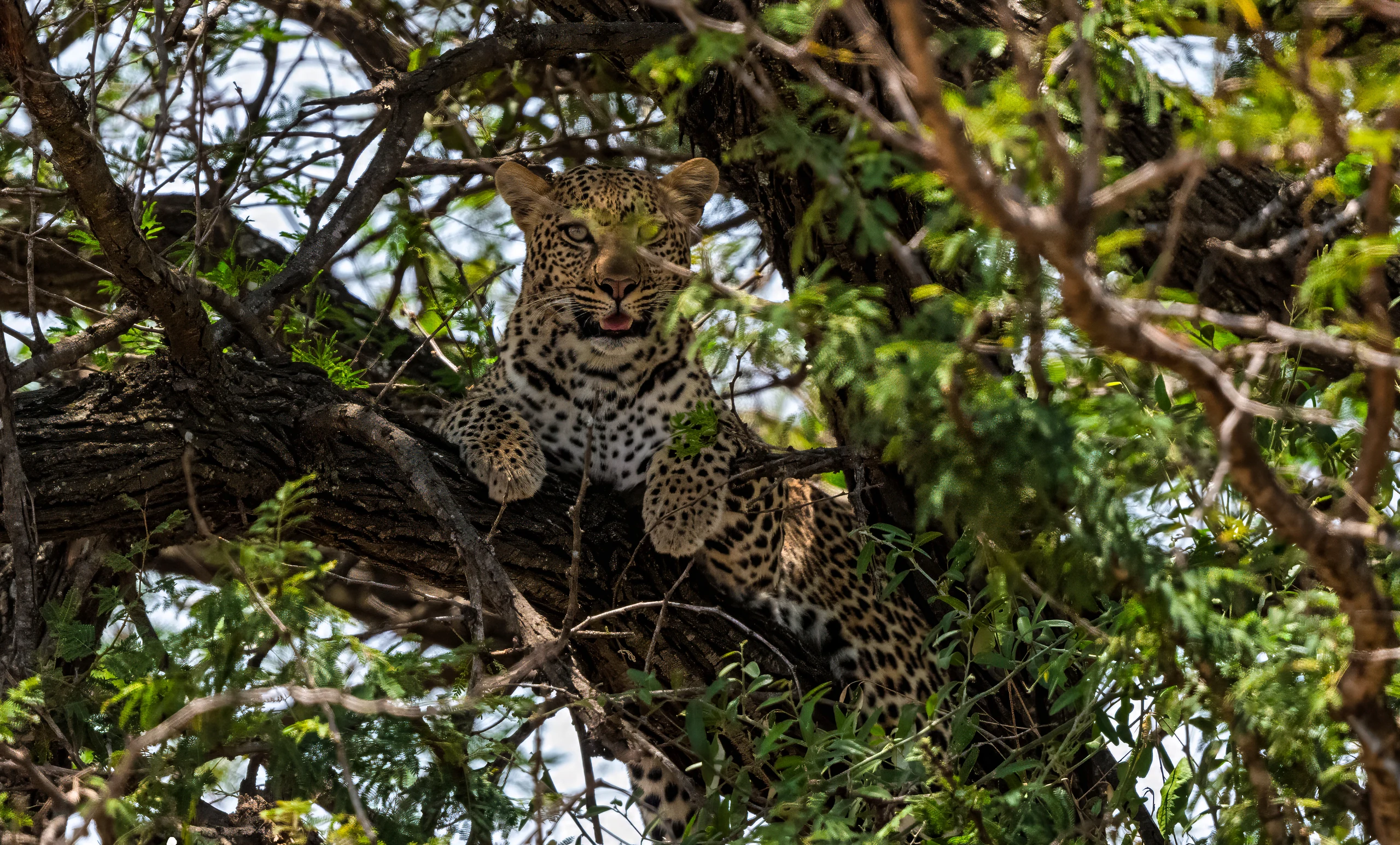
Predators can be among the most exciting photographic subjects because their behavior changes quickly. A sleeping lion can suddenly stand. A cheetah may move from resting to hunting. A leopard may climb into a tree. Hyenas may become active around a carcass.
The key is to watch behavior rather than simply waiting for the animal to face the camera. Ask yourself: what is the animal likely to do next? That question often produces better photographs than constantly adjusting your camera settings.
Photographing Elephants
Elephants provide opportunities at almost every focal length. With a telephoto lens, you can isolate an eye, ear or trunk. With a wider lens, you can show an entire herd moving through the landscape.
Tarangire is particularly interesting for environmental elephant photography because of its distinctive baobab scenery. Look for interactions between adults and calves. Watch the ears. Watch the trunk. Watch how the herd moves. The behavior is often more compelling than a static portrait.
Photographing Birds on Safari
Bird photography requires a different mindset. You may need longer lenses, faster shutter speeds and considerably more patience. Tanzania has a remarkable variety of habitats, making birds a valuable part of the photographic experience.
If birds are important to you, tell your operator before the safari. Your guide can then pay attention to smaller species instead of focusing entirely on large mammals.
Wildlife Photography Settings
There is no single camera setting that works for every safari. But a useful starting point is to think about the three variables: shutter speed, aperture and ISO.
Shutter speed is important when animals are moving. Aperture is useful for controlling depth of field and separating an animal from the background. ISO helps maintain shutter speed when light becomes limited.
As the morning gets brighter, you can reduce ISO or increase shutter speed. As the sun disappears, you may need to raise ISO. Modern cameras handle high ISO much better than older generations, so do not be afraid of it when the moment matters. A slightly noisy photograph is usually more valuable than a perfectly clean photograph of an empty frame.
Shutter Speed for Wildlife
Fast animals need fast shutter speeds. A resting lion is forgiving. A running cheetah is not. If you know an animal may suddenly move, keep enough shutter speed available to freeze the action.
For birds in flight, you may need significantly faster settings. Do not wait until the animal starts running to change everything. Watch the behavior and prepare beforehand.
Aperture & Backgrounds
A wide aperture can help separate an animal from a distracting background. But do not automatically shoot everything wide open. Sometimes you want more of the environment in focus.
For two animals standing at different distances, a slightly narrower aperture may keep both subjects recognizable. Photography is about communicating the scene, not following one setting.
Choosing Lenses for a Tanzania Safari
A flexible camera bag is usually more useful than bringing every lens you own. If you are traveling with two camera bodies, you can keep different lenses ready instead of changing lenses constantly in dusty conditions.
Telephoto lens
Useful for distant animals, birds and detailed portraits.
Mid-range zoom
Useful for larger animals, environmental portraits and general safari scenes.
Wide-angle lens
Useful for landscapes, camp photography and animals that come relatively close.
Camera Bodies
One camera body is enough to photograph a safari. Two bodies can be useful for serious photographers because you can keep a telephoto lens mounted on one and a wider lens on the other. This reduces lens changes. It also gives you backup equipment if something goes wrong.
But do not buy a second camera simply because you think a photography safari requires it. Use the equipment you already know. A familiar camera is often more valuable than unfamiliar expensive equipment.
Dust & Camera Protection
Safari roads can be dusty. Keep your equipment protected when you are not photographing. A camera bag with good dust protection is useful. Avoid changing lenses unnecessarily in dusty conditions. Carry lens-cleaning materials and a blower. Protect memory cards and batteries from unnecessary exposure to dust and moisture.
And remember that safari vehicles are not sterile photography studios. Your equipment will get dirty. That is part of the experience.
Batteries, Memory Cards & Backup
Do not underestimate how many photographs you can take on a safari. Bring more memory capacity than you think you need. Carry spare batteries. A power bank can also be useful, although charging arrangements vary between camps.
For an important photography trip, consider backing up photographs every evening. Ideally, keep a second copy separate from your primary storage. Losing an entire safari’s photographs because of one damaged card is an avoidable disaster.
Photographing From the Safari Vehicle
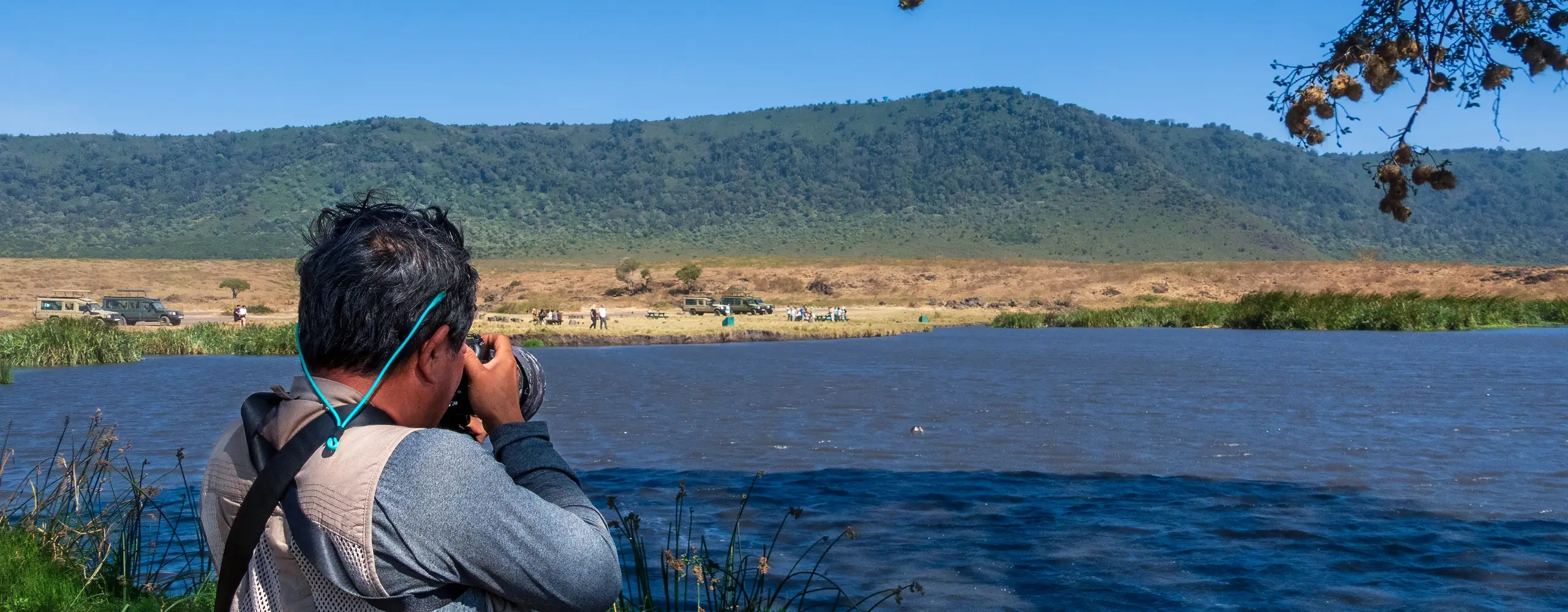
The safari vehicle becomes your photography platform. Keep your camera ready rather than packed away. Use the vehicle’s open windows or roof opening when appropriate. Resting your lens on a stable surface can help, but be careful not to block other passengers or create unnecessary movement.
Your guide can also help position the vehicle so that the animal is not hidden behind vegetation or another vehicle. Always follow the guide’s instructions and park rules. Wildlife photography should never come at the expense of wildlife welfare or visitor safety.
Photography Etiquette Around Wildlife
The photograph is never more important than the animal. Do not ask a guide to chase wildlife for a better angle. Do not pressure a driver to leave designated roads. Do not crowd an animal simply because another vehicle has found something interesting. Do not make noise to get an animal’s attention. Do not use bait or attempt to manipulate animal behavior.
Park policies specifically prohibit manipulating wildlife and natural resources for photographic or filming purposes. The best wildlife photographs come from observing natural behavior.
Photography Etiquette Around Other Vehicles
You are rarely alone on a popular safari route. Your guide should consider the position of other vehicles as well as your own photograph. Do not expect to block a road indefinitely. If several vehicles are present, patience and cooperation matter.
Sometimes the best photographic opportunity comes after other vehicles leave. And sometimes another vehicle will have the better position. That is part of photographing wildlife in a shared environment.
Commercial Photography & Permits
There is an important distinction between taking photographs for your personal collection and conducting professional commercial photography. Commercial photography or filming in national parks requires the appropriate permit.
If you are producing images for advertising, commercial campaigns, publications or a professional production, tell your safari operator before the trip. Do not assume that an ordinary tourist photography setup automatically covers commercial production. Permit requirements and fees can change, so confirm the current requirements with the relevant park authority before traveling.
Drone Photography in Tanzania
Do not simply pack a drone and launch it inside a national park. Drones are not permitted in Tanzania’s national parks without specific authorization. Published drone guidelines require multiple permits and approvals, including authorization from park authorities and other relevant agencies, with additional restrictions around places such as Serengeti river crossings.
If aerial photography is important to your project, discuss it with your operator well before arrival. For ordinary safari travelers, a conventional camera is the straightforward option.
Photography Safari With a Professional Photographer
Some travelers want to learn as well as photograph. A specialist photography guide or photo leader can help with camera settings, composition, light, animal behavior, lens selection, image review, field technique and post-processing.
This can be particularly useful if you are serious about improving your photography rather than simply collecting holiday photographs. A specialist photography safari may also be structured around longer stays and fewer destinations. That allows the photographic experience to become the central purpose of the trip.
Photography Safari for Beginners
You do not need to be a professional photographer. In fact, Tanzania is a wonderful place to learn. Before your trip, become comfortable with the basic controls so you are not learning them while a leopard is walking through the frame. Practice before you leave.
- Changing shutter speed
- Changing aperture
- Adjusting ISO
- Switching autofocus modes
- Selecting focus points
- Using exposure compensation
- Changing lenses
- Reviewing images quickly
Photography Safari for Experienced Photographers
Experienced photographers may want to build the trip around a specific goal. The more specific your goal, the easier it becomes to design the right itinerary.
Predator photography
Focus on lions, cheetahs, leopards and hyenas.
Migration photography
Focus on herd movement, dust, river crossings and large-scale landscapes.
Bird photography
Build more time around bird-rich habitats and specialist guiding.
Environmental wildlife
Use wider lenses and include animals within their landscapes.
Fine-art photography
Spend more time on light, composition, silhouettes, textures and minimalist scenes.
Best Time for a Photography Safari
There is no single best month for every photographer. Your preferred season depends on the images you want. If migration is your priority, choose your location according to where the herds are expected to be rather than simply booking the most famous month. The migration is a moving system, not a single event that takes place in one location.
January–March
Green landscapes, young animals in the southern Serengeti and dramatic skies can create colorful and intimate photographs.
April–May
The landscape can become intensely green, with changing weather and fewer visitors in some areas. Rain can make driving more complicated, but dramatic clouds can produce excellent landscape photography.
June–October
Drier conditions, golden grass and strong wildlife-viewing opportunities make this a popular period for classic wildlife photography.
How Many Days Do You Need?
Photography benefits from time. A rushed three-day safari can produce wonderful photographs, but it gives you fewer opportunities to wait for behavior and changing light.
For a dedicated photography trip, 7–10 safari days can provide a much more comfortable rhythm. Instead of visiting five parks, you might choose three and spend more nights in each — for example Tarangire for 2 nights, Ngorongoro for 1–2 nights and Serengeti for 4–5 nights. That gives you several mornings and evenings to work with changing conditions.
Photography Safari Itinerary: 7 Days
For serious photographers, extending Serengeti by several additional nights can be more valuable than adding another park.
- Day 1 — Arusha: Arrive and prepare your equipment.
- Day 2 — Tarangire: Elephants, baobabs and environmental wildlife portraits.
- Day 3 — Tarangire: Second full photography day.
- Day 4 — Ngorongoro: Transfer and crater-area photography.
- Day 5 — Ngorongoro Crater: Full wildlife and landscape photography day.
- Day 6 — Serengeti: Fly or drive into Serengeti and photograph the afternoon light.
- Day 7 — Serengeti: Full day of photography before onward travel.
Photography Safari Itinerary: 10 Days
Five nights in Serengeti allow you to photograph different conditions rather than relying on one or two game drives. You can dedicate some drives to predators, others to landscapes, and others simply to following whatever looks interesting that morning.
- Days 1–2: Tarangire
- Days 3–4: Ngorongoro
- Days 5–9: Serengeti
- Day 10: Serengeti → Arusha or onward destination
How Much Does a Photography Safari Cost?
Photography safaris can cost more than standard safaris because photographers often want private vehicles, longer stays, specialist guides, better photographic positioning, fewer passengers, internal flights, specialist camps and extra equipment or support.
But you do not necessarily need a luxury safari. The biggest photographic investment is often the time and vehicle, not the room. A modest camp combined with a private vehicle and several days in the right location can produce a better photographic experience than an expensive lodge combined with a rushed itinerary.
For current park fees, photography or filming charges and permits, check the latest official publications because regulations and fees can change.
What to Pack for a Photography Safari
Your camera equipment is only part of the packing list. Official travel guidance also recommends lightweight clothing, a warm layer for early drives, sun protection and binoculars, and notes that asking permission before photographing local people is courteous.
Camera equipment
Bring a camera body, backup body if needed, telephoto lens, mid-range zoom, wide-angle lens, spare batteries, memory cards, card reader, camera bag, lens cloth, air blower, sensor-cleaning equipment if you know how to use it, and a portable hard drive or backup device.
Safari essentials
Pack neutral-colored clothing, a warm layer, sun hat, sunglasses, sunscreen, insect repellent, comfortable shoes, a small day bag, reusable water bottle, power bank and travel documents.
Photographing Local People & Culture
Tanzania is not only about wildlife. People, villages, markets, traditional activities and everyday life can become an important part of your travel story. But cultural photography requires more care than photographing an elephant from a vehicle.
Ask permission before photographing people, particularly close portraits. If someone does not want to be photographed, respect that immediately. The strongest cultural photographs are usually created through interaction and trust rather than simply pointing a long lens at strangers.
Photography Beyond Wildlife
Leave some space on your memory cards for everything around the animals. Years later, these photographs can become the images that connect the wildlife photographs into a complete story.
- Safari vehicles
- Camp life
- Morning coffee
- Footprints
- Dust
- Acacia trees
- Baobabs
- Clouds
- Sunsets
- Local food
- Safari guides
- Landscapes
- Roads
- Camp details
- Night skies
Photographing the Safari Story
A good photography collection should have variety. Do not return with 500 photographs of lions. Think of your safari as a visual story.
Start with the landscape. Then show the animals. Then show behavior. Then show details. Then show the people and places around the wildlife. Finally, finish with an image that captures the feeling of being there. This approach creates a much stronger collection than simply selecting your sharpest animal portraits.
Common Photography Safari Mistakes
Most weak safari collections come from planning and field habits that are easy to fix before you leave.
Bringing too much equipment
More equipment can mean more weight, more decisions and more missed moments.
Changing lenses constantly
Dust is a reality of safari. Choose a practical setup and keep it ready.
Shooting everything at maximum zoom
Sometimes the landscape is the photograph.
Ignoring the background
A technically sharp animal can still make a weak photograph if the background is distracting.
Forgetting the light
Beautiful light can transform an ordinary animal into an extraordinary photograph.
Not backing up
Do not let one memory-card failure destroy your trip.
Chasing rare sightings
Wildlife behavior cannot be scheduled. Patience is part of photography.
Forgetting to enjoy the safari
Put the camera down occasionally. Some moments are better experienced than photographed.
Plan Your Tanzania Photography Safari
A photography safari should give you something a normal sightseeing itinerary cannot: time. Time to wait for the light. Time to watch an animal’s behavior. Time to return to the same area. Time to try a different composition. Time to put the camera down and simply watch.
That is why we prefer building photography safaris around fewer destinations and longer stays rather than trying to collect every famous park in one trip. For many photographers, the Serengeti will be the centerpiece. Tarangire can add elephants and baobabs. Ngorongoro can add dramatic landscapes. Lake Manyara can bring birds and forest scenes.
The route matters. But the rhythm matters just as much. The best photograph of your Tanzania safari may not happen because you had the most expensive camera or the longest lens. It may happen because you were willing to wait another ten minutes. And in the African bush, those ten minutes can change everything.