Why Day Count Matters More Than Park Count
Safari days are different from city-break days. Getting from one park to another can take hours on rough roads, and jet lag can easily wipe out your first morning. By midday, the heat can also make another long drive feel like more effort than it’s worth.That’s why a “seven-day safari” isn’t always as much safari as it sounds. If two of those days are spent travelling and you’re changing lodges every night, you may actually spend less time watching wildlife than you would with five nights spread across three well-chosen areas.
Two To Four Days
A two-to-four-day safari can still be a great experience, but there isn’t much room for detours. The shorter the trip, the more important it is to choose one area and stay there rather than spend hours moving between parks.
With two days, focus on one park or wildlife area close to your arrival point. Tarangire works well for this, while a short Serengeti trip makes more sense if you fly in rather than travel there entirely by road. With three or four days, you have more flexibility to combine two nearby areas, such as Tarangire and Ngorongoro, or fly into the Serengeti and spend a few nights there.
Keep in mind that your arrival and departure still take up part of the trip. A “three-day safari” may give you only two full days of game drives once transfers are included. That’s why we prefer a simple route with longer stays over trying to tick several parks off a list.
Five to seven days
Five to seven days can be enough for a safari, but it works best when you keep the route focused and don’t try to change lodges every night. In practice, you’ll usually lose a day to arrival and another to departure or a transfer, leaving around four or five proper safari days.
With that amount of time, it makes more sense to build a simple route: perhaps Tarangire or Lake Manyara, the Ngorongoro Crater, and two or three nights in the Serengeti. Trying to squeeze in the entire northern circuit — and then add a beach stay — usually means spending too much of the trip on the road.
- Realistic parks: Tarangire + Ngorongoro + 2–3 Serengeti nights
- Build in: arrival recovery; avoid same-day crater after long transfer
- Best for: focused wildlife hit, second visit, or safari portion of longer trip
Eight to ten days
For a first trip around Tanzania’s northern circuit, eight to ten days is a comfortable amount of time. Once you allow for arrival and departure, you’ll have around six to eight proper safari days. That’s enough to visit Tarangire, spend some time around the Karatu highlands or include a cultural stop, visit Ngorongoro, and still have three nights in the Serengeti without packing and unpacking every day.
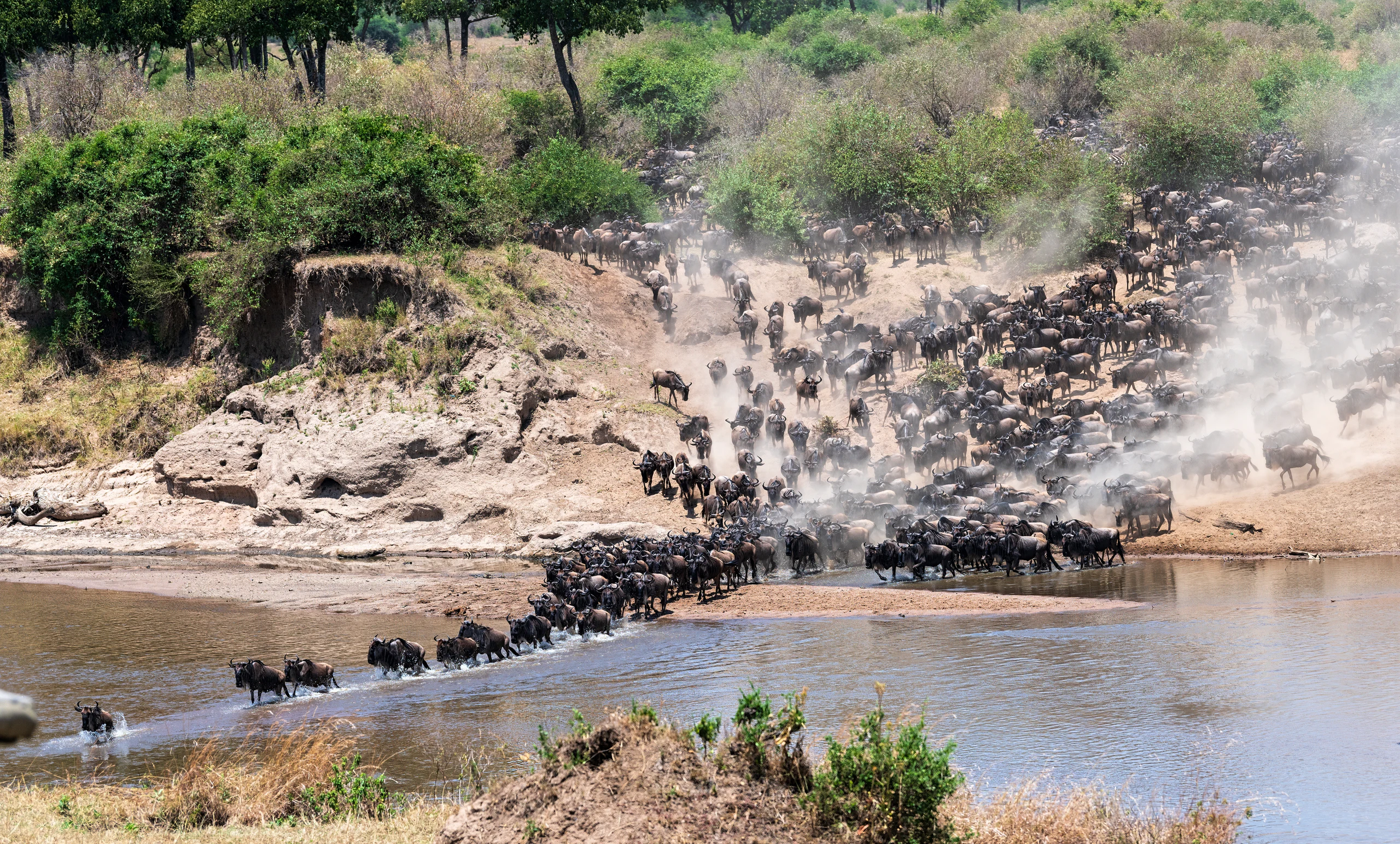
It also gives you more flexibility with the Serengeti. Depending on the season, you can spend more time in the central area, head south for the calving season, or go north when the wildebeest crossings are taking place. Having a little extra room in the schedule also helps if a flight is delayed or the weather disrupts a day. You can even fit in something like a cultural visit or a hot-air-balloon flight without turning the rest of the trip into a rush.
What we wouldn’t recommend is trying to squeeze a beach holiday into the same eight safari days. You’ll usually end up cutting back on rest or spending less time in the Serengeti. If you want both safari and a few proper days on the coast, it’s better to allow around twelve to fourteen days for the whole trip.
Day 1
Arrive JRO, transfer, brief
Recovery and kit check. No ambitious drive — jet lag is real.
Days 2–3
Tarangire + Karatu
Elephants, baobabs, and highland buffer before crater descent.
Day 4
Ngorongoro Crater
Dense Big Five day; rim night or sensible transfer afterward.
Days 5–7
Serengeti depth
Three nights minimum in the sector that matches your month.
Days 8–9
Optional culture or balloon
Flexible chapter before return toward Arusha or airstrip.
Day 10
Depart or beach connection
Buffer for flight delays; connect to ZNZ if extension planned.
Ten to fourteen days
Ten to fourteen days gives you enough time to experience Tanzania without constantly watching the clock. You can spend four nights in the Serengeti, choose the right area for the season, take your time around Ngorongoro, and still fit in Tarangire or Lake Manyara without choosing purely because it happens to be on the way
It also gives you something that shorter safaris often miss: breathing room. You can have a slower afternoon, stay longer with a pride of lions, or simply enjoy watching what happens around a waterhole instead of feeling like you need to move on to the next park.
For many first-time visitors, this is a good length for the classic Northern Circuit: Tarangire, Ngorongoro, and several nights in the Serengeti. Where you spend those Serengeti nights should depend on the time of year. If seeing the wildebeest crossings is the priority, allow three or four nights in the northern Serengeti rather than treating it as a quick day trip. The longer transfer is real, and getting there and back can take up valuable safari time.
Tarangire is particularly rewarding in the dry season, when elephants gather around the remaining water and the baobab landscapes really stand out. Lake Manyara can also work well when the route and season make sense, but there’s no need to add another park simply to make the itinerary look fuller.
And if Mount Kilimanjaro is also on your list, treat the climb as a separate part of the trip. A Kilimanjaro trek takes several days, so adding it to a wildlife itinerary usually means giving up some Serengeti time. If reaching the summit is your main goal, that’s one thing; if the safari is the priority, protect those Serengeti nights.
- Classic arc: Tarangire → Ngorongoro → Serengeti (3–4 nights) → optional Karatu culture
- Serengeti: 3–4 nights for migration depth or photography pace
- Optional beach: 3–5 nights after safari if total leave allows twelve-plus days
- Kilimanjaro trek only if intentional — not squeezed into a tight wildlife window
How to allocate Northern Circuit nights
Plan your safari around nights, not just the number of parks you can fit on a map. Tarangire is worth one or two nights, especially in the dry season when elephants tend to gather around the remaining water.
For Ngorongoro, one night around the crater is often enough for a full crater day. Some travelers stay in Karatu instead, which can make the logistics easier and give you a more relaxed start to the crater visit.
The Serengeti is where staying longer really makes a difference. Three nights gives you a good introduction, four feels much more comfortable, and five or more is ideal if you’re interested in photography, following the migration, or simply prefer to spend more time watching wildlife rather than driving between areas.
Lake Manyara is often better treated as a morning or en-route stop than somewhere you need to spend a full night. The park is relatively compact, and a few hours can be enough to see its highlights, including the birdlife and, with some luck, its famous tree-climbing lions.
Most importantly, don’t try to cover too much in a single day. Driving from the crater to a distant Serengeti camp can take hours, and arriving late means losing the best light and ending the day exhausted. A slightly slower itinerary usually gives you more actual safari time.
Fly-in versus road
Road transfers show landscape and spread cost across the group — but Arusha to central Serengeti can consume a full day each direction. Light aircraft hops from Arusha or Seronera airstrips compress distance and preserve energy, especially when northern Serengeti or Grumeti sectors are the goal. Luggage limits apply — soft duffels, typically fifteen kilograms checked on bush hops.
Fly-in does not eliminate travel time; it shifts it to airports, weight checks, and weather delays. Topy Tours mixes road and air based on sector, season, and how many dawn drives you want fresh. Luxury fly-in itineraries such as Serengeti Luxury Fly-In protect time for guests who prioritize wildlife hours over road scenery.
Budget camping arcs may road more to preserve nightly rate — acceptable when drive lengths are honest and Serengeti nights still protected. Never save days by skipping the correct Serengeti sector for your month.
Beach add-on and optional extensions
Zanzibar works after safari, not squeezed in the middle of a tight northern loop. Plan a flight from Arusha or Serengeti airstrips to Zanzibar (ZNZ) with one travel day and at least three full beach nights — five is better if Stone Town and a north-coast lodge both matter.
Season affects ocean clarity and seaweed on east-coast beaches; your Topy Tours planner can steer month choice. Diving and snorkeling need calm seas — build flexibility if conditions matter more than tan lines.
Total trip math: ten safari nights plus four beach nights plus two travel buffers lands near sixteen calendar days — a common honeymoon and celebration arc. Shorter totals either shorten safari or turn beach into a photo stop.
Optional extensions — culture, balloon, and specialist days
Beyond core game drives, many travelers add a hot-air balloon morning over the Serengeti, a Karatu highlands cultural day, or an optional walking safari where park rules and fitness allow. Each adds time and cost — build them into the calendar before locking lodge nights, not as afterthoughts on transfer days.
Balloon flights need a non-transfer Serengeti morning and weather clearance; book early in peak season. Cultural visits to Maasai communities or coffee estates work best as half-days with respectful briefing — not rushed add-ons between long drives.
Do not stack every optional activity into a seven-day window. Minimum humane pacing: protect three Serengeti nights first, then add one special chapter — balloon, culture, or walking — if days allow.
- Book balloon and premium activities early in peak season
- Cultural days: respectful visits, not performance tourism
- Walking safaris need moderate fitness and park-specific rules
- Age minimums apply for balloon and some walks — verify for families
Buffers and who the length suits
International flights from North America or Europe often arrive exhausted. Scheduling a crater descent or twelve-hour transfer on arrival day is how trips start wrong. Build one soft day — briefing, short local walk, early night — before the first serious drive.
Departure day needs margin too. Road transfers from Serengeti to JRO can run long; weather delays on bush flights are common. Topy Tours holds buffers so a flat tire or fog does not cost you a giraffe sunrise.
Holiday travelers stacking Christmas or New Year should book earlier and expect premium pricing — not just lodges, but flights and permits. Shoulder weeks before or after peak often deliver better value with strong wildlife.
Matching days to traveler type
Families with young children often succeed with eight to ten days and conservative drive lengths — not fourteen days of dawn-to-dusk intensity. Honeymoon couples frequently choose twelve to sixteen days with Serengeti depth, one balloon morning, and Zanzibar privacy. Photographers may want fourteen days with five Serengeti nights and flexible midday rest.
Solo travelers in private custom safaris fit eight to twelve day arcs comfortably — companionship without organizing every detail. Senior travelers benefit from extra buffer days and fewer lodge changes even if total park count drops.