Arusha National Park overview
Arusha National Park is one of the most varied parks in northern Tanzania. It is also one of the easiest to overlook.
Travelers often pass through Arusha on their way to Serengeti, Ngorongoro or Kilimanjaro, without realizing that a remarkably diverse national park sits close to the city. Mount Meru dominates the landscape, rising above forests, open grasslands and volcanic terrain. Below it are the peaceful Momella Lakes, the dramatic Ngurdoto Crater and a mixture of habitats that support giraffes, buffalo, elephants, monkeys and hundreds of bird species. TANAPA describes the park as a compact destination only about half an hour by paved road from Arusha, making it particularly convenient for short visits and day trips.
Arusha National Park is not primarily about chasing the Big Five. Its appeal is the combination of mountain scenery, forest, lakes, wildlife and walking experiences in a relatively small area.
What Makes Arusha National Park Special?
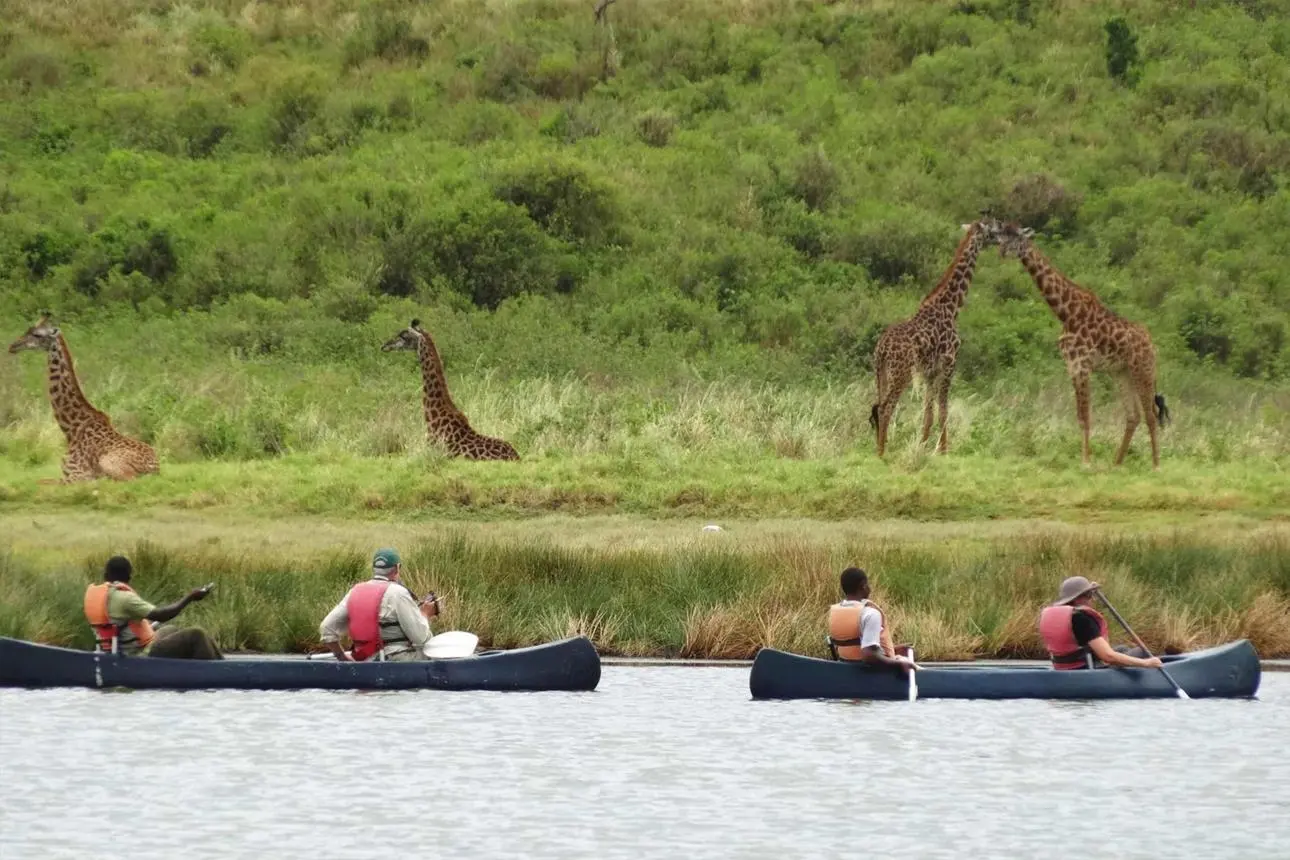
The biggest difference is variety.
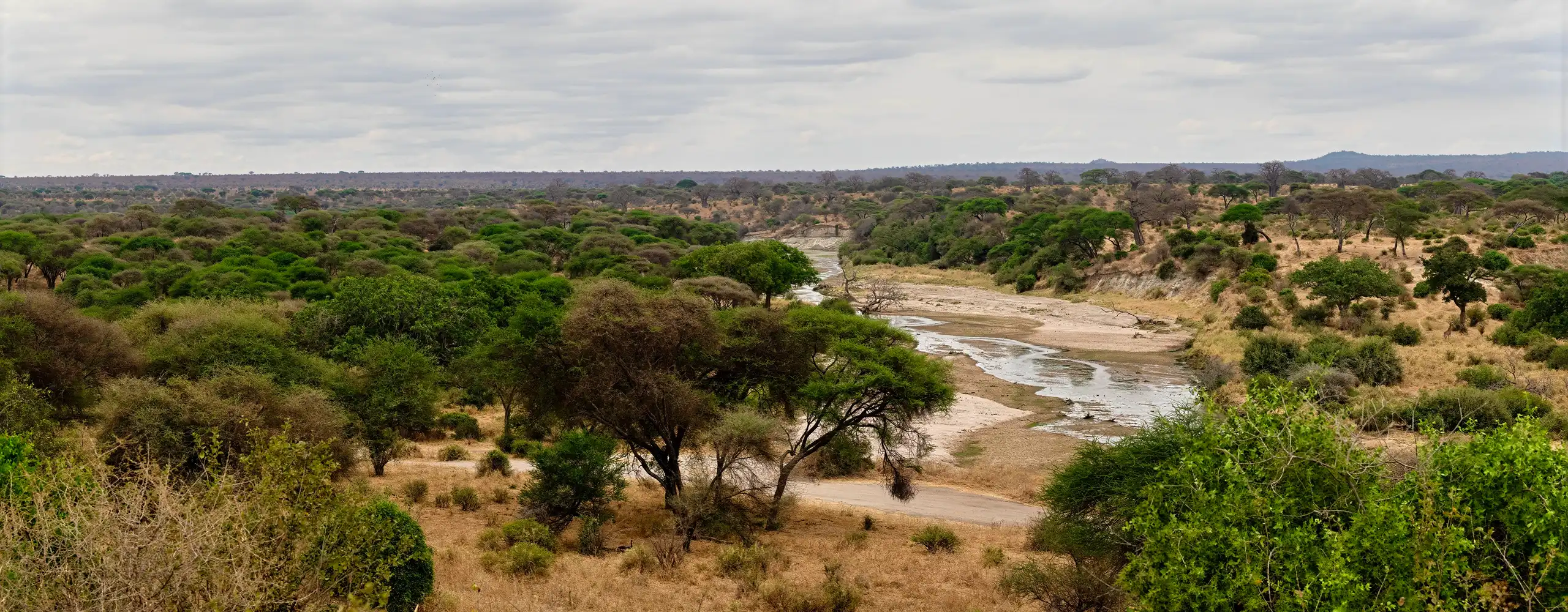
Within a relatively compact area, you can move from open grassland to forest, volcanic crater landscapes and alkaline lakes. Mount Meru provides the dramatic backdrop, while Ngurdoto Crater creates another distinct landscape and the Momella Lakes attract waterbirds and wildlife.
The park also offers activities that are less common on a traditional vehicle-based safari. You can go on a game drive, walk through the forest with a guide, explore the lakes by canoe or use the park as the starting point for a Mount Meru climb. TANAPA lists activities including hiking, canoeing, birdwatching, game drives and nature walks among the experiences available in Tanzania's national parks.
Mount Meru
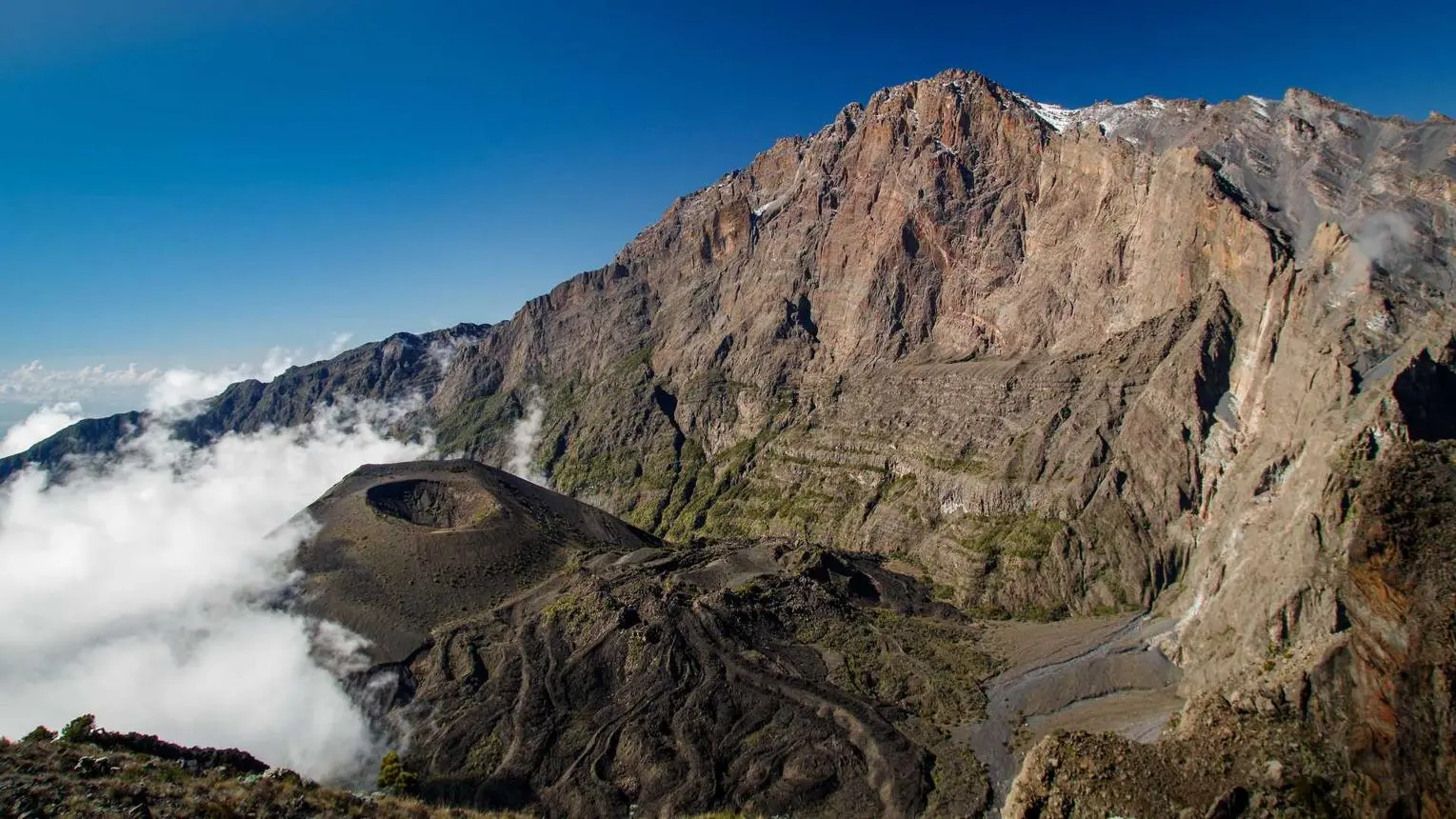
Mount Meru is the defining feature of Arusha National Park. At 4,566 metres, it is Tanzania's second-highest mountain and one of East Africa's great volcanic landscapes.
The mountain is a dormant volcano with a dramatic horseshoe-shaped caldera created by a major collapse of its eastern side. Its slopes change dramatically with altitude.
Lower areas contain woodland and forest, while higher elevations lead into montane vegetation and eventually the rocky summit environment. On clear days, Mount Kilimanjaro can also be visible from parts of the park and from Mount Meru itself. For trekkers, Mount Meru offers a serious mountain experience without being as high as Kilimanjaro. For safari travelers who are not climbing, simply seeing the mountain rising above the park can be one of the highlights of the visit.
Ngurdoto Crater
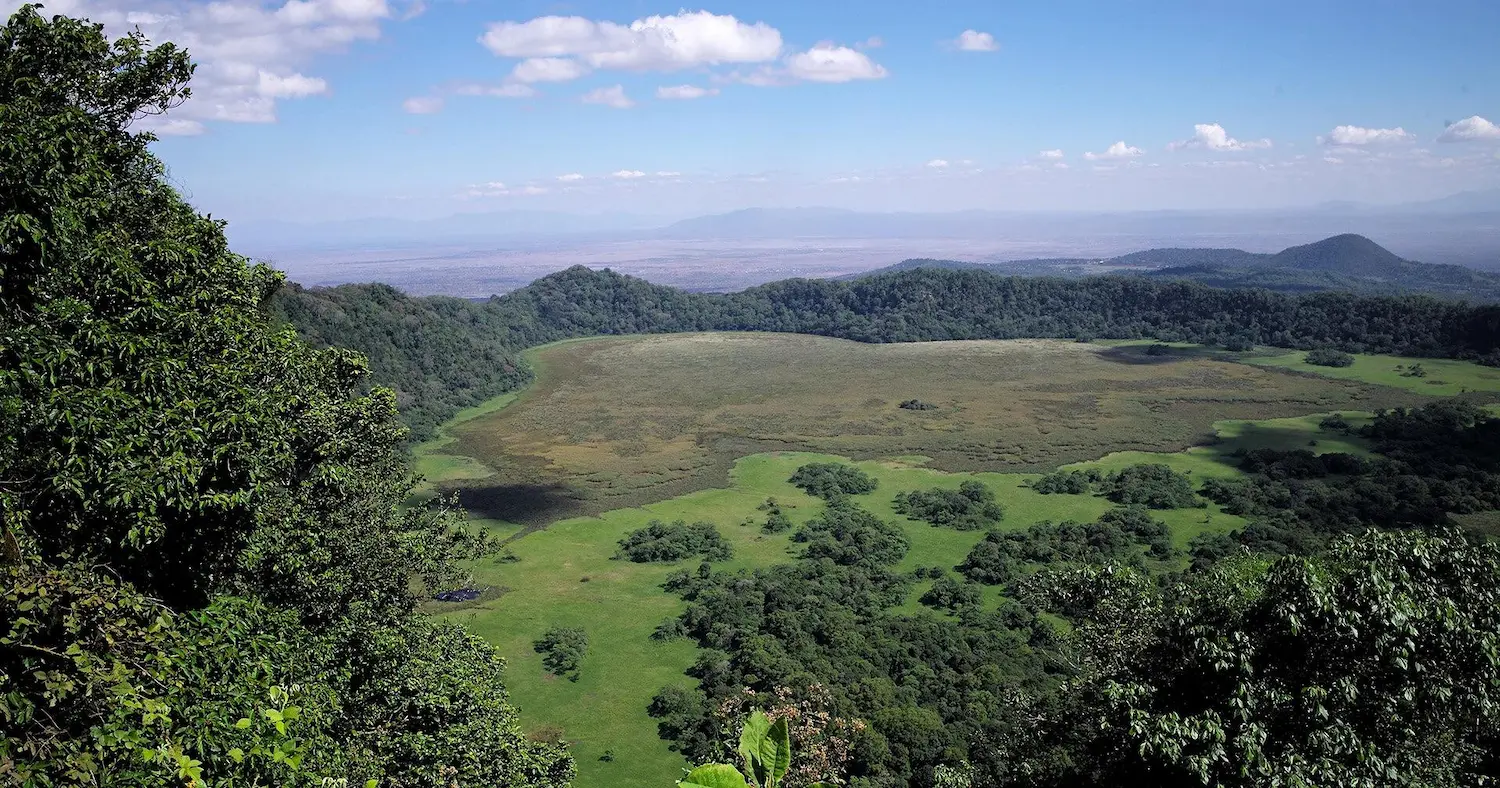
Ngurdoto Crater is sometimes described as a miniature version of the much larger Ngorongoro Crater. The comparison is useful visually, but the two places are very different in scale and experience.
Ngurdoto is a volcanic crater surrounded by steep forested walls. Its floor contains grassland, swamp and water, creating an enclosed habitat for wildlife. From viewpoints around the rim, you can look down into the crater and sometimes see buffalo, warthogs and elephants moving through the vegetation.
TANAPA describes Ngurdoto as a complete volcanic crater with forest, grassy glades, lake and swamp habitats. The viewpoint experience is particularly enjoyable because you can appreciate the crater's shape from above rather than spending the entire time driving around its floor.
Momella Lakes
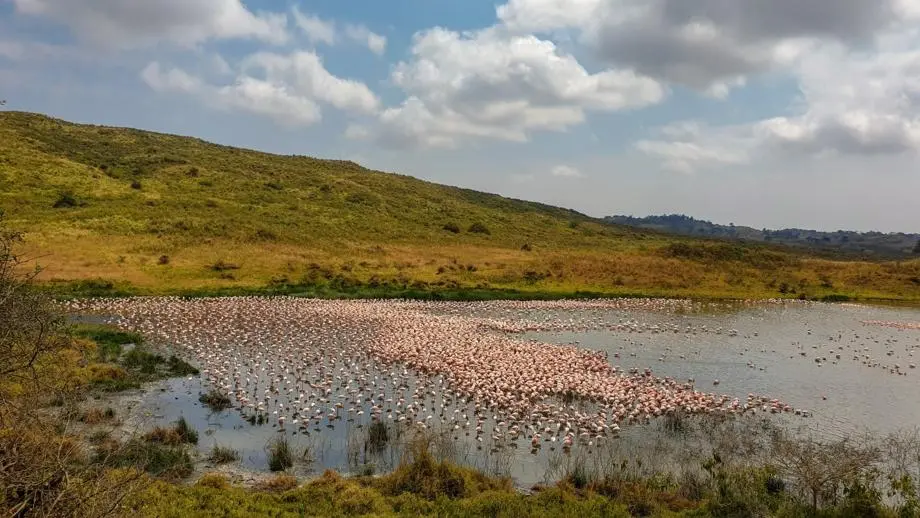
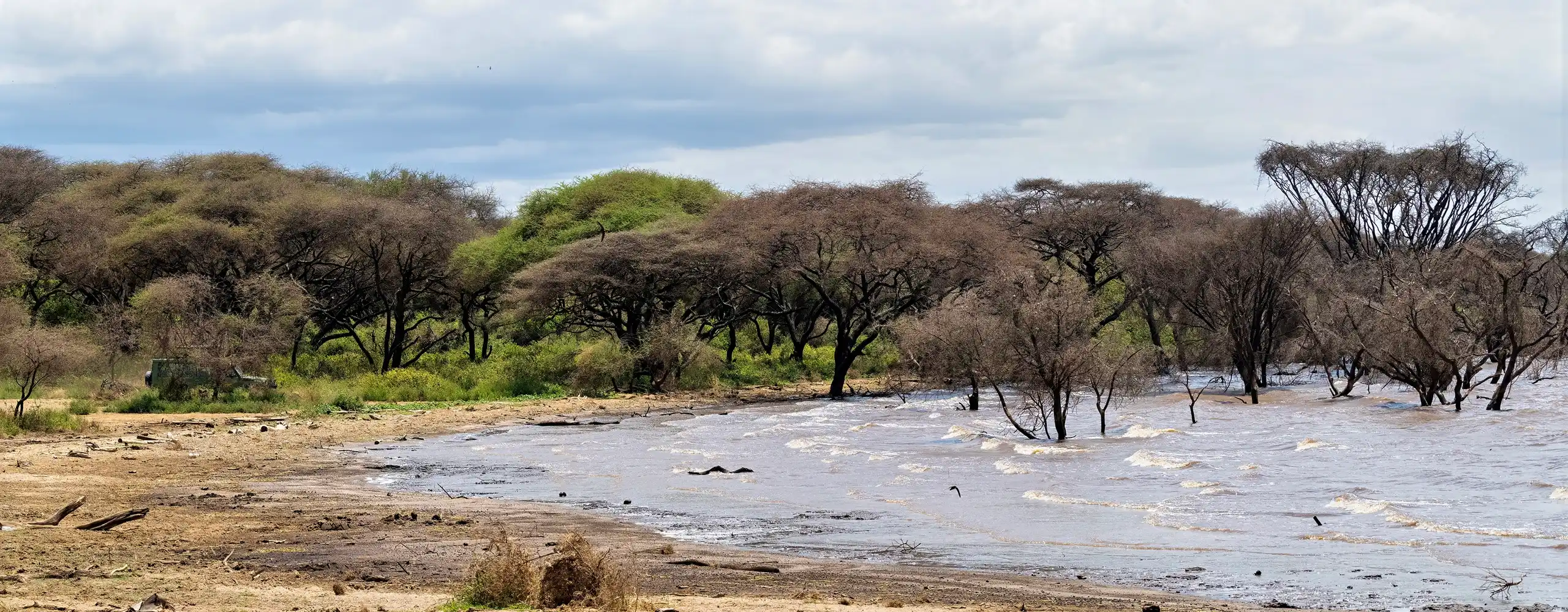
The Momella Lakes are a collection of shallow alkaline lakes in the northeastern part of the park. Their different mineral compositions contribute to differences in water color and vegetation.
The lakes are also important for birdlife. Flamingos are among the most recognizable visitors, while other waterbirds can be seen around the shoreline. TANAPA notes that the game-viewing track around the Momella Lakes provides opportunities to see both lesser and greater flamingos.
The lakes also provide one of the most peaceful landscapes in the park. With Mount Meru rising behind them, they can feel very different from the busy wildlife-viewing areas of larger safari parks.
Arusha National Park Wildlife
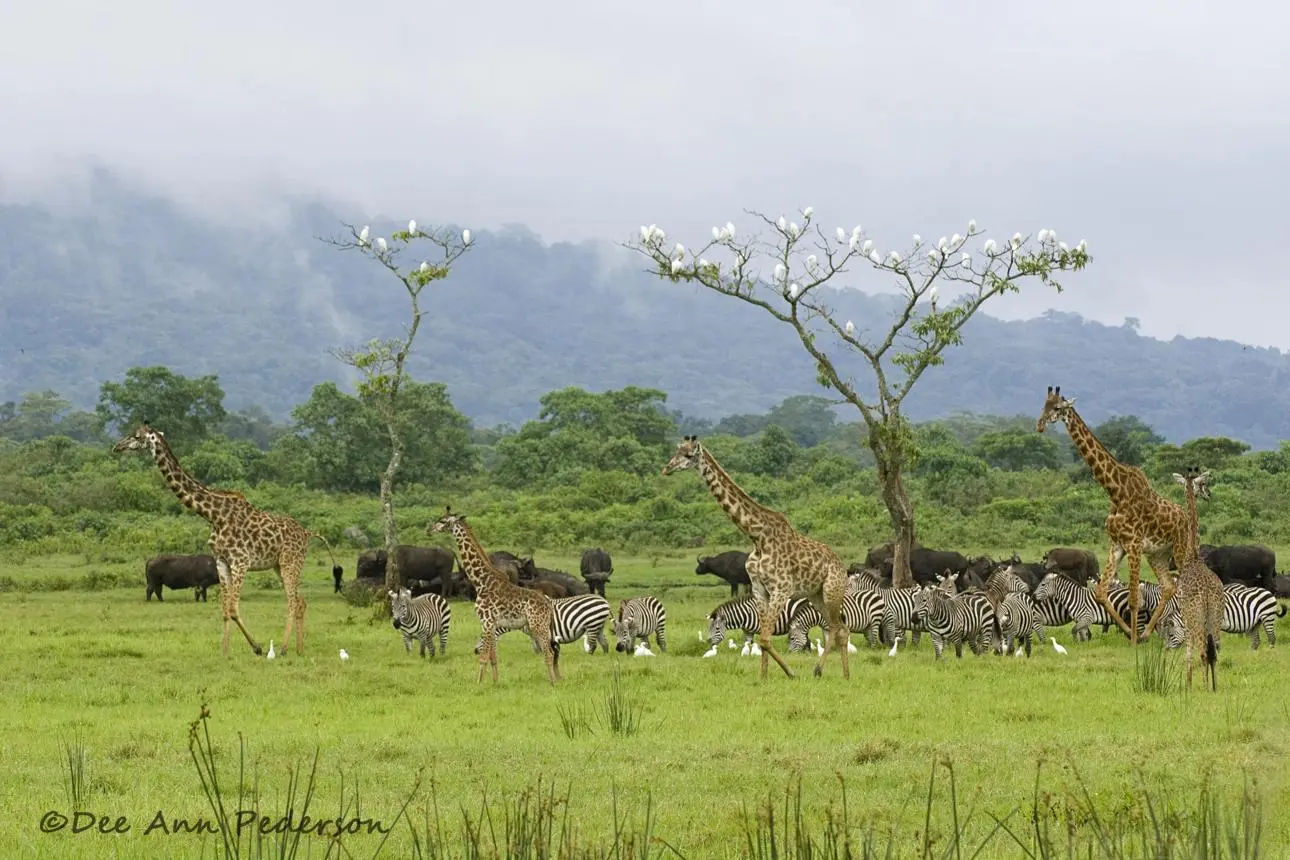
Arusha National Park contains a surprising range of wildlife for its size.
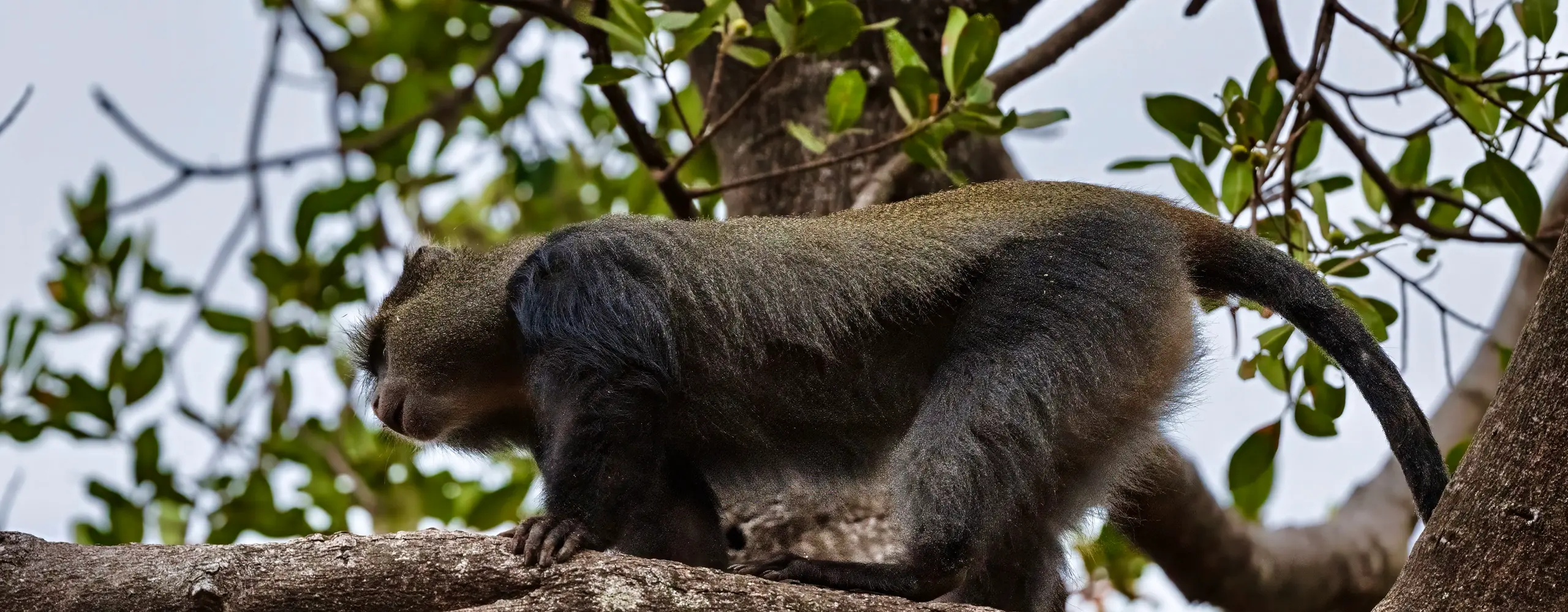
You may encounter: Giraffes, Buffalo, Elephants, Bushbuck, Waterbuck, Warthogs, Hippos, Baboons, Black-and-white colobus monkeys, Blue monkeys. Duikers, Hyenas, Leopards
Leopards are present but rarely seen. The park is better known for its forest species, giraffes, buffalo, primates and birdlife than for predator sightings. TANAPA specifically highlights giraffe, elephant, buffalo, waterbuck, hippo, bushbuck, duiker, baboon and monkeys among the park's wildlife.
Black-and-White Colobus Monkeys
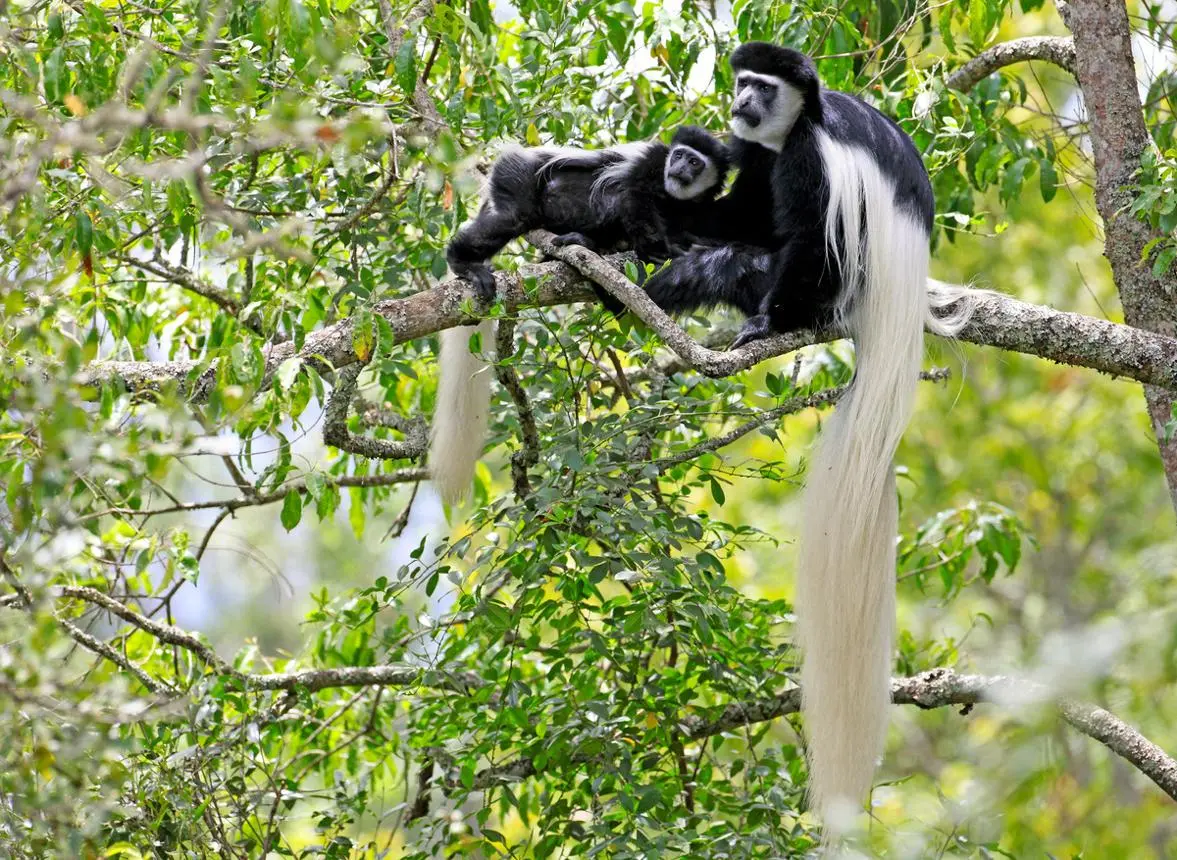
One of the most rewarding wildlife encounters in Arusha National Park can happen above your head. Black-and-white colobus monkeys move through the forest canopy, their long white fringes and tails making them relatively easy to recognize when they come into view.
TANAPA identifies Arusha National Park as one of the strongest places in Tanzania to see black-and-white colobus monkeys. They can also be heard before they are seen. Their calls echo through the forest, adding another layer to the walking experience. If you are interested in primates, this is one reason to slow down and spend time in the forest rather than focusing only on a vehicle safari.
Arusha National Park is not primarily about chasing the Big Five. Its appeal is the combination of mountain scenery, forest, lakes, wildlife and walking experiences in a relatively small area.
Giraffes, Buffalo & Elephants
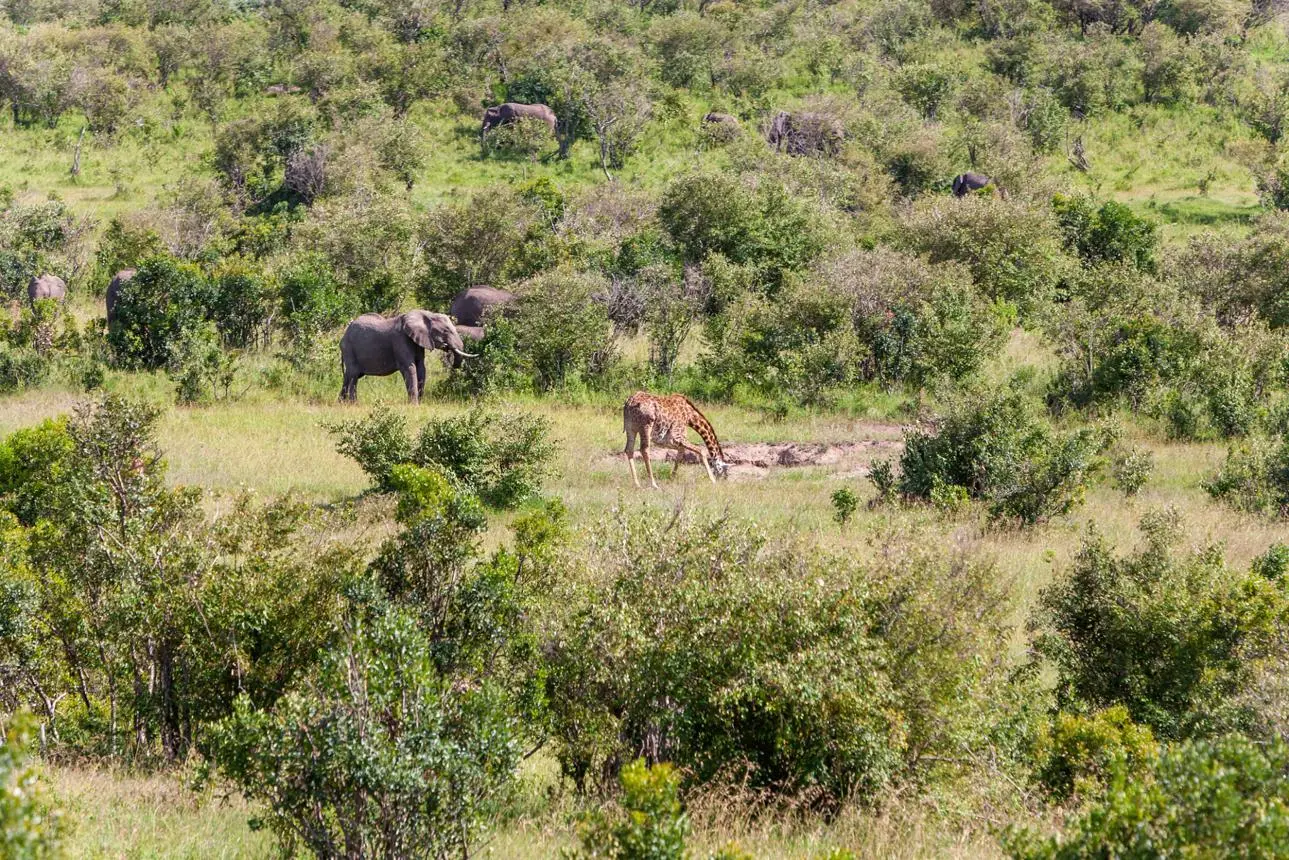
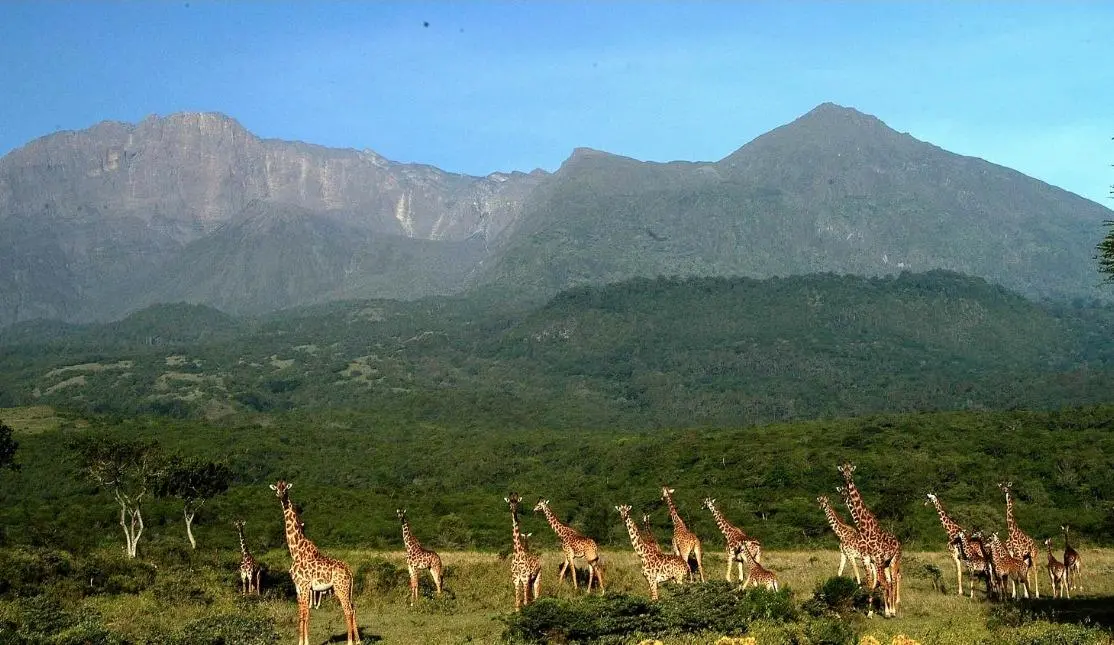
Giraffes are particularly noticeable in Arusha National Park because of the contrast between their long silhouettes and the forested slopes of Mount Meru.
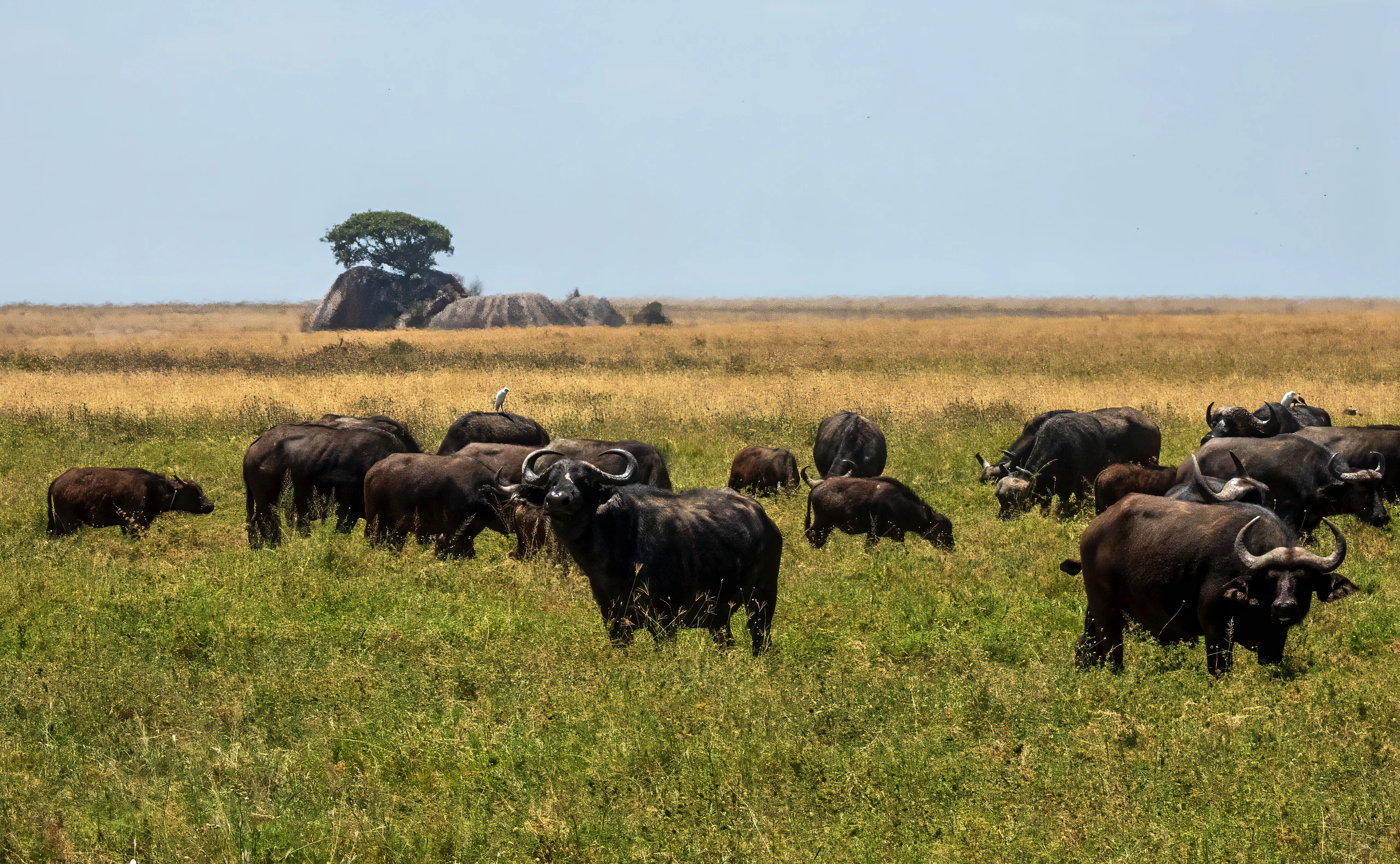
Buffalo are also common in suitable areas, especially around open grassland and wet habitats.
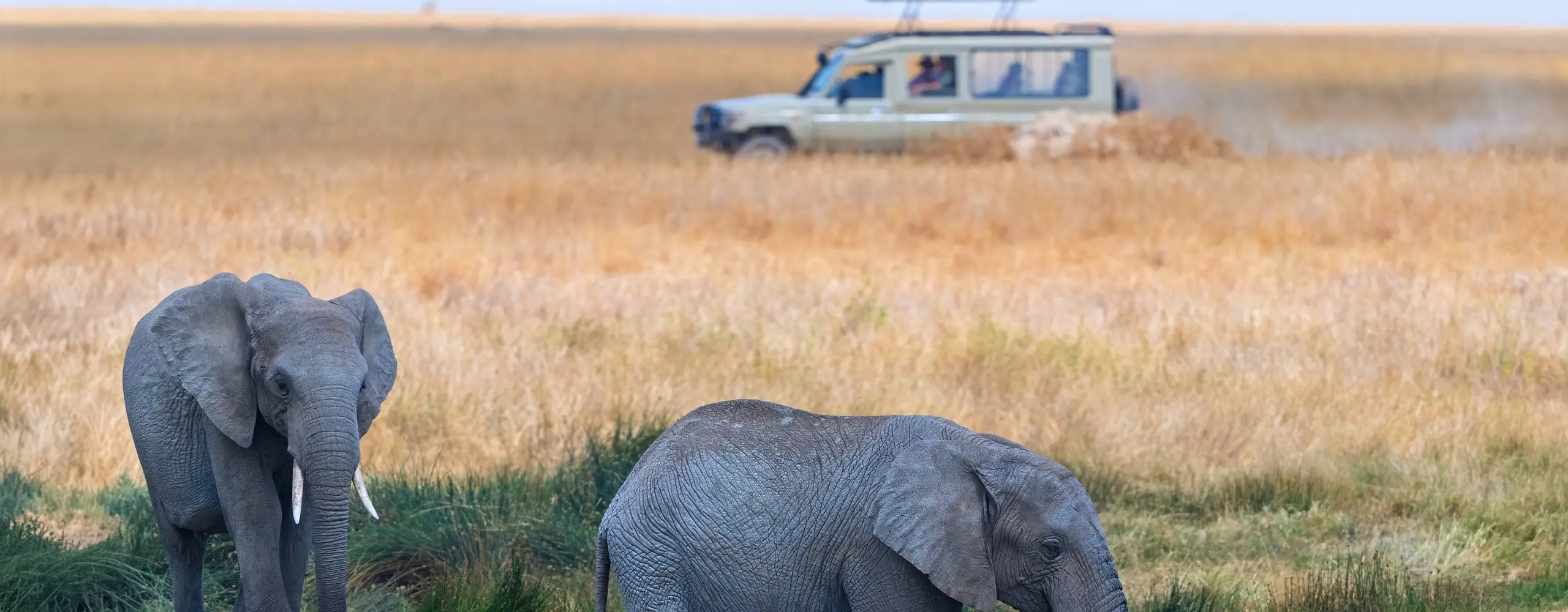
Elephants occur in the park but sightings are not necessarily the main reason to visit.
Instead of expecting large herds around every corner, think of Arusha as a mixed habitat where wildlife is part of a broader mountain and forest experience.
BirdWatching
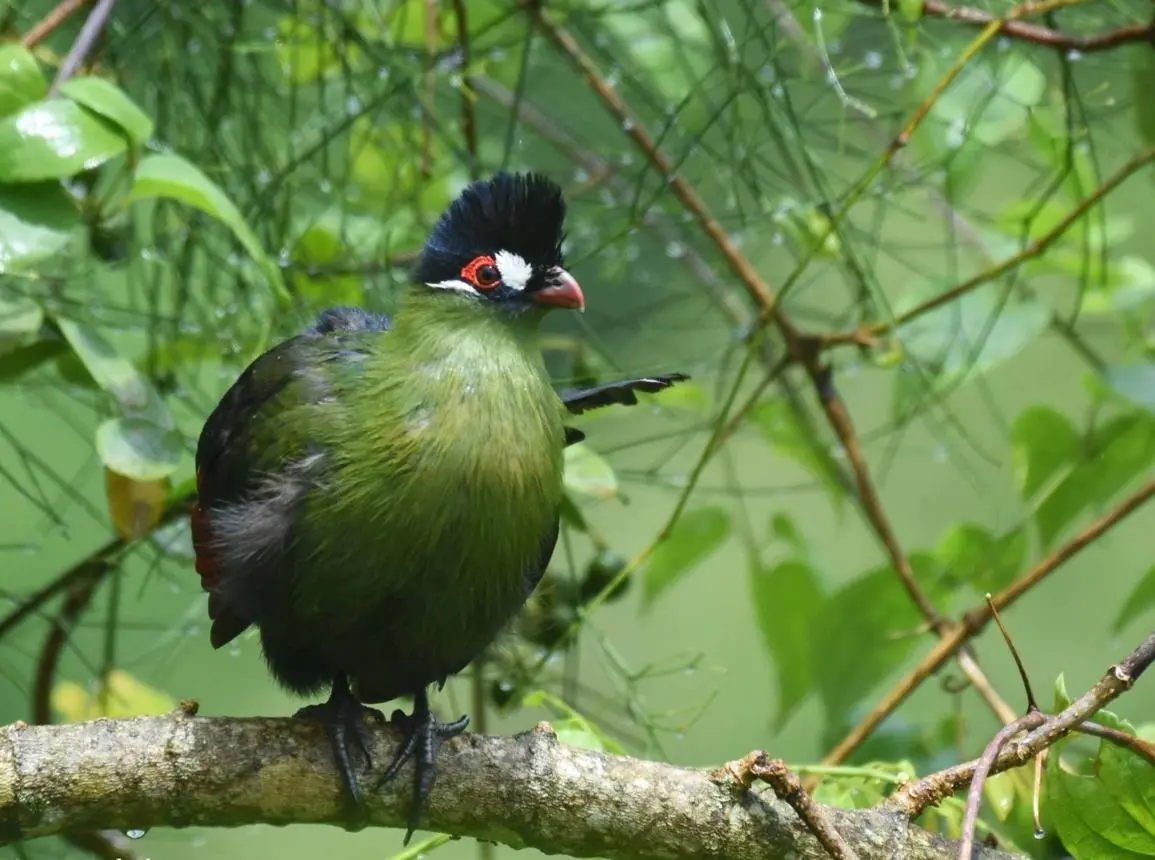
Arusha National Park is an excellent destination for birdwatching. TANAPA records more than 450 bird species in the park. The variety of habitats is the main reason. Forest species occur around Mount Meru, while the lakes and wetlands attract waterbirds. Depending on the season and location, you may see flamingos, storks, herons, egrets, kingfishers, hornbills and birds of prey. Birdwatching is particularly rewarding during walking experiences because you are moving slowly enough to hear and identify species that can easily be missed from a vehicle.
Arusha National Park is not primarily about chasing the Big Five. Its appeal is the combination of mountain scenery, forest, lakes, wildlife and walking experiences in a relatively small area.
Mount Meru Trekking
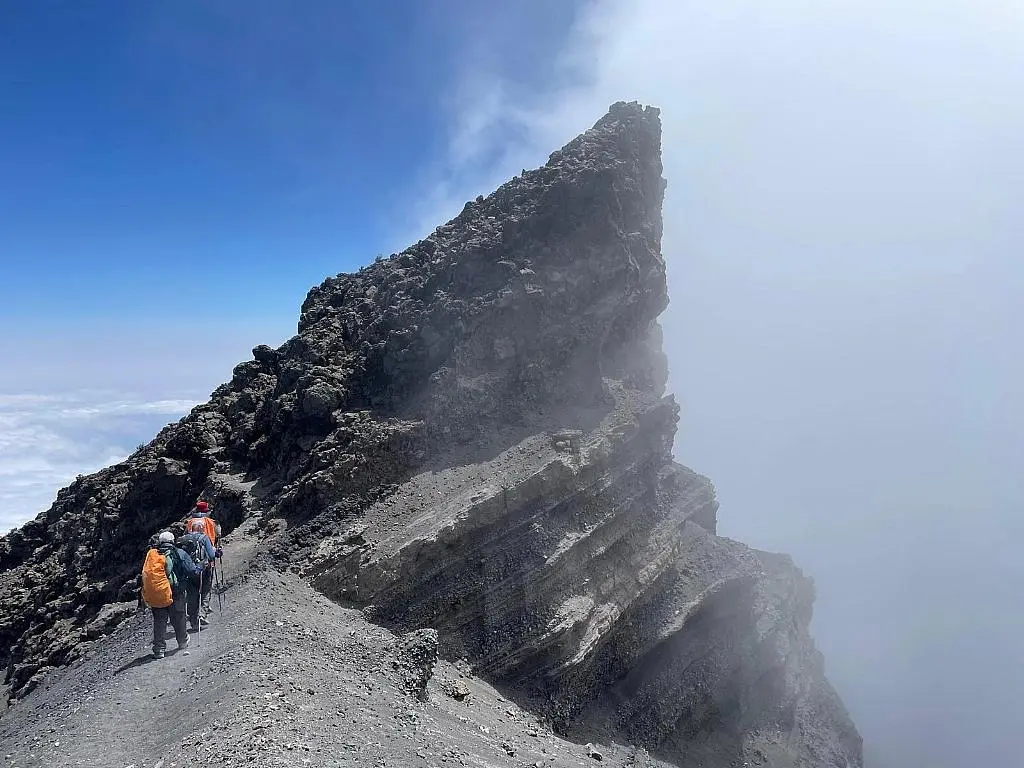
For adventurous travelers, Mount Meru is one of the biggest reasons to spend more time in the park. The mountain reaches 4,566 metres and offers a serious high-altitude trekking experience. The climb passes through changing ecological zones, from forest at lower elevations toward the open alpine environment near the summit. The trek is also sometimes used as preparation or acclimatization for Kilimanjaro, although it should not be treated as a guarantee against altitude problems. The mountain is a destination in its own right. If you have several days available, adding Mount Meru can turn an ordinary pre-safari stay in Arusha into a much more memorable part of the journey.
Arusha National Park is not primarily about chasing the Big Five. Its appeal is the combination of mountain scenery, forest, lakes, wildlife and walking experiences in a relatively small area.
Canoeing on Momella Lakes
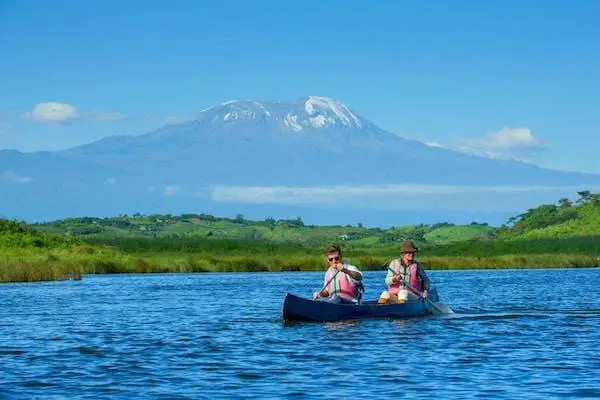
Canoeing provides a completely different way to experience Arusha National Park. Instead of exploring by vehicle, you move quietly across the water and observe the landscape from lake level. Birds and other wildlife around the shoreline can become easier to appreciate because the experience is slower and quieter. Availability and operating conditions can depend on current regulations and lake conditions, so this should be confirmed when arranging your trip. TANAPA specifically identifies canoeing on Momella Lakes among the park's tourism experiences.
Best Time to Visit Arusha National Park
Arusha National Park can be visited throughout the year.The best timing depends heavily on what you want to do.
June–October
The drier months generally provide comfortable conditions for game drives and walking. Mountain visibility can vary from day to day, but clear periods can provide excellent views.
November–December
The short rains bring greener vegetation and can make the landscapes particularly attractive. Bird activity can also be rewarding during this period.
January–March
This can be a good period for combining Arusha National Park with other Northern Circuit destinations. The landscape may remain relatively green, while mountain conditions can vary.
April–May
The long rains can make the park lush and quiet. Rain can affect roads and hiking conditions, so flexibility is useful. If Mount Meru trekking is your main goal, your dates should be planned around trekking conditions rather than simply choosing the traditional safari high season.
How Long Do You Need?
Arusha National Park works well as a day trip, but it can also justify several days.
- A day can include a game drive around the park and the Momella Lakes, with time for viewpoints and wildlife.
- Two days : Two days allow a slower combination of game viewing and walking or canoeing.
- Several days : If you are climbing Mount Meru, you will need a dedicated multi-day itinerary. For most safari travelers, however, one full day is enough to experience the park before continuing to another destination.
Where to Stay
Because Arusha National Park is close to Arusha city, you have several accommodation options. You can stay in Arusha and make a day trip into the park. Alternatively, staying closer to the park can give you a more immersive experience and reduce driving. For a short pre-safari visit, an Arusha hotel can be practical. For a slower nature-focused itinerary, staying near the park can make more sense. If you are climbing Mount Meru, your accommodation plan will naturally be built around the trekking schedule.
How-to-get-there
Arusha National Park is one of the easiest national parks in northern Tanzania to reach. TANAPA describes the park as approximately half an hour from Arusha by paved road. The exact travel time depends on your starting point, traffic and which park gate you use.
What to Pack for Arusha National Park
Because the park includes both lowland safari areas and mountain environments, your packing depends on your activities.
- Lightweight clothing
- Comfortable trousers
- Walking shoes
- Hat
- Sunglasses
- Sunscreen
- Binoculars
- Camera
- Water bottle
- Insect repellent
- Light jacket